-

日本製 正絹(しょうけん) 数寄屋袋(すきやぶくろ) 紹智花兎(しょうちはなうさぎ)
¥9,600($60.58)
日本製の正絹(しょうけん)の数寄屋袋 (すきやぶくろ)のご紹介です。 数寄屋袋とは、茶道で使う帛紗や扇子、 楊枝、懐紙、志野袋などを入れて携帯する 袋物のことです。 和装の時に持つハンドバッグのようなもの なので、茶道の時だけではなく和服で お出かけの際にも使って頂けます。 この裂地は、茶道の流派の一つである 藪内流(やぶのうちりゅう)の流祖・ 藪内剣仲紹智(けんちゅうじょうち)が 終生愛用したことからその名がつきました。 藪内剣仲紹智は安土桃山時代から 江戸時代初期にかけての茶人で、武野紹鷗に 師事し、千利休とは同門の相弟子(弟弟子) にあたります。 のちに武家茶道を確立する古田織部の妹を 妻に迎えており、利休がその媒酌人を務める ほど深い関わりがありました。 現在でも藪内流において、この紹智花兎は 祖堂の打敷(仏壇の敷物)や帛紗に 用いられる最高峰のお家好みとして 大切に受け継がれています。 名物裂における「花兎文様」は、元々 中国・明の時代に織られた金襴です。 白茶色の地に、まるで麦藁や木目のように ゆるやかに波打つ「よろけ縞(筋)」が 細かく織り出されています。 波打つ地紋の上に、金糸を用いて小さな 花兎の文様が整然と並べられています。 一般的な金襴のようなギラギラとした 派手さはなく、非常に上品で静かな情緒を 持っています。 大名物「円乗坊肩衝」や 中興名物「振鼓(ふりつづみ)」 の仕覆として使われています。 23cm × 17cm × 4cm 正絹 Made in Japan: Pure Silk Sukiya Pouch – Shochi Hana Usagi (Floral Rabbit Pattern) We are pleased to introduce this Japanese-made sukiya pouch crafted from pure silk. A sukiya pouch is a traditional pouch used in the Japanese tea ceremony to carry essential items such as a fukusa (silk cloth used in tea preparation), a folding fan, a yoji (tea pick), kaishi (Japanese paper used during the tea ceremony), and a shino-bukuro (small pouch). Similar to a handbag carried with traditional Japanese clothing, it can be used not only for the tea ceremony but also when going out dressed in a kimono. This textile is named after Yabunouchi Kenshu Jochi, the founder of the Yabunouchi school, one of the schools of Japanese tea ceremony, who cherished and used it throughout his life. Yabunouchi Kenshu Jochi was a tea master who lived from the Azuchi-Momoyama period to the early Edo period. He studied under Takeno Joo and was a fellow disciple of Sen no Rikyu, though he was junior to Rikyu in their line of study. He later married the younger sister of Furuta Oribe, who would go on to establish the samurai style of tea ceremony. Their relationship was so close that Sen no Rikyu himself served as the matchmaker at their wedding. Even today, within the Yabunouchi school, this Shochi Hana Usagi textile is carefully preserved and passed down as one of the most prestigious textiles favored by the school. It is used for uchishiki (decorative cloths placed on Buddhist altars) in the ancestral hall, as well as for fukusa. The Hana Usagi (floral rabbit) pattern, classified among Japan's celebrated historical textiles known as meibutsu-gire, originated as a gold brocade woven in China during the Ming dynasty. On a pale beige-brown ground, fine, gently undulating stripes known as yore-jima are woven into the fabric, resembling straw or the grain of wood. Against this softly undulating background, small floral rabbit motifs are arranged in orderly rows using gold thread. Unlike the glittering flamboyance of typical gold brocade, this textile possesses an exceptionally refined elegance and a quiet, understated charm. This textile has also been used for shifuku (protective pouches for tea ceremony utensils) for the celebrated tea caddies known as Enjobo Katatsuki, classified as a oomeibutsu (a great tea treasure), and Furitsuzumi, classified as a chuko meibutsu (a tea treasure recognized in a later period). Dimensions: 23 × 17 × 4 cm Material: Pure silk 日本制造 正绢(纯丝)数寄屋袋(茶道用收纳袋)绍智花兔 为您介绍这款日本制造的正绢(纯丝)数寄屋袋。 数寄屋袋是用于收纳和携带茶道中使用的帛纱、折扇、楊枝、怀纸、志野袋等物品的袋子。 它类似于穿着和服时携带的手提包,因此不仅可以在茶道活动时使用,也适合穿着和服外出时携带。 这种织物的名称源于薮内流的创始人薮内剑仲绍智。薮内流是日本茶道的一个流派,剑仲绍智一生都十分喜爱这种织物,因此得名「绍智花兔」。 薮内剑仲绍智是活跃于安土桃山时代至江户时代初期的茶人,曾师从武野绍鸥,与千利休属于同门师兄弟关系,是千利休的师弟。 后来,他迎娶了古田织部的妹妹为妻。古田织部是后来确立武家茶道的重要人物,而千利休甚至担任了这桩婚姻的媒人,由此可见他们之间有着深厚的交情。 时至今日,在薮内流中,「绍智花兔」依然被视为最具代表性的流派传承纹样之一,深受珍视。它作为家元特别钟爱的高级织物,被用于祖堂的打敷(佛坛上的铺垫)及帛纱,并世代传承至今。 名物裂中的「花兔纹样」,原本是一种织造于中国明代的金襕织物。 织物以白茶色为底色,细致地织出了缓缓起伏的「摇曳条纹」,其形态宛如麦秆或木纹,呈现出柔和的波浪状线条。 在起伏的底纹之上,采用金线将小巧的花兔纹样整齐地排列开来。 它不像一般金襕织物那样具有耀眼华丽的视觉效果,而是呈现出十分高雅、含蓄而宁静的韵味。 这种织物曾被用作大名物「圆乘坊肩冲」以及中兴名物「振鼓」的仕覆(用于包裹和保护茶道名物茶入的锦缎袋)。 尺寸: 23厘米 × 17厘米 × 4厘米 材质: 正绢(纯丝)
-
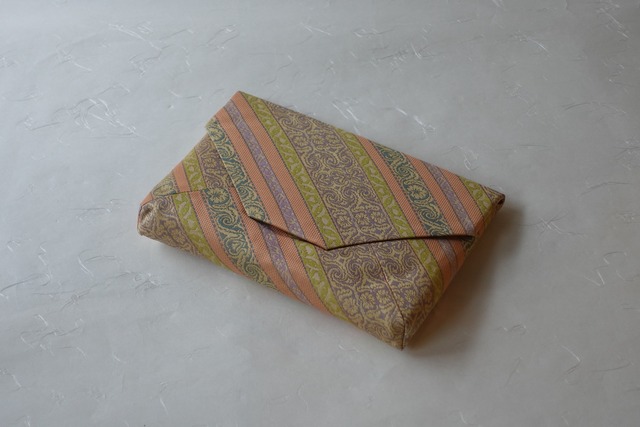
日本製 正絹(しょうけん) 数寄屋袋(すきやぶくろ) 段織(だんおり)モール
¥11,500($72.57)
日本製の正絹(しょうけん)の数寄屋袋 (すきやぶくろ)のご紹介です。 数寄屋袋とは、茶道で使う帛紗や扇子、 楊枝、懐紙、志野袋などを入れて携帯する 袋物のことです。 和装の時に持つハンドバッグのようなもの なので、茶道の時だけではなく和服で お出かけの際にも使って頂けます。 段織モールの紋様は、紫、黄緑、朱、深緑 など多くの色が使われ気品を感じさせる デザインとなっています。 真田組織状を含む、太さの異なる織が段状に 施され、変化のある裂地です。 この裂地は精巧に織り出され、流動的な 唐草紋と静止的な幾何学紋とが対比され、 ペルシア風の紋様構成が異国情緒を 醸し出しています。 大名物、中興名物の茶入れなどに横縞の モール裂を仕覆として使われる例が 多くなっています。 横幅 21.5cm × 縦 15cm × 厚さ 3.5cm 正絹 Japanese-Made Pure Silk Sukiya Bag – Dan-ori Mohr Here is a Japanese-made Sukiya bag made of pure silk. A Sukiya bag is a type of bag used to carry items needed for the tea ceremony, such as a fukusa (silk cloth), folding fan, toothpick, kaishi (Japanese paper used in the tea ceremony), and Shino-bukuro (small pouch). Since it is similar to a handbag carried with traditional Japanese clothing, it can be used not only for the tea ceremony but also when going out wearing a kimono. The Dan-ori Mohr pattern uses many colors, including purple, yellow-green, vermilion, and deep green, creating an elegant and refined design. Fabrics of different thicknesses, including Sanada-style woven structures, are woven in tiered bands, creating a textile with a varied and distinctive appearance. The textile is intricately woven, with a contrast between the flowing arabesque patterns and the more static geometric patterns. The Persian-style composition of the patterns creates an exotic and foreign atmosphere. Horizontal-striped Mohr textiles are increasingly often used as Shifuku (tea caddy pouches) for tea caddies associated with such classifications as Daimei-butsu and Chuko Meibutsu. Width: 21.5 cm × Height: 15 cm × Thickness: 3.5 cm Material: Pure Silk 日本制 正绢(しょうけん) 数寄屋袋(すきやぶくろ) 段织摩尔纹 下面为您介绍一款日本制正绢数寄屋袋。 所谓数寄屋袋,是用于装入茶道中使用的帛纱、折扇、楊枝、怀纸、志野袋等物品,并方便随身携带的一种袋物。 由于它类似于穿着和服时携带的手提包,因此不仅可以在茶道时使用,穿着和服外出时也可以使用。 段织摩尔纹样采用了紫色、黄绿色、朱红色、深绿色等多种色彩,整体设计呈现出高雅的气质。 织物采用包括真田组织在内的不同粗细织法,以阶梯状层次织成,形成富有变化的织物纹理。 这种织物经过精巧织造,将富有流动感的唐草纹与具有静止感的几何纹样形成对比,带有波斯风格的纹样构成营造出浓郁的异国情调。 在大名物、中兴名物等等级的茶入所使用的仕覆中,也有越来越多采用横条纹摩尔织物的实例。 横宽:21.5厘米 × 纵长:15厘米 × 厚度:3.5厘米 材质:正绢
-

日本製 正絹(しょうけん) 数寄屋袋(すきやぶくろ) 萬歴緞子(ばんれきどんす)
¥5,759($36.34)
SOLD OUT
日本製の正絹(しょうけん)の数寄屋袋 (すきやぶくろ)のご紹介です。 数寄屋袋とは、茶道で使う帛紗や扇子、 楊枝、懐紙、志野袋などを入れて携帯する 袋物のことです。 和装の時に持つハンドバッグのようなもの なので、茶道の時だけではなく和服で お出かけの際に使って頂けます。 萬歴緞子(ばんれきどんす)の萬歴とは 中国明代の年号のことで、この時代には 優れた織物が数多く織られました。 多彩な色、豪華な文様など萬歴の一時代を 貫流する美的様式があります。 この裂地は石畳に菱形の唐花文をはめ込んだ 美しい図柄で、萬歴様式の名物裂として 好まれています。 横幅 21.5cm × 縦 15cm × 厚さ 3cm 正絹 Made in Japan — Pure Silk Sukiya-bukuro (Tea Ceremony Accessory Pouch) — Banreki Donsu Brocade This piece is a Japanese-made sukiya-bukuro crafted from pure silk. A sukiya-bukuro is a pouch used in the tea ceremony to carry items such as the fukusa (silk cloth), folding fan, yōji (sweets pick), kaishi paper, Shino-bukuro envelope, and other accessories. Because it functions much like a small handbag for traditional dress, it can be used not only for tea gatherings but also when going out in Japanese attire. The term Banreki Donsu refers to brocade woven during the Wanli era of the Ming dynasty in China, a period famed for its exceptional textile production. Brocades from this era are characterized by vibrant colors and opulent patterns, reflecting a distinctive aesthetic style that defined the Wanli period. This particular textile features a beautiful design in which a lattice pattern is filled with lozenge-shaped karahana (Chinese floral) motifs. It is well regarded as a classic “meibutsu-gire” (famous specialty textile) in the Wanli style. Dimensions: 21.5 × 15 × 3 cm Material: Pure silk 日本制 正绢 数寄屋袋 万历缎子 以下为日本制正绢数寄屋袋的介绍。 所谓“数寄屋袋”,是指用于茶道携带帛纱、折扇、楊枝、怀纸、志野袋等用品的袋物。 由于与和服时所携带的手提包类似,因此不仅可用于茶道场合,也适合在穿着和服出行时使用。 “万历缎子”中的“万历”是中国明代的年号。此时期织造了大量优异的织物,具有色彩丰富、纹样华丽等审美风格,贯穿万历一代。 此裂地以方格状石畳中嵌入菱形唐花纹的美丽图案著称,作为万历样式的名物裂而备受喜爱。 尺寸:宽21.5cm × 高15cm × 厚3cm 材质:正绢(真丝)
-

日本製 正絹(しょうけん) 数寄屋袋(すきやぶくろ) 亡羊緞子(ぼうようどんす)
¥5,760($36.35)
日本製の正絹(しょうけん)の数寄屋袋 (すきやぶくろ)のご紹介です。 数寄屋袋とは、茶道で使う帛紗や扇子、 楊枝、懐紙、志野袋などを入れて携帯する 袋物のことです。 和装の時に持つハンドバッグのようなもの なので、茶道の時だけではなく和服で お出かけの際に使って頂けます。 亡羊緞子(ぼうようどんす)は 名物裂の一つで、千宗旦の門の茶人で 儒学者の三宅亡羊が所持していたと 言われています。 文様は雲形の花をつけた唐草文に鳳凰が 舞う様を表したもので、異国情緒を 感じさせてくれます。 大名物「岩城文琳茶入」の仕覆に 用いられています。 中国明代中期の製と思われます。 淡いグリーンのさわやかで、お洒落な 数寄屋袋です。 横幅 21.5cm × 縦 15cm × 厚さ 3cm 正絹 Japanese Silk Sukiya-bukuro — “Bōyō Donsu” Brocade Introducing a Japanese-made sukiya-bukuro fashioned from pure silk. A sukiya-bukuro is a pouch used in the tea ceremony for carrying fukusa, folding fans, yōji (sweet picks), kaishi paper, Shino-bukuro, and similar small implements. Functionally, it is like a handbag carried with traditional dress, so it is suitable not only for tea gatherings but also for outings in kimono. “Bōyō Donsu” is one of the celebrated meibutsugire (famous brocades). It is said to have been owned by Miyake Bōyō, a Confucian scholar and disciple of Sen Sōtan. The design features arabesques with cloud-like blossoms and dancing phoenixes, evoking a distinctly exotic charm. It was used for the shifuku pouch of the renowned tea caddy “Iwaki Bunrin.” The textile is believed to date from the mid-Ming dynasty in China. This sukiya-bukuro is made in a refreshing, stylish pale green. Dimensions: 21.5 cm (W) × 15 cm (H) × 3 cm (D) Material: Pure silk 日本制 正绢 数寄屋袋 亡羊缎子 以下介绍一款日本制、正绢材质的“数寄屋袋”。 所谓“数寄屋袋”,是指茶道中用来收纳帛纱、扇子、楊枝、怀纸、志野袋等物品以便携带的袋物。由于类似和装时携带的手提包,因此不仅可用于茶道场合,也可在和服外出时使用。 “亡羊缎子”是名物裂之一,据说为千宗旦门下的茶人兼儒学者三宅亡羊所持有。其纹样为云形花纹的唐草文中,点缀飞舞的凤凰,颇具异国情调。亦被用于大名物“岩城文琳茶入”的仕覆。被认为出自中国明代中期。 此款数寄屋袋为淡绿色调,清爽而雅致。 尺寸:横幅21.5cm × 纵15cm × 厚3cm 材质:正绢(真丝)
-

日本製 正絹(しょうけん) 数寄屋袋(すきやぶくろ) 大黒屋金襴(だいこくやきんらん)
¥6,655($42.00)
日本製の正絹(しょうけん)の数寄屋袋 (すきやぶくろ)のご紹介です。 数寄屋袋とは、茶道で使う帛紗や扇子、 楊枝、懐紙、志野袋などを入れて携帯する 袋物のことです。 和装の時に持つハンドバッグのようなもの なので、茶道の時だけではなく和服で お出かけの際に使って頂けます。 大黒屋金襴(だいこくやきんらん)は 一重蔓小牡丹唐草文に宝尽し文は配した 金襴で、一重蔓の繊細な唐草の間に花文、 蕾、葉、雑宝などが散らされています。 大黒屋の名は商家の屋号と言われていますが 詳しくは不明です。 この柄の製作年代は中国明時代の萬歴年間と 考えられ豪華な装飾化が感じられます。 横幅 21.5cm × 縦 15cm × 厚さ 3cm 正絹 Made in Japan — Pure Silk Sukiya-bukuro Pouch — “Daikokuya Kinran” Brocade This is a sukiya-bukuro made of pure silk and produced in Japan. A sukiya-bukuro is a pouch used in the tea ceremony for carrying items such as the fukusa (silk cloth), folding fan, yōji (sweet pick), kaishi (paper for sweets), and Shino-bukuro, among others. Because it functions much like a handbag for traditional Japanese dress, it can be used not only for tea gatherings but also when going out in kimono. The “Daikokuya Kinran” brocade features a delicate pattern of single-stem arabesque with small peony motifs (hitoetsuru syobotan karakusa-mon) combined with treasure motifs (takara-zukushi). Between the fine single arabesque vines are scattered floral elements, buds, leaves, and various auspicious treasures. It is said that “Daikokuya” was the trade name of a merchant house, though the details are unclear. The design is thought to date to the Wanli period of the Ming dynasty in China, and conveys a sense of luxurious ornamentation. Dimensions: 21.5 cm (W) × 15 cm (H) × 3 cm (D) Material: Pure silk 日本制 正绢 数寄屋袋(茶道随身袋) 本次介绍的是日本制正绢材质的数寄屋袋。 所谓“数寄屋袋”,是指用于茶道时收纳帛纱、折扇、楊枝、怀纸、志野袋等物品,方便携带的小袋。 其用途类似于和服时所携带的手袋,因此不仅限于茶道场合,在穿着和服外出时也能使用。 “大黑屋金襴”是一种金襴织物,以“一重蔓小牡丹唐草纹”并配以“宝尽纹”为特色。在细致的一重蔓唐草间散布花纹、花蕾、叶片及杂宝等图案。 “大黑屋”被认为是商家的屋号,但详细情况已不可考。 该图案的制作年代推测为中国明代万历年间,风格富丽华美,颇具装饰性。 尺寸:横 21.5cm × 纵 15cm × 厚 3cm 材质:正绢(真丝)
-

日本製 正絹(しょうけん) 数寄屋袋(すきやぶくろ) 天平双華文錦(てんぴょうそうかもんにしき)
¥7,700($48.59)
日本製の正絹(しょうけん)の数寄屋袋 (すきやぶくろ)のご紹介です。 数寄屋袋とは、茶道で使う帛紗や扇子、 楊枝、懐紙、志野袋などを入れて携帯する 袋物のことです。 和装の時に持つハンドバッグのようなもの なので、茶道の時だけではなく和服で お出かけの際に使って頂けます。 天平双華文錦 (てんぴょうそうかもんにしき)は 六弁花文の縦縞と菱形花文の縦縞が交互に 繰り返される文様で、主・副の別なく 唐花文への初期的な過程を示すもので 正倉院宝物・楽舞装束の半臂(はんぴ) (短袖の胴着)に同様の文様があります。 この格調ある文様を基に配色に創意を加え 織り成した錦です。 横幅 21.5cm × 縦 15.5cm × 厚さ 3cm 正絹 龍村織物 Made in Japan Pure silk (shōken) Sukiya-bukuro (tea accessory pouch) Tenpyō Sōkamon Nishiki This is an introduction to a Japanese-made pure silk (shōken) sukiya-bukuro. A sukiya-bukuro is a type of pouch used in the tea ceremony to carry items such as a fukusa (silk cloth), folding fan, toothpick case, kaishi paper, and Shino-bukuro. It is similar to a handbag carried with traditional Japanese attire, so it can be used not only for tea ceremony occasions but also when going out in kimono. Tenpyō Sōkamon Nishiki features a pattern in which vertical stripes of six-petaled floral motifs alternate with vertical stripes of diamond-shaped floral motifs. This design shows an early stage in the development of karahana (Chinese floral) patterns, without distinction between primary and secondary motifs. Similar patterns can be found on the hanpi (short-sleeved upper garment) of gigaku and bugaku dance costumes among the treasures of the Shōsōin Repository. Based on this dignified pattern, creative color arrangements have been applied and woven into this brocade. Size: Width 21.5 cm × Height 15.5 cm × Depth 3 cm Material: Pure silk Weaver: Tatsumura Textile Co. 日本制 正绢(纯丝) 数寄屋袋 天平双华纹锦 这是日本制正绢(纯丝)数寄屋袋的介绍。 所谓数寄屋袋,是在茶道中用于收纳并随身携带帛纱、扇子、牙签、怀纸、志野袋等物品的袋类器物。 它相当于和装时使用的手提包,因此不仅在茶道时可用,穿着和服外出时同样可以使用。 天平双华纹锦,是由六瓣花纹的纵向条纹与菱形花纹的纵向条纹交替反复构成的纹样,不分主纹与副纹,体现了向唐花纹发展的初期阶段。 在正仓院宝物中,乐舞装束的半臂(短袖上衣)上也可见到相同的纹样。 以这一格调高雅的纹样为基础,在配色上加以巧思而织成的锦织品。 尺寸: 横宽 21.5 厘米 × 纵 15.5 厘米 × 厚 3 厘米 材质:正绢(纯丝) 织造:龙村织物
-

日本製 小林徹彩 筆 桜タペストリー 麻100%
¥12,100($76.36)
小林徹彩 筆の桜のタペストリーのご紹介です。 小林徹彩氏は 日本画家 佐藤晴夫氏に師事 京都大覚寺 味岡理事長に水墨画師事 ローケツ染作家 山名辰之助氏に師事 日本図案協会理事 木下勝功氏に素描染を師事 琳派 石川象山氏に師事 京都彩芸美術展入賞し、その後もあらゆる手描き染を修得し 独自の作風を確立。 この桜のタペストリーもその技法が生かされており 麻布に独特の風合いの桜が描かれています。 麻のきれい過ぎない生地が、時代が経っても風化しない 独自の世界観があります。 桜は日本を代表する花であり、世界的にも人気の花です。 春の季節に飾って楽しむという考え方と すぐに散ってしまう桜を一年中、部屋の中で楽しむという 考え方もあります。 幅 64㎝ 縦 48㎝(ひも含まず)