-

松楽 作 黒楽 馬上盃(ばじょうはい) 抹茶碗
¥17,400($110.23)
松楽 作の黒楽の馬上盃(ばじょうはい)の 抹茶碗のご紹介です。 馬上盃とは盃の高台部分が高く立ち上がって 脚のようになったもので、武将などが 馬に乗ったまま酒を飲むのに、この脚が握れ 具合がいいことから、この名前が ついたようです。 あるいは、盃が高く馬上に騎ったようだから という説もあります。 岐阜でいうと「信長まつり」や 「道三まつり」など武将に因んだ行事や 端午の節句などの茶事で使って頂くと いいかもしれません。 形が普通の抹茶碗とかなり違うので、 インパクトがあり、とても目立って話題に なりそうです。 高台が高いので、茶を出された方は 偉くなったような高貴な感じがします。 高台は末広がりになっているので、 大変安定しています。 脚部は縦に削ぎがあり一部に穴が 空けられています。 昔の中国にはすでにこのような形のものが あったようで歴史を感じる茶碗といえます。 口径 12cm 高さ 12cm Shohraku – Black Raku “Bajo-hai” Matcha Bowl Here is an introduction to a black Raku matcha bowl made by Shohraku, in the bajo-hai style. A bajo-hai is a type of drinking cup with a tall foot that extends upward from the bottom of the cup, forming a leg-like shape. It is said to have been given this name because the raised foot was convenient to hold when warriors and others drank sake while remaining on horseback. Another theory is that the name comes from the cup being raised high, as if it were being held on horseback. In Gifu, this matcha bowl may be particularly suitable for tea gatherings associated with events related to historical warlords, such as the “Nobunaga Festival” and “Dosan Festival,” as well as tea gatherings held for the Boys’ Festival (Tango no Sekku). Because its shape is quite different from that of an ordinary matcha bowl, it has a strong visual impact and is likely to attract attention and become a topic of conversation. Because the foot is unusually tall, the person served tea in this bowl may feel as though they have been elevated to a position of importance, giving the bowl a noble and dignified impression. The foot widens toward the bottom, making the bowl very stable. The leg section has vertical facets carved into it, with openings cut into part of the foot. Similar forms are said to have already existed in ancient China, making this a matcha bowl that conveys a sense of history. Diameter: 12 cm Height: 12 cm 松乐作 黑乐 马上盏(ばじょうはい) 抹茶碗 现为您介绍一款由松乐制作的黑乐马上盏抹茶碗。 所谓“马上盏”,是指盏的高台部分向上高高立起,形成类似脚部的形状。据说过去武将等骑在马背上饮酒时,这样的脚部便于握持,因此得名“马上盏”。 另外,也有一种说法认为,是因为盏身高高耸起,仿佛骑在马背上一样,所以才有了“马上盏”这一名称。 在岐阜,如果用于“信长祭”或“道三祭”等与武将有关的活动,或者端午节等茶事中,或许会非常合适。 由于其造型与普通的抹茶碗有很大的不同,因此视觉冲击力很强,非常醒目,相信会成为令人印象深刻、容易引起话题的一款茶碗。 由于高台较高,饮茶者在饮用时会产生一种仿佛身份变得尊贵起来的高贵感觉。 高台呈向下逐渐展开的形状,因此非常稳定。 脚部纵向刻有削痕,并在部分位置开有孔洞。 据说古代中国很早就已经出现过这种形状的器物,因此可以说,这是一只让人感受到悠久历史的茶碗。 口径 12厘米 高度 12厘米
-
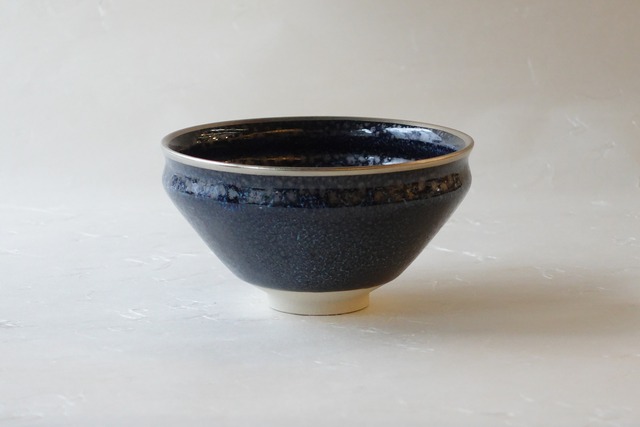
清水焼 窯変 油滴天目 茶碗
¥10,120($64.11)
清水焼から天目茶碗のご紹介です。 天目茶碗とは、鉄質黒釉の茶碗で、 茶の湯の台子点前や貴人点前に 用いられます。 普通の抹茶碗に比べて格の高い茶碗とされ、 天目茶台にのせて使われます。 高貴な方への呈茶や仏前に供えられることが 多いです。 鎌倉時代に我が国の禅僧が、中国浙江省、 天目山の仏寺より持ち帰った茶碗が この形をしていた為天目茶碗と名付けられた という説があります。 天目茶碗の素地は硬く黒褐色または紫褐色を 呈し下部は厚手に作られています。 形状はやや浅く、口が開きかげんで、 高台は低く小さくなっています。 碗の口縁は、すっぽん口状の曲線を有し 天目型の特徴とされています。 釉薬は鉄やマンガンによって様々な窯変が 現れます。 この抹茶碗は、油滴天目と言われるもので、 黒褐色ですが所々に青色に窯変しており 美しい風合いが出ています。 高台に向かってのラインが美しく、 スマートな形をしています。 また、覆輪(ふくりん)といって、 口の部分は銀色の釉薬が塗られており (本銀ではございません)格上の雰囲気が よく出ています。 大切なお客様への呈茶や、神仏やご先祖様の お供えなどにもお使い頂けます。 口径 13cm 高さ 6.8cm Kiyomizu Ware Yohen Oil-Drop Tenmoku Matcha Bowl We are pleased to introduce this Tenmoku tea bowl from Kiyomizu ware. A Tenmoku tea bowl is a tea bowl with an iron-rich black glaze and is used for Daisu procedures and Kinin procedures in the Japanese tea ceremony. It is considered a tea bowl of higher status than an ordinary matcha bowl and is used placed on a Tenmoku tea-bowl stand. It is often used when serving tea to distinguished guests or when offering tea before a Buddhist altar. One theory holds that the name “Tenmoku tea bowl” originated because Zen monks from Japan brought back tea bowls of this shape from Buddhist temples on Mount Tenmoku in Zhejiang Province, China, during the Kamakura period (1185–1333). The clay body of a Tenmoku tea bowl is hard and is dark brown or purplish brown in color, with the lower part made relatively thick. The shape is somewhat shallow, with the rim opening slightly outward, while the foot is low and small. The rim of the bowl has a curved shape resembling a suppon-guchi (soft-shelled turtle’s mouth), which is considered one of the characteristic features of the Tenmoku form. The glaze produces various kiln effects through the action of iron and manganese. This particular matcha bowl is known as an “Oil-Drop Tenmoku.” Although predominantly dark brown, parts of the surface have undergone a kiln transformation into blue, creating a beautiful and distinctive appearance. The line leading toward the foot is beautifully formed, giving the bowl a sleek and elegant shape. In addition, the rim is finished with what is called fukurin, in which a silver-colored glaze has been applied around the edge. (It is not real silver.) This gives the bowl a refined and elevated appearance. It can be used for serving tea to important guests, as well as for offerings to deities, Buddhas, and ancestors. Diameter: 13 cm Height: 6.8 cm 清水烧 窑变 油滴天目茶碗 为您介绍一款清水烧的天目茶碗。 所谓天目茶碗,是使用含铁质的黑釉烧制而成的茶碗,主要用于茶道中的台子点前和贵人点前。 与普通的抹茶碗相比,天目茶碗被认为是等级较高的茶碗,使用时会放在天目茶台上。 它常用于为尊贵的客人奉茶,以及供奉于佛前。 有一种说法认为,镰仓时代,日本的禅僧从中国浙江省天目山的佛寺带回的茶碗具有这种形制,因此被命名为“天目茶碗”。 天目茶碗的胎质坚硬,呈黑褐色或紫褐色,下部制作得较为厚实。 其形状略浅,口沿向外微微张开,圈足较低且较小。 茶碗的口沿呈现类似“鳖口”的曲线,这被视为天目型茶碗的特征之一。 由于釉药中的铁和锰,会呈现出各种各样的窑变效果。 这款抹茶碗属于被称为“油滴天目”的类型,整体呈黑褐色,但部分区域窑变呈现出蓝色,展现出十分美丽的质感与风韵。 从碗身向圈足方向延伸的线条十分优美,整体造型简洁而秀美。 此外,碗口部分采用了称为“覆轮”的装饰,施有银色釉药(并非纯银),很好地营造出更加高贵典雅的气氛。 可用于为重要的客人奉茶,也可用于供奉神佛或祖先等。 口径:13cm 高度:6.8cm
-

京焼 若水 作 蔦(つた) 白釉 抹茶碗
¥9,950($63.03)
京焼から小野山若水 作の手づくり抹茶碗の ご紹介です。 赤茶色の土をろくろ成形し、白い釉薬が 掛けられ、蔦(つた)が手描きされて 作られています。 内側は全面に白釉が掛けられ、外側は 上部3分の2に釉薬が掛けられ、 土の表情を見せています。 釉薬の上に蔦の葉が大胆に描かれ、 風情のある雰囲気が出ています。 葉は金、朱、緑、黄と多彩な色で描かれ、 色彩豊かな色合いとなっています。 蔓の艶のある深い緑が映え、金色で葉脈が 描かれ豪華さのある画が描かれています。 細やかで繊細な絵柄は優しい雰囲気があり 色絵の美しさと白釉の風合い、生地の土の 荒々しい味わいの3つを同時に味わえる 抹茶碗となっています。 生地は薄手で、ろくろ成形の技術の高さが 感じられ、持つと軽くて繊細な雰囲気が あります。 正面には一箇所えくぼが作られ変化が 付けられ、見所がたくさんある抹茶碗と なっています。 口径 12cm 高さ 7.3cm Kyo-yaki Matcha Bowl by Jakusui – Ivy Design, White Glaze We are pleased to introduce this handmade matcha bowl by Jakusui Onoyama from Kyo-yaki (Kyoto ware). It is made by wheel-throwing reddish-brown clay, applying a white glaze, and hand-painting ivy leaves onto the surface. The entire interior is covered with white glaze, while approximately the upper two-thirds of the exterior is glazed, allowing the natural character and texture of the clay to show through. Ivy leaves are boldly painted over the glaze, creating an elegant and atmospheric appearance. The leaves are painted in a variety of colors, including gold, vermilion, green, and yellow, resulting in a rich and colorful design. The glossy, deep green vines stand out beautifully, while the leaf veins are painted in gold, creating a luxurious and ornate pictorial design. The delicate and intricate pattern has a gentle and graceful atmosphere. This matcha bowl allows you to appreciate three different qualities at once: the beauty of the overglaze painting, the texture of the white glaze, and the rugged, earthy character of the clay body. The clay body is thinly formed, demonstrating the high level of wheel-throwing craftsmanship. It feels light in the hand and has a delicate, refined character. A single dimple has been created on the front of the bowl, adding variation to its form. With many details to appreciate, this is a matcha bowl with plenty of visual interest. Diameter of rim: 12 cm Height: 7.3 cm 京烧 若水作 常春藤 白釉 抹茶碗 下面为您介绍一款京烧小野山若水制作的手工抹茶碗。 这款抹茶碗采用红褐色陶土,经拉坯成型后施以白色釉药,并手工描绘常春藤纹样制作而成。 碗的内侧整体施有白釉,外侧上方约三分之二施釉,露出陶土本身的质感。 釉药之上大胆地描绘了常春藤的叶片,呈现出富有情趣的雅致氛围。 叶片以金色、朱红色、绿色和黄色等多种色彩描绘,呈现出色彩丰富的色调。 藤蔓光泽感十足的深绿色十分醒目,并以金色描绘叶脉,绘制出具有华丽感的图案。 细腻而精致的绘画纹样营造出柔和的氛围,使这款抹茶碗能够同时欣赏彩绘之美、白釉的质感以及陶土本身粗犷而富有韵味的三种不同魅力。 胎体较薄,可以感受到高超的拉坯成型技艺,拿在手中轻盈,并具有纤细雅致的感觉。 正面有一处特意制作的凹痕(酒窝状装饰),增添了造型上的变化,使这款抹茶碗具有许多值得欣赏的细节。 口径:12厘米 高度:7.3厘米
-
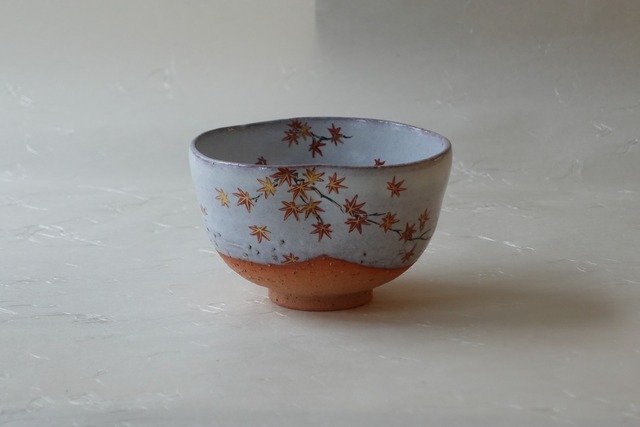
京焼 若水 作 紅葉 白釉 抹茶碗
¥18,700($118.47)
京焼から小野山若水 作の手づくり抹茶碗の ご紹介です。 赤茶色の土をろくろ成形し、白い釉薬が 掛けられ、紅葉が手描きされて 作られています。 内側は全面に白釉が掛けられ、外側は 上部3分の2に釉薬が掛けられ、 土の表情を見せています。 釉薬の上に枝と紅葉が細かく描かれ、 風情のある雰囲気が出ています。 鮮やかな紅葉の赤が映え、金色で葉脈が 描かれ豪華さのある画が描かれています。 細やかで繊細な絵柄は優しい雰囲気があり 色絵の美しさと白釉の風合い、生地の土の 荒々しい味わいの3つを同時に味わえる 抹茶碗となっています。 生地は薄手で、ろくろ成形の技術の高さが 感じられ、持つと軽くて繊細な雰囲気が あります。 正面には一箇所えくぼが作られ変化が 付けられ、見所がたくさんある抹茶碗と なっています。 口径 12cm 高さ 7.3cm Kyoyaki — Hand-Painted Maple Leaves, White Glaze, Matcha Tea Bowl We are pleased to introduce this handmade matcha tea bowl by Onoyama Jakusui, made in the traditional Kyoyaki style of Kyoto. The bowl is wheel-thrown using reddish-brown clay, coated with a white glaze, and decorated with hand-painted maple leaves. The entire interior is covered with white glaze, while the glaze is applied to approximately the upper two-thirds of the exterior, allowing the natural character and texture of the clay to remain visible. Fine branches and maple leaves are delicately painted over the glaze, creating an elegant and atmospheric appearance. The vivid red of the maple leaves stands out beautifully, while the veins of the leaves are painted in gold, creating a luxurious and splendid design. The delicate and intricate decoration has a gentle, graceful quality. This matcha tea bowl allows you to appreciate three elements at once: the beauty of the colored decoration, the distinctive character of the white glaze, and the rugged, earthy texture of the clay body. The clay body is thinly formed, demonstrating the high level of skill in wheel throwing. The bowl feels light in the hand and has a delicate, refined character. A single dimple is intentionally formed on the front of the bowl, adding an element of variation to its shape. With many points of interest to appreciate, this is a matcha tea bowl with considerable charm and character. Diameter of rim: 12 cm Height: 7.3 cm 京烧 若水作 红叶 白釉 抹茶碗 下面为您介绍一款由京烧陶艺家小野山若水手工制作的抹茶碗。 以红褐色陶土拉坯成形,施以白色釉药,并手绘红叶纹样烧制而成。 碗的内侧整体施有白釉,外侧则在上部约三分之二的位置施釉,使下部保留陶土本身的质感与表情。 在釉面上细致描绘枝条与红叶,营造出富有日本传统风情的雅致氛围。 鲜艳的红叶之红色格外醒目,叶脉以金色描绘,呈现出华丽而富有装饰性的画面。 细腻精致的绘画纹样带来温和柔美的气息,使这款抹茶碗能够同时欣赏彩绘之美、白釉所呈现的温润质感,以及陶土胎体粗犷而富有韵味的质朴之美。 胎体较为薄,能够感受到高超的拉坯成形技艺。拿在手中轻盈而纤细,具有十分雅致的气质。 正面特意制作了一处“酒窝”状的凹痕,使器形富于变化,也增添了观赏上的趣味。这是一款具有众多值得品味之处的抹茶碗。 口径:12厘米 高度:7.3厘米
-
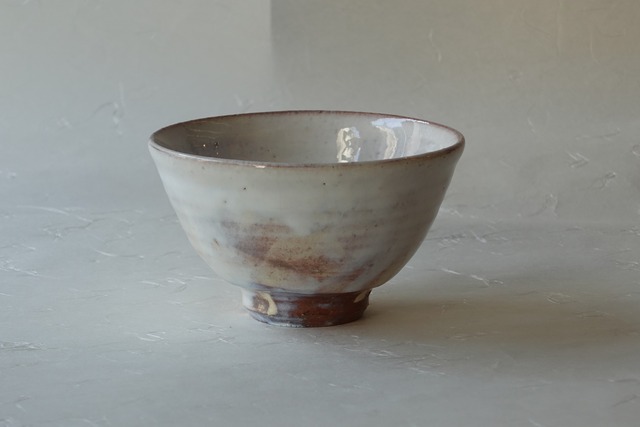
萩焼 林紅陽 作 白釉 井戸 抹茶碗
¥16,500($104.53)
萩焼から林紅陽 作の井戸茶碗のご紹介です。 井戸茶碗は元々、朝鮮茶碗の一種で李朝の 比較的早い時期に作られたものと見られ、 室町時代以後に渡来した朝鮮茶碗の中でも 第一等の位に置かれ、唐物茶碗の王者と されています。 井戸茶碗の特徴として、土は鉄分の強い 荒目のもので赤褐色をしています。 この荒目の土を速いろくろで挽いているため 表面にあばら状のろくろ目が目立つことが 多くなっています。 高台は竹の節高台といわれ釉薬をかける時に 茶碗をつかみやすくする利便性として 生じたものと言われています。 これは削り出し高台で、高台内をさらえる ヘラが斜めに入るため高台内の中央が渦を 巻いたように高まるのが特徴です。 釉掛けは高台内側までずぶ掛けにする 総釉掛けのため高台の土を直接見れる部分が ほとんどありません。 井戸茶碗の約束の一つになっています。 全体に艶のある白い釉薬が掛けられており やわらかい雰囲気があります。 表面の釉薬はぼってりと厚めに掛けられ、 濃淡があり下地の土の風合いが感じられ、 その変化が見所となっています。 全体に細かな貫入やピンホールなどが見られ 萩焼の特徴がよく出ています。 どっしりと重厚感があり高級感があります。 大井戸茶碗よりも少し小ぶりなので、 薄茶としても使えるサイズです。 白い釉薬の部分が多く、明るい印象です。 使い込んで「萩の七変化」を楽しみながら 永く使える逸品です。 口径 13.7cm 高さ 7.8cm Hagi Ware – Kōyō Hayashi, White-Glazed Ido Matcha Tea Bowl We are pleased to introduce this Ido-style tea bowl by Kōyō Hayashi of Hagi ware. The Ido tea bowl was originally a type of Korean tea bowl, believed to have been made during the relatively early period of the Joseon Dynasty. Among the Korean tea bowls that were brought to Japan after the Muromachi period, Ido tea bowls were regarded as being of the highest rank and came to be considered the king of karamono tea bowls. One of the characteristics of an Ido tea bowl is its coarse clay, which contains a high amount of iron and has a reddish-brown color. Because this coarse clay was thrown on the wheel at high speed, prominent rib-like throwing marks are often visible on the surface. The foot is known as a “take no fushi” or bamboo-joint-style foot. It is said to have developed as a practical feature that made it easier to hold the tea bowl when applying glaze. This tea bowl has a carved foot. Because the spatula used to hollow out the inside of the foot enters at an angle, the center of the interior of the foot rises in a characteristic spiral-like form. The glaze is applied over the entire bowl, including the inside of the foot, in a technique known as complete glazing. As a result, there is almost no area where the bare clay of the foot can be seen directly. This is regarded as one of the established characteristics, or traditional formal features, of an Ido tea bowl. The entire bowl is covered with a glossy white glaze, creating a soft and gentle atmosphere. The glaze on the surface has been applied relatively thickly, with variations in its depth and tone that allow the texture of the underlying clay to be appreciated. These subtle changes are one of the highlights of the piece. Fine crazing and pinholes can be seen throughout the surface, bringing out the distinctive characteristics of Hagi ware. The bowl has a substantial weight and a dignified, robust presence, giving it a luxurious appearance. It is slightly smaller than an Oiido tea bowl, making it a suitable size for use with usucha, or thin tea. Because a large portion of the surface is covered in white glaze, it gives a bright and refreshing impression. This is a superb piece that can be enjoyed and used for many years while appreciating the famous “seven transformations of Hagi,” as the appearance of Hagi ware gradually changes through continued use. Diameter: 13.7 cm Height: 7.8 cm 萩烧 林红阳 作 白釉 井户 抹茶碗 下面为您介绍萩烧林红阳老师制作的井户茶碗。 井户茶碗原本是朝鲜茶碗的一种,被认为制作于李朝相对早期的时期。在室町时代以后传入日本的朝鲜茶碗之中,井户茶碗被置于最高等级,被誉为唐物茶碗之王。 井户茶碗的特点之一,是使用含铁量较高、质地粗糙的陶土,呈红褐色。 由于这种粗质陶土是在较快的旋转速度下拉坯成型,因此器物表面往往可以明显看到类似肋骨状的旋坯纹。 圈足被称为「竹节高台」,据说这是为了在施釉时便于抓握茶碗而形成的设计。 此碗采用削制高台,由于用于削刮高台内部的竹篦以倾斜的角度进入,因此高台内部中央部分会呈现出如同漩涡般隆起的特点。 施釉时一直覆盖到高台内部,采用将茶碗整体浸釉的「总釉施挂」工艺,因此几乎没有能够直接看到高台陶土的部分。 这也是井户茶碗所具有的传统特征之一。 整件茶碗施以带有光泽的白色釉药,呈现出柔和温润的气氛。 表面的釉药施得较为厚实,釉色具有浓淡变化,同时可以感受到胎土本身的质感,这些丰富的变化也成为欣赏此碗的一大看点。 整件茶碗可以看到细密的开片以及针孔等萩烧特有的窑变景象,充分展现了萩烧的特色。 整体造型沉稳厚重,具有十足的分量感与高级质感。 尺寸比大井户茶碗略小一些,因此作为薄茶茶碗使用也非常合适。 由于白色釉药所占面积较大,整体给人明亮而清雅的印象。 随着长久使用,欣赏所谓「萩之七变化」的釉色与器物变化,是一件可以陪伴您长久使用、值得珍藏的精品。 **口径:**13.7cm **高度:**7.8cm
-

清水焼 佐々木松楽 作 赤楽 抹茶碗
¥9,190($58.22)
清水焼から佐々木松楽 作の赤楽茶碗の ご紹介です。 楽焼は帰化人 飴屋(楽家初代 長次郎の父)が 創始したものとされ田中宗慶が豊臣秀吉から 「楽」の金印を拝領したことから楽焼の称が おこったとされています。 楽焼は茶道の盛行に伴い出現した日本独自の 産物であり質・形・色などその特徴はすべて 茶の湯の精神に合致しています。 楽焼は楽家初代の長次郎に千利休が指導して 作らせたといわれています。 初期の赤楽は聚楽土を用いたと言われ 胎土の上に赤釉を塗って化粧し、透明度の 高い釉薬を掛け、比較的低温で 焼成しています。 楽焼は手捏ねの軟陶で、赤楽は豊臣秀吉が 好んだとされています。 この楽茶碗の大きさは標準的なサイズと なっています。 胴回りの中央がわずかにくびれているように 感じられます。 丸みは少なく真っ直ぐに立ち上がっている 寸胴気味で口の部分はわずかに内側に 入っています。 正面は黒くなっており、分かりやすく なっています。 表面や艶やかで薄作りで軽く、持つと 手にしっくりと馴染むので飲みやすく 扱いやすいと思われます。 楽茶碗の良さを存分に楽しんで頂ける 赤楽茶碗です。 胴径 12.5cm 高さ 8.5cm Kiyomizu Ware Red Raku Matcha Bowl by Sasaki Shoraku Introducing a Red Raku Matcha Bowl by Sasaki Shoraku, crafted in the tradition of Kiyomizu Ware. Raku ware is believed to have been founded by the naturalized immigrant Ameya, the father of Chojiro, the first generation of the Raku family. It is said that the name "Raku" originated when Tanaka Sokei was presented with a gold seal bearing the character Raku by Toyotomi Hideyoshi. Raku ware is a uniquely Japanese ceramic tradition that emerged alongside the development of the Japanese tea ceremony. Its distinctive qualities—including its texture, form, and color—are all in perfect harmony with the spirit and aesthetics of chanoyu (the Way of Tea). It is also said that Sen no Rikyu personally instructed Chojiro, the first-generation Raku master, in the creation of Raku tea bowls. Early Red Raku pieces are believed to have been made using Juraku clay. A red glaze was applied over the clay body as a decorative coating, followed by a highly transparent glaze, and the bowls were fired at a relatively low temperature. Raku ware is hand-molded from soft earthenware clay, and Red Raku is said to have been especially favored by Toyotomi Hideyoshi. This tea bowl is made in a standard size that is ideal for preparing and enjoying matcha. The center of the bowl gently narrows, giving the body a subtle waist. Rather than being fully rounded, the sides rise almost straight, creating a slightly cylindrical form, while the rim gently curves inward. The front of the bowl features a blackened accent, making the principal viewing side easy to recognize. The surface has a soft, elegant luster, and the bowl is thinly crafted and lightweight. It fits comfortably in the hand, making it pleasant to hold, drink from, and handle during tea preparation. This Red Raku Matcha Bowl allows you to fully appreciate the timeless beauty and distinctive character that make Raku ware so highly regarded. Dimensions: Body Diameter: 12.5 cm Height: 8.5 cm 清水烧 佐佐木松乐 作 赤乐抹茶碗 下面为您介绍一款来自清水烧、由佐佐木松乐制作的赤乐抹茶碗。 相传,乐烧由归化人飴屋(乐家初代长次郎之父)所创始。后来,田中宗庆获丰臣秀吉赐予刻有“乐”字的金印,因此便有了“乐烧”这一名称。 乐烧是随着日本茶道的发展而诞生的日本独有陶艺,其材质、造型、色彩等各方面特征,都与茶之汤的精神完美契合。 据说,乐烧初代长次郎是在茶圣千利休的指导下制作乐茶碗,从而奠定了乐烧的基础。 相传早期的赤乐采用聚乐土制作,在陶胎表面施以红釉作为化妆土,再覆盖透明度较高的釉药,并以相对较低的温度烧成。 乐烧属于手工捏制的软质陶器,而赤乐尤其深受丰臣秀吉的喜爱。 这只乐茶碗采用标准尺寸制作。 碗身中央略微收腰,线条变化自然。 整体圆润感较少,器壁近乎笔直向上延伸,略呈直筒形,碗口则微微向内收敛。 正面带有一处黑色烧色变化,使茶碗的正面一目了然。 器表光润细腻,胎体轻薄,拿在手中轻巧舒适,与手掌自然贴合,因此无论品茗还是使用都十分顺手。 这是一只能够充分展现乐茶碗独特魅力的赤乐抹茶碗。 规格: **口径(胴径):**12.5cm **高度:**8.5cm
-

清水焼 佐々木松楽 作 飴楽 抹茶碗
¥9,680($61.32)
SOLD OUT
清水焼から佐々木松楽 作の飴楽茶碗の ご紹介です。 楽焼は帰化人 飴屋(楽家初代 長次郎の父)が 創始したものとされ田中宗慶が豊臣秀吉から 「楽」の金印を拝領したことから楽焼の称が おこったとされています。 楽焼は茶道の盛行に伴い出現した日本独自の 産物であり質・形・色などその特徴はすべて 茶の湯の精神に合致しています。 楽焼は楽家初代の長次郎に千利休が指導して 作らせたといわれています。 鉄分を含んだ飴色の釉薬を掛けて 作られており、美しい琥珀色をしています。 透明度の高い釉薬は土の風合いや削ぎの 具合などを直接感じることが出来ます。 楽焼は手捏ねの軟陶で、比較的低温で 焼成しています。 この楽茶碗の大きさは標準的なサイズと なっています。 胴回りの中央がわずかにくびれているように 感じられます。 丸みは少なく真っ直ぐに立ち上がっている 寸胴気味で口の部分はわずかに内側に 入っています。 表面や艶やかである程度の重厚感があり、 持つと手にしっくりと馴染むので飲みやすく 扱いやすいと思われます。 色は濃過ぎず薄過ぎない、こっくりとした べっ甲色をしており、何とも言えない趣深い 色合いをしています。 楽茶碗の良さを存分に楽しんで頂ける 茶碗といえます。 胴径 12.3cm 高さ 8.5cm Kiyomizu Ware – Amber Raku Matcha Bowl by Sasaki Shoraku Introducing the Amber Raku Matcha Bowl by Sasaki Shoraku, a distinguished artisan of Kiyomizu ware. Raku ware is said to have originated with Ameya, an immigrant craftsman and the father of Chojiro, the first-generation head of the Raku family. It is believed that the name "Raku ware" came into use after Tanaka Sokei received a gold seal bearing the character "Raku" (楽) from Toyotomi Hideyoshi. Raku ware is a uniquely Japanese ceramic tradition that emerged alongside the development of the tea ceremony. Its distinctive qualities—its texture, form, and color—are all in harmony with the spirit and aesthetics of chanoyu (the Japanese tea ceremony). It is also said that Sen no Rikyu personally instructed Chojiro, the first-generation master of the Raku family, in the making of Raku ware. This tea bowl is finished with an amber-colored glaze containing iron, producing a beautiful amber hue. The highly transparent glaze allows the natural texture of the clay and the hand-carved trimming marks to be appreciated directly. Raku ware is made from hand-molded soft clay and fired at a relatively low temperature. This Raku tea bowl is of a standard size for matcha preparation. The center of the body is subtly constricted, giving the bowl a gentle, refined profile. It has very little roundness, rising almost straight with a slightly cylindrical form, while the rim curves gently inward. The glossy surface has a pleasing sense of substance, and the bowl fits comfortably in the hand, making it easy to hold, drink from, and handle. Its color is a rich tortoiseshell brown—neither too dark nor too light—with remarkable depth and warmth, creating an exceptionally refined and tasteful appearance. This is a tea bowl that allows you to fully appreciate the timeless beauty and unique character of Raku ware. Dimensions: Diameter: 12.3 cm Height: 8.5 cm 清水烧 佐佐木松乐 作 饴乐抹茶碗 下面为您介绍这款出自清水烧名家佐佐木松乐之手的饴乐抹茶碗。 乐烧(乐烧陶)相传由归化人饴屋(乐家初代长次郎之父)所创始。后来,田中宗庆获丰臣秀吉赐予刻有“乐”字的金印,因此“乐烧”这一名称便由此而来。 乐烧是伴随着日本茶道的发展而诞生的日本独有陶艺,其材质、造型、釉色等各方面的特征,都与茶之汤的精神完美契合。 据说,乐烧最初是在千利休的指导下,由乐家初代长次郎烧制而成。 本品施以含铁成分的饴色釉烧制,呈现出优雅美丽的琥珀色泽。 透明度极高的釉面,使陶土本身的质感以及削饰纹理都能够直接展现出来,令人充分感受到陶土天然的风韵。 乐烧采用手工捏制的软质陶土,并以相对较低的温度烧成。 这款乐茶碗为标准尺寸,适合日常点茶使用。 碗身中央略微收腰,整体线条流畅自然。 器形圆润感较少,整体近乎直立,略带筒形,碗口则微微向内收敛。 器表光润细腻,兼具适度的厚重感,握于手中十分贴合掌心,因此无论品饮还是使用都十分舒适顺手。 釉色既不过深,也不过浅,呈现出浓郁温润的玳瑁色(鼈甲色),散发着难以言喻的深邃韵味与雅致风情。 可以说,这是一款能够充分领略乐茶碗独特魅力的优秀抹茶碗。 尺寸: 口径(胴径):12.3cm 高度:8.5cm
-

京焼 若水 作 桔梗 掛分け 抹茶碗
¥18,700($118.47)
京焼から小野山若水 作の手づくり抹茶碗の ご紹介です。 薄茶色の土をろくろ成形し、薄紫の釉薬が 掛け分けされ、桔梗が手描きされて 作られています。 内側はほぼ全面に紫釉が掛けられ、外側は 一部に釉薬が掛けられ、生地の部分に 桔梗が描かれ、風情のある雰囲気が 出ています。 桔梗の紺と白の花や緑の葉は艶やかで 盛り上がっており立体感があります。 金色で葉が描かれ豪華さのある画が 描かれています。 色絵の美しさと紫釉の風合い、生地の土の 味わいの3つを同時に味わえる抹茶碗と なっています。 生地は薄手で、ろくろ成形の技術の高さが 感じられ、持つと軽くて繊細な雰囲気が あります。 正面には一箇所えくぼが作られ変化が 付けられ、紫釉の垂れなど見所が たくさんある抹茶碗です。 秋の七草とされている桔梗は夏から 初秋までの時期に使える抹茶碗といえます。 口径 12cm 高さ 7.3cm Kyoto Ware Matcha Bowl by Jakusui Onoyama – Handcrafted Bellflower Design with Purple Glaze Introducing a handcrafted matcha bowl by Jakusui Onoyama, produced in the tradition of Kyoto ware (Kiyomizu-yaki). The bowl is wheel-thrown from light brown clay and finished with a divided application of soft purple glaze. Delicately hand-painted bellflowers (Kikyō) decorate the surface, creating an elegant seasonal design. The interior is almost entirely covered with the purple glaze, while the exterior is only partially glazed, leaving areas of the natural clay exposed. Bellflowers are painted on the unglazed clay surface, creating a refined and tasteful contrast. The deep blue and white blossoms, along with the vibrant green leaves, are painted in raised enamels that give the design a glossy finish and a striking three-dimensional appearance. Gold-painted leaves add a touch of luxury and sophistication, enhancing the overall elegance of the decoration. This matcha bowl allows you to appreciate three distinctive qualities at the same time: the beauty of the overglaze enamels, the rich texture of the purple glaze, and the warm, natural character of the clay body. The bowl is thinly potted, demonstrating the high level of wheel-throwing craftsmanship. It is lightweight in the hand and conveys a delicate, refined feeling. A subtle thumb indentation has been formed on the front of the bowl to create visual interest, while features such as the natural drips of the purple glaze provide additional points of appreciation. The bellflower (Kikyō), one of Japan's Seven Flowers of Autumn, makes this matcha bowl especially suitable for use from summer through early autumn. Dimensions: Diameter: 12.0 cm (4.72 in.) Height: 7.3 cm (2.87 in.) 京烧 若水作 桔梗 挂分彩绘 抹茶碗 下面为您介绍这款由京烧陶艺家小野山若水亲手制作的抹茶碗。 抹茶碗以浅褐色陶土经拉坯成形,采用淡紫色釉进行挂分施釉,并以手绘桔梗纹饰精心制作而成。 碗内几乎整体施以紫釉;碗外则局部施釉,在保留胎土质感的部分手绘桔梗图案,营造出富有雅趣的韵味。 桔梗花以深蓝色与白色描绘,配以翠绿色叶片,釉彩莹润饱满,并具有浮雕般的立体感。 叶片还以金彩描绘,使整体画面更显华丽高雅。 这款抹茶碗可同时欣赏三种不同的美感:色绘的绚丽、紫釉的温润质感,以及陶胎本身朴实自然的风味。 胎体轻薄,可感受到高超的拉坯工艺;拿在手中轻盈细腻,散发出优雅精致的气息。 碗的正面特意制作了一处凹点(えくぼ),增添变化之美;此外,紫釉自然流淌形成的釉垂等细节也极具观赏价值,是一件值得细细品味的抹茶碗。 桔梗为日本“秋之七草”之一,因此这款抹茶碗适合在夏季至初秋期间使用。 尺寸: 口径:12厘米 高度:7.3厘米
-

京焼 若水 作 青楓 掛分け 抹茶碗
¥18,700($118.47)
京焼から小野山若水 作の手づくり抹茶碗の ご紹介です。 薄茶色の土をろくろ成形し、白釉が 掛け分けされ、青楓が手描きされて 作られています。 内側はほぼ全面に白釉が掛けられ、外側は 一部に釉薬が掛けられ、生地の部分に 緑の青楓が描かれ、さわやかな雰囲気が 出ています。 青楓の緑釉は艶やかで盛り上がっており 立体感があります。 金色で楓と流水が描かれ豪華さと動きのある 画が描かれています。 内側にも生地の部分に青楓が描かれ、 色絵の美しさと白釉の風合い、生地の土の 味わいの3つを同時に味わえる抹茶碗と なっています。 生地は薄手で、ろくろ成形の技術の高さが 感じられ、持つと軽くて繊細な雰囲気が あります。 正面には一箇所えくぼが作られ変化が 付けられ、白釉の垂れなど見所が たくさんある抹茶碗です。 緑が青々とした初夏から盛夏の前までの 時期に使える抹茶碗といえます。 口径 12cm 高さ 7.3cm Kyo Ware – Matcha Bowl by Jakusui – Blue Maple Design with Contrasting Glaze Introducing this handcrafted matcha bowl by Onoyama Jakusui from Kiyomizu Ware. The bowl is wheel-thrown from light brown clay, finished with contrasting applications of white glaze, and decorated with hand-painted blue maple leaves. The interior is almost entirely covered with white glaze, while portions of the exterior are selectively glazed, leaving areas of the clay body exposed. Fresh green maple leaves are painted on these unglazed sections, creating a refreshing and seasonal atmosphere. The green glaze used for the maple leaves is glossy and slightly raised, giving the decoration a three-dimensional quality. Gold-painted maple leaves and flowing water motifs add a sense of elegance, richness, and movement to the design. Blue maple leaves are also painted on exposed clay areas inside the bowl, allowing the user to simultaneously appreciate the beauty of overglaze decoration, the texture of the white glaze, and the natural character of the clay body. The clay body is thin and delicate, reflecting a high level of wheel-throwing skill. When held, the bowl feels light and refined. A small indentation has been intentionally formed on the front of the bowl, adding visual interest and variation. Combined with features such as the flowing drips of the white glaze, this bowl offers many details to admire. This matcha bowl is particularly suitable for use from early summer through midsummer, when the vibrant green of fresh maple leaves is at its most beautiful. Dimensions Diameter: 12 cm Height: 7.3 cm 京烧 若水 作 青枫纹 挂分釉 抹茶碗 下面为您介绍一款由小野山若水亲手制作的清水烧抹茶碗。 作品以浅茶色陶土经拉坯成型,在器身上采用挂分施釉技法,并以手绘青枫纹饰精心制作而成。 碗内几乎全面施以白釉;外侧则局部施釉,在保留胎土质感的部分手绘翠绿色青枫图案,营造出清新爽朗的气息。 青枫所使用的绿色釉彩光泽莹润,纹饰略有凸起,富有立体感。 同时以金彩描绘枫叶与流水纹样,使画面兼具华丽感与流动感。 碗内侧的露胎部分同样绘有青枫图案,因此这件抹茶碗能够同时欣赏到彩绘之美、白釉的温润质感以及陶土本身的自然韵味三种不同的魅力。 胎体制作得较为轻薄,充分体现出高超的拉坯技艺。拿在手中轻盈细腻,散发出雅致而精巧的气质。 器物正面特别设计了一处“酒窝状”的凹陷,使整体造型更富变化;此外,白釉自然流淌形成的釉垂效果等细节也极具观赏价值,是一件值得细细品味的抹茶碗。 其青翠欲滴的枫叶纹样,特别适合在初夏至盛夏来临之前的时节使用,充满清凉与季节感。 尺寸规格 口径:12厘米 高度:7.3厘米**
-

日本製 耐熱ガラス 金刷毛目 平茶碗
¥8,910($56.45)
日本製の耐熱ガラス製の抹茶碗の ご紹介です。 耐熱ガラスの生地に金色で刷毛目が渦状に 入れられたデザインとなっています。 筆で書かれたように、かすれた筆跡があり 趣深い雰囲気が特徴です。 形は背が低く、口径が大きい平茶碗の形状と なっており暑い時期に涼を感じさせてくれる 抹茶碗といえます。 平茶碗は普通の抹茶碗よりも、口径が大きく 背が低いのが特徴です。 これは暑い時期に少しでも、涼しくお抹茶を 召し上がって頂くように口径が広いことで、 お抹茶が冷めやすくなっています。 亭主のおもてなしの気持ちを感じることが 出来ます。 耐熱ガラス製なので、熱湯を注いでも 割れにくく、安心してお使い頂けます。 冷たい抹茶を入れて頂き、より涼を感じて 頂けますし、鉢としてお料理や果物、 デザートなどを盛って頂いてもお洒落です。 透明感があり、清涼感と和の風情を感じる 抹茶碗といえます。 口径 14.3cm 高さ 6cm 耐熱ガラス Made in Japan Heat-Resistant Glass Matcha Bowl with Gold Brushstroke Design Introducing a Japanese-made matcha bowl crafted from heat-resistant glass. The bowl features a spiral brushstroke design in gold applied to the surface of the heat-resistant glass body. The brushstrokes have a naturally faded, hand-painted appearance, creating a tasteful and refined atmosphere. Its shape is that of a hirachawan (flat matcha bowl), characterized by a low profile and wide opening, making it especially suitable for the warmer seasons by evoking a sense of coolness. A flat matcha bowl differs from a standard matcha bowl in that it has a wider diameter and lower height. This design allows the matcha to cool more easily, enabling guests to enjoy their tea more comfortably during hot weather. It also reflects the host’s thoughtful spirit of hospitality and consideration. Because it is made of heat-resistant glass, it is less likely to crack even when hot water is poured into it, allowing for safe and confident use. It can be used to serve chilled matcha for an even greater feeling of refreshment. It is also stylish when used as a bowl for serving food, fruit, desserts, and other dishes. With its transparency, this matcha bowl conveys both a refreshing sense of coolness and the elegant charm of traditional Japanese aesthetics. Dimensions Diameter: 14.3 cm (5.6 in.) Height: 6 cm (2.4 in.) Material: Heat-Resistant Glass Made in Japan 日本制造 耐热玻璃 金色刷纹 平茶碗 现为您介绍一款日本制造的耐热玻璃抹茶碗。 这款抹茶碗采用耐热玻璃材质,在玻璃胎体上以金色刷纹呈漩涡状装饰,设计独具特色。 如同毛笔挥写般的笔触效果,保留了若隐若现的飞白痕迹,营造出富有韵味的雅致氛围。 其器形为高度较低、口径较大的平茶碗造型,是一款能够在炎热季节带来清凉感受的抹茶碗。 平茶碗相比一般抹茶碗,最大的特点在于口径更宽、器身更低。 这样的设计是为了让人在炎热时节品饮抹茶时能够感受到更多凉意。由于口径较大,抹茶更容易散热降温。 从中也能够感受到茶会主人待客款待的细致心意。 由于采用耐热玻璃制成,即使倒入沸水也不易破裂,可安心使用。 除了盛装冷抹茶,更能增添清凉感;作为钵使用,盛放料理、水果或甜点等,也同样时尚雅致。 其通透的质感兼具清爽凉意与浓厚的和风情趣,是一款极具魅力的抹茶碗。 口径:14.3厘米 高度:6厘米 耐热玻璃制品
-

美濃焼 清秀 作 粉引 松葉紋 抹茶碗
¥12,100($76.66)
美濃焼から横井清秀 作の手づくり抹茶碗の ご紹介です。 赤茶色の土をろくろ成形し、粉引の釉薬が 掛けられ松葉の絵柄が手描きされています。 粉引釉は通常白いですが、こちらは萩焼の ような薄いベージュ色をしており温かみの ある風合いをしています。 茶碗の内外に青、緑、赤、茶色の松葉が 手描きされ彩り豊かな色彩となっています。 全体に丸みを帯び外側には深めのろくろ目が 見られ手づくりの味わいがあります。 生成りの自然の色合いと厚めの生地の どっしりとした茶碗です。 松葉は落ち葉になっても2本の葉が ばらばらにならず、しっかりとつながって いることから、離れ離れにならない 夫婦円満・永遠の愛 の意味があります。 松は一年中緑の葉をつける常緑樹なので 不老長寿・生命力の意味があり季節を問わず 使えます。 落ち葉と捉えると秋から冬にかけての落葉の 季節となります。 江戸時代に松葉ちらしは将軍家だけが使える 紋様であった時期があり松の柄は格の高い ものの一つといえます。 口径 12cm 高さ 8cm Mino Ware – Matcha Bowl with Pine Needle Motif by Seishu Introducing a handmade matcha bowl by Yokoi Seishu from Mino ware. The bowl is wheel-thrown from reddish-brown clay and finished with a Kohiki (slipware) glaze, featuring hand-painted pine needle motifs. While Kohiki glaze is typically white, this piece has a soft beige tone reminiscent of Hagi ware, giving it a warm and inviting character. Blue, green, red, and brown pine needles are hand-painted both inside and outside the bowl, creating a rich and colorful decorative effect. The bowl has an overall rounded form, and the deep wheel marks visible on the exterior convey the charm and character of handmade craftsmanship. With its natural off-white coloration and relatively thick body, the bowl has a substantial and stable presence. Even after pine needles fall from the tree, the two needles of a pair remain firmly connected rather than separating. Because of this, pine needles symbolize marital harmony and eternal love, representing a bond that will never be broken. As pine trees are evergreen and retain their green foliage throughout the year, they also symbolize longevity, vitality, and enduring life, making this bowl suitable for use in any season. When viewed as fallen pine needles, the motif is particularly associated with the season of falling leaves from autumn through winter. During the Edo period, there was a time when the Matsuba Chirashi (scattered pine needle) pattern was reserved exclusively for the shogunal family. As such, pine motifs have long been regarded as symbols of high status and refinement. Diameter: 12 cm (4.7 in.) Height: 8 cm (3.1 in.) 美浓烧 清秀作 粉引松叶纹抹茶碗 为您介绍一款来自美浓烧、由横井清秀制作的手工抹茶碗。 采用红褐色陶土经拉坯成形,施以粉引釉,并以手绘方式描绘松叶纹样。 粉引釉通常呈白色,而此作品则呈现如萩烧般淡雅的米黄色调,散发出温润柔和、富有暖意的质感。 茶碗内外均以手绘方式描绘了蓝色、绿色、红色及茶色的松叶纹饰,色彩丰富而鲜艳。 整体造型圆润饱满,外侧可见较深的拉坯纹,展现出浓厚的手工制作韵味。 天然米白色的自然色调配以较厚实的胎体,使茶碗显得稳重厚实,富有存在感。 松叶即使化作落叶,两针叶片仍紧密相连而不分离,因此具有“夫妻和睦、永恒爱情”的吉祥寓意。 松树为四季常青的常绿树种,因此又象征着“不老长寿、旺盛生命力”,一年四季皆可使用。 若将其视为落叶纹样,则更契合秋季至冬季的落叶时节。 在江户时代,松叶散纹(松叶ちらし)曾有一段时期仅允许将军家使用,因此松纹可谓具有较高格调与身份象征的传统纹样之一。 尺寸: 口径:12厘米 高度:8厘米
-
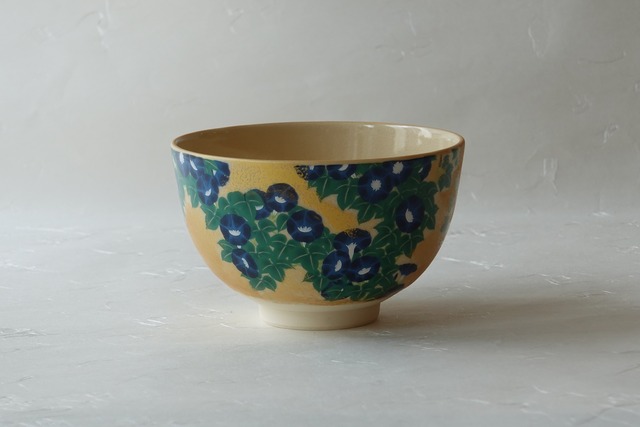
美濃焼 藤山 作 朝顔図写 抹茶碗
¥13,300($84.26)
美濃焼から藤山 作の抹茶碗のご紹介です。 白土を成形し外側には金地の上に 多くの朝顔が描かれています。 江戸琳派を代表する「朝顔図屏風」 鈴木其一筆の屏風絵を写した茶碗です。 鈴木其一は江戸後期、優美な画風を基盤に 斬新で独創的な作品を描いた江戸琳派を 代表する絵師です。 「朝顔図屏風」は米国メトロポリタン美術館 に現在、収蔵されています。 金地は豪華さがあり、青い朝顔の花と 青々とした緑の葉がさわやかな風合いを 感じられます。 内側はクリーム色の生地に細かい貫入が みられます。 胴は丸みを帯び口は広めで、持ちやすく 飲みやすい形状をしています。 生地は薄手で軽く扱いやすい茶碗です。 江戸時代後期の歴史と文化を感じられる 数少ない抹茶碗の一つといえます。 口径 12.3cm 高さ 7.5cm Mino Ware – Matcha Bowl with Morning Glory Design after a Screen Painting by Tozan Introducing a matcha bowl by Tozan from Mino ware. The bowl is formed from white clay, and its exterior is decorated with numerous morning glories painted over a gold background. This tea bowl is based on the famous Morning Glory Screen (Asagao-zu Byōbu), a screen painting by Suzuki Kiitsu, one of the leading artists of the Edo Rinpa school. Suzuki Kiitsu was a representative painter of the Edo Rinpa tradition during the late Edo period. Building upon an elegant painting style, he created works that were both innovative and highly original. Today, the Morning Glory Screen is housed in the Metropolitan Museum of Art in the United States. The gold ground lends the bowl a sense of luxury, while the blue morning glory blossoms and vibrant green leaves create a fresh and refreshing impression. The interior features a cream-colored glaze with a fine crackle pattern (kannyū) visible throughout. The body of the bowl is gently rounded with a relatively wide mouth, making it comfortable to hold and pleasant to drink from. The clay body is thin and lightweight, resulting in a tea bowl that is easy to handle. This is one of the few matcha bowls that allows the user to appreciate the history and culture of the late Edo period. Dimensions Diameter: 12.3 cm Height: 7.5 cm 美濃烧 藤山作 《牵牛花图》抹茶碗 为您介绍一件来自美浓烧、由藤山制作的抹茶碗。 此碗以白色陶土成形,外侧在金地之上绘有众多牵牛花图案。 其纹样取材自江户琳派代表作品《牵牛花图屏风》,为临摹日本画家铃木其一所绘屏风画而制作的茶碗。 铃木其一是江户时代后期最具代表性的江户琳派画家之一。他以优美典雅的画风为基础,创作出众多新颖且富有独创性的作品。 《牵牛花图屏风》现收藏于美国大都会艺术博物馆。 金地装饰华丽典雅,蓝色的牵牛花与翠绿鲜嫩的叶片相互映衬,展现出清新爽朗的风韵。 碗内为奶油色胎釉,可见细密的开片纹理。 器身圆润饱满,口沿较为开阔,造型便于持握,也利于品饮抹茶。 胎体轻薄,重量轻盈,使用起来十分顺手。 可以说,这是少数能够让人感受到江户时代后期历史与文化气息的抹茶碗之一。 口径:12.3厘米 高度:7.5厘米
-

赤津焼 松本鉄山 作 織部 平茶碗
¥9,920($62.84)
SOLD OUT
赤津焼から松本鉄山作の織部の抹茶碗の ご紹介です。 ベージュの土をろくろ挽きで成形し 織部の釉薬を掛けて作られています。 平茶碗は普通の抹茶碗よりも、口径が大きく 背が低いのが特徴です。 これは暑い時期に少しでも、涼しくお抹茶を 召し上がって頂くように口径が広いことで、 お抹茶が冷めやすくなっています。 亭主のおもてなしの気持ちを感じることが 出来ます。 土ものの抹茶碗は、一見すると重そうに 見えますが、ろくろ技術が高いため 薄く繊細さを感じる生地につくられており、 大変軽くなっています。 織部の釉薬は内外に二か所、掛けられ 外側には鉄絵で2種類の絵柄が 描かれています。 生地にはろくろ目が残され、随所に削ぎ跡が 確認ができます。 全体的に貫入も見られ、使い込んで頂くと 独特の味わいも出てきます。 非常に落ち着いた、茶の湯の原点に 立ち戻ったかのような、侘びを感じる 抹茶碗です。 幅 15.5cm 奥行 15cm 高さ 5.5cm Akazu Ware Oribe Flat Tea Bowl by Matsumoto Tetsuzan Introducing an Oribe-style matcha tea bowl by Matsumoto Tetsuzan from Akazu ware. It is formed on a potter’s wheel using beige clay and finished with Oribe glaze. A hira-chawan (flat tea bowl) is characterized by a wider diameter and lower height compared to a standard matcha bowl. This design allows matcha to cool more easily due to the wide opening, enabling guests to enjoy tea more comfortably during the hot season. One can truly feel the host’s spirit of hospitality in this thoughtful design. At first glance, earthenware matcha bowls may appear heavy, but thanks to the high level of wheel-throwing skill, the body is made thin and delicate, resulting in a remarkably lightweight bowl. The Oribe glaze has been applied in two areas on both the interior and exterior, and two different designs have been painted on the outside using iron pigment decoration. Wheel marks remain visible on the clay body, and trimming marks can also be seen throughout the piece. Fine crackles can be observed overall, and with continued use, the bowl will develop a unique character and depth of appearance. This is an exceptionally calm and refined matcha bowl that evokes the wabi aesthetic, as if returning to the very origins of the tea ceremony. Width: 15.5 cm Depth: 15 cm Height: 5.5 cm 赤津烧 松本铁山 作 织部 平茶碗 下面为您介绍一款来自赤津烧、由松本铁山制作的织部抹茶碗。 此茶碗以米黄色陶土经拉坯成型,再施以织部釉烧制而成。 平茶碗与一般抹茶碗相比,其特点是口径较大、器形较低。 这是为了在炎热季节中,能够让人稍微清凉地享用抹茶,因此较宽的口径使抹茶更容易降温。 从中也能够感受到主人待客款待之心。 陶土制的抹茶碗乍看之下似乎较为厚重,但由于拉坯技艺高超,胎体被制作得轻薄而细腻,因此整体非常轻巧。 织部釉在内外两处施挂,外侧还以铁绘描绘了两种不同的纹样。 胎体表面保留了明显的拉坯纹,并且在各处都可以看到削修的痕迹。 整体还能看到贯入纹,随着长期使用,会逐渐呈现出独特而富有韵味的风貌。 这是一款气质极为沉稳,仿佛回归茶之汤原点一般,能够令人感受到“侘寂”之美的抹茶碗。 宽度 15.5cm 纵深 15cm 高度 5.5cm
-

赤津焼 松本鉄山 作 黄瀬戸 平茶碗
¥9,920($62.84)
SOLD OUT
赤津焼から松本鉄山作の黄瀬戸の平茶碗の ご紹介です。 平茶碗は普通の抹茶碗に比べて、口径が広く 背が低くなっています。 これは暑い時期にお客様に少しでも涼しく、 お抹茶を召し上がって頂くためにお茶が 冷めやすくなるように、工夫が なされています。 土ものの抹茶碗ですが、ろくろの技術が 高いため、とても薄手に挽かれています。 見た目の土ものの重厚な印象とは異なり、 持ってみるととても繊細で作り手の思いや、 技術の高さを感じることが出来ます。 口作りは真円ではなく意図的に若干ゆがめて 作られています。 そのゆがみが面白く、この抹茶碗の特徴と なっています。 茶だまりの部分は平らではなく側面は比較的 角度のある状態となっています。 内側も外側も、ろくろで挽いた時の筋や ろくろ目が残されています。 全体に貫入が入っており、内外に緑の釉薬と 外側に縦に削ぎが三か所あります。 黄瀬戸はベーシックな焼き物なので、一つは 欲しいものの一つです。 幅 15.5cm 奥行 14.9cm 高さ 5.5cm Akazu Ware – Yellow Seto Hirachawan (Flat Tea Bowl) by Matsumoto Tetsuzan Introducing a Yellow Seto flat tea bowl by Matsumoto Tetsuzan from Akazu ware. Compared to an ordinary matcha bowl, a hirachawan (flat tea bowl) has a wider mouth and a lower profile. This design was devised for use during the hotter seasons so that guests may enjoy matcha in a cooler and more refreshing manner, as the tea cools more easily in the shallow bowl. Although it is an earthenware matcha bowl, the potter’s wheel technique is highly refined, allowing the bowl to be thrown very thinly. Contrary to the solid and weighty impression of earthenware, when held in the hand it feels remarkably delicate, conveying both the maker’s intentions and the high level of craftsmanship. The rim is intentionally formed slightly irregular rather than perfectly round. This subtle distortion creates an interesting effect and serves as one of the distinctive characteristics of the bowl. The chadamari, the area where the tea settles, is not flat, and the inner sides are shaped with relatively sharp angles. Both the interior and exterior retain the lines and wheel marks created during the throwing process on the potter’s wheel. The entire surface is covered with fine crackling (kannyu), with green glaze appearing on both the inside and outside, and three vertically carved facets on the exterior. Yellow Seto ware is considered one of the classic and fundamental styles of Japanese pottery, making this a piece one would certainly wish to own. Width: 15.5 cm Depth: 14.9 cm Height: 5.5 cm 赤津烧 松本铁山 作 黄濑户 平茶碗 下面为您介绍一款来自赤津烧、由松本铁山制作的黄濑户平茶碗。 平茶碗与普通抹茶碗相比,口径更宽, 器身高度较低。 这是为了在炎热季节中, 让客人能够感受到一丝清凉, 并使抹茶更容易降温而特别设计制作的。 虽然是陶土制的抹茶碗, 但由于拉坯技术高超, 整体被拉制得十分轻薄。 不同于外观看上去厚重沉稳的陶器印象, 实际拿在手中时却十分细腻, 能够感受到制作者的用心以及高超技艺。 碗口并非标准正圆, 而是刻意略微做出些许变形。 这种微妙的歪斜感十分有趣, 也成为这只抹茶碗的重要特色。 茶汤积聚的部分并非完全平坦, 内侧斜面带有较明显的角度变化。 无论内侧还是外侧, 都保留了拉坯时形成的纹路与辘轳纹。 整体带有贯入纹, 内外施有绿色釉药, 外侧另有三处纵向削纹装饰。 黄濑户属于经典基础的烧物之一, 也是非常值得拥有的一类器物。 宽 15.5cm 纵深 14.9cm 高 5.5cm
-

萩焼 林紅陽 作 小井戸 抹茶碗 窯変
¥9,900($62.72)
SOLD OUT
萩焼から林紅陽 作の小井戸茶碗の ご紹介です。 「井戸茶碗」とは、元々朝鮮茶碗の一種で 李朝の比較的早い時期に作られたとみられ、 室町時代以後しきりに渡来した朝鮮茶碗の 中でも第一等の位に置かれ、 「唐物茶碗の王者」とされています。 土は鉄分の多い粗めのもので、少し赤みを 帯びています。 粗めの土を早いろくろで挽くため、 ろくろ目が見られます。 釉掛けは茶碗の内外はもちろん、高台の 内側までずぶ掛けにする総釉掛けのため、 高台の土を直接見れる部分がほとんど ありません。 釉薬掛けの時に茶碗を摘みやすくする 利便性から生じたとされる高台は 「竹の節高台」となっています。 「竹の節高台」とは抹茶碗の高台が竹の節の ようになっているものをいいます。 高台の内側を削り、外側を削るうちに カンナが当たって、竹の節型になります。 井戸茶碗の約束の一つになっています。 削り出し高台で、高台内側をさらえるヘラが 斜めに入るので高台内の中央が渦を巻いた ように高まっています。 この抹茶碗は、大井戸茶碗に比べて小ぶりで 高台の低い「小井戸」と呼ばれる茶碗で、 主に薄茶で使われます。 赤みを帯びた生地に白い釉薬が掛かり、 窯の中で窯変し釉薬が複雑な変化をしている のが見られます。 小さな手にもすっぽりとおさまる、 扱いやすい、ちょうどいいサイズの 抹茶碗です。 使い込んで頂き「萩の七変化」も 楽しんで頂けます。 径 13.5cm 高さ 7.8cm 萩焼から林紅陽 作の小井戸茶碗の ご紹介です。 「井戸茶碗」とは、元々朝鮮茶碗の一種で 李朝の比較的早い時期に作られたとみられ、 室町時代以後しきりに渡来した朝鮮茶碗の 中でも第一等の位に置かれ、 「唐物茶碗の王者」とされています。 土は鉄分の多い粗めのもので、少し赤みを 帯びています。 粗めの土を早いろくろで挽くため、 ろくろ目が見られます。 釉掛けは茶碗の内外はもちろん、高台の 内側までずぶ掛けにする総釉掛けのため、 高台の土を直接見れる部分がほとんど ありません。 釉薬掛けの時に茶碗を摘みやすくする 利便性から生じたとされる高台は 「竹の節高台」となっています。 「竹の節高台」とは抹茶碗の高台が竹の節の ようになっているものをいいます。 高台の内側を削り、外側を削るうちに カンナが当たって、竹の節型になります。 井戸茶碗の約束の一つになっています。 削り出し高台で、高台内側をさらえるヘラが 斜めに入るので高台内の中央が渦を巻いた ように高まっています。 この抹茶碗は、大井戸茶碗に比べて小ぶりで 高台の低い「小井戸」と呼ばれる茶碗で、 主に薄茶で使われます。 赤みを帯びた生地に白い釉薬が掛かり、 窯の中で窯変し釉薬が複雑な変化をしている のが見られます。 小さな手にもすっぽりとおさまる、 扱いやすい、ちょうどいいサイズの 抹茶碗です。 使い込んで頂き「萩の七変化」も 楽しんで頂けます。 径 13.5cm 高さ 7.8cm Hagi Ware Matcha Bowl by Hayashi Koyo – Koido Style, Kiln Effects Introducing a Koido-style tea bowl by Hayashi Koyo from Hagi Ware. The “Ido chawan” originally refers to a type of Korean tea bowl believed to have been made during the relatively early period of the Yi Dynasty. Among the Korean tea bowls imported frequently after the Muromachi period, it was regarded as the highest class and has been called the “king of karamono tea bowls.” The clay is coarse and rich in iron, giving it a slightly reddish tone. Because the coarse clay is thrown quickly on the wheel, visible wheel marks remain on the surface. The glaze is applied over the entire bowl—not only the inside and outside, but even the inner area of the foot ring—resulting in a full glaze coating, with very little exposed clay visible on the foot. The foot ring, said to have originated as a practical feature to make the bowl easier to grip during glazing, is formed in the style known as “take-no-fushi kodai” (bamboo-node foot). This refers to a foot ring shaped like the node of a bamboo stalk. As the inner and outer portions of the foot are trimmed, the carving tool naturally creates this bamboo-joint form. It is considered one of the defining characteristics of Ido tea bowls. The foot is carved from the clay body, and because the trimming tool enters at an angle when shaping the inside of the foot, the center of the foot interior rises in a spiral-like form. Compared with larger Oido tea bowls, this bowl is smaller in size with a lower foot, and is therefore called a “Koido.” It is mainly used for preparing thin tea (usucha). White glaze has been applied over the reddish clay body, and natural kiln effects have created complex and beautiful variations in the glaze during firing. It is a perfectly sized matcha bowl that fits comfortably even in smaller hands and is easy to handle. With continued use, you can also enjoy the famous “Seven Transformations of Hagi,” the gradual change in appearance that Hagi ware develops over time. Diameter: 13.5 cm Height: 7.8 cm 萩烧 林红阳 作 小井户抹茶碗 窑变 为您介绍来自萩烧的林红阳所作小井户茶碗。 “井户茶碗”原本是朝鲜茶碗的一种,被认为制作于李朝时期较早阶段。自室町时代以后大量传入日本的朝鲜茶碗之中,被列为第一等品位,并被誉为“唐物茶碗之王者”。 其胎土为含铁量较高的粗质陶土,略带红色调。 由于以较粗的胎土在快速拉坯成型,因此可见明显的拉坯旋纹。 施釉时,不仅茶碗内外皆施釉,连高台内侧也采用整体浸釉的总釉方式,因此几乎看不到高台胎土直接裸露的部分。 高台被制作为“竹节高台”,据说这是为了施釉时便于夹持茶碗而形成的结构。 所谓“竹节高台”,是指抹茶碗的高台形似竹子的节部。 在削修高台内侧与外侧的过程中,刀具自然形成转折,使其呈现竹节般的轮廓。 这也是井户茶碗的重要特征之一。 此碗采用削出式高台,由于修整高台内部的工具斜向切入,因此高台内中央略微隆起,呈现如旋涡般的形态。 这只抹茶碗相较于大井户茶碗尺寸较小,高台较低,被称为“小井户”,主要用于薄茶。 略带红色的胎土上覆盖白色釉药,并在窑烧过程中产生窑变,可见釉面呈现复杂而丰富的变化。 尺寸恰到好处,即使手较小的人也能稳稳包覆握持,十分顺手好用。 经长期使用后,还可欣赏“萩之七变化”的独特魅力。 直径 13.5cm 高 7.8cm
-

萩焼 紅陽作 びわ釉 井戸 抹茶碗
¥16,500($104.53)
萩焼から林紅陽 作の井戸茶碗のご紹介です。 井戸茶碗は元々、朝鮮茶碗の一種で李朝の 比較的早い時期に作られたものと見られ、 室町時代以後に渡来した朝鮮茶碗の中でも 第一等の位に置かれ、唐物茶碗の王者と されています。 井戸茶碗の特徴として、土は鉄分の強い 荒目のもので赤褐色をしています。 この荒目の土を速いろくろで挽いているため 表面にあばら状のろくろ目が目立つことが 多くなっています。 高台は竹の節高台といわれ釉薬をかける時に 茶碗をつかみやすくする利便性として 生じたものと言われています。 これは削り出し高台で、高台内をさらえる ヘラが斜めに入るため高台内の中央が渦を 巻いたように高まるのが特徴です。 釉掛けは高台内側までずぶ掛けにする 総釉掛けのため高台の土を直接見れる部分が ほとんどありません。 井戸茶碗の約束の一つになっています。 全体がビワ色に仕上がっており、やわらかい 風合いとなっています。 所々に白釉が掛けられており釉薬の垂れや 流れ方などの変化が見所となっています。 表面の釉薬には艶があり、やさしい雰囲気が 漂っています。 全体に細かな貫入やピンホールなどが見られ 萩焼の特徴がよく出ています。 どっしりと重厚感があり高級感があります。 大井戸茶碗よりも少し小ぶりなので、 薄茶としても使えるサイズです。 こっくりとした萩焼らしい深い味わいが ありながら、明るい印象があります。 使い込んで「萩の七変化」を楽しみながら 永く使える逸品です。 口径 14cm 高さ 8.3cm Hagi Ware Matcha Tea Bowl, Ido Style, Biwa Glaze Made by Koyo (Hayashi Koyo) We are pleased to introduce this Ido-style tea bowl by Hayashi Koyo from Hagi ware. Ido tea bowls are originally a type of Korean tea bowl, believed to have been produced in the early period of the Yi Dynasty. Among the Korean tea bowls brought to Japan after the Muromachi period, they are regarded as the highest class and are often referred to as the “king of Karamono (Chinese/Korean-imported) tea bowls.” A characteristic of Ido tea bowls is the use of coarse clay rich in iron, giving it a reddish-brown color. Because this coarse clay is thrown on a fast-spinning wheel, pronounced rib-like wheel marks often appear on the surface. The foot (kodai) is known as a “bamboo-node foot,” said to have developed as a practical feature to make the bowl easier to hold during glazing. This is a carved foot, and due to the angled use of the trimming tool inside the foot, the center rises in a spiral-like form—one of its defining characteristics. The glazing is applied as an overall immersion (full glaze), covering even the inside of the foot, so very little of the bare clay is visible—this is one of the conventions of Ido tea bowls. The entire piece is finished in a loquat (biwa) color, giving it a soft and gentle texture. In places, white glaze is applied, and the drips and flow of the glaze create attractive variations to appreciate. The surface glaze has a natural sheen, imparting a calm and refined atmosphere. Fine crazing and pinholes can be seen throughout, clearly expressing the characteristic features of Hagi ware. It has a solid, weighty presence with a sense of luxury. Slightly smaller than a typical Ō-Ido tea bowl, it is also suitable for preparing usucha (thin tea). While possessing the rich, deep character typical of Hagi ware, it also conveys a bright impression. This is an उत्कृष्ट piece that can be enjoyed over time, developing character with use—embodying the “Seven Transformations of Hagi.” Dimensions: Rim Diameter 14 cm × Height 8.3 cm 萩烧 红阳作 枇杷釉 井户形抹茶碗 现为您介绍一款来自萩烧、由林红阳所作的井户茶碗。 井户茶碗原本属于朝鲜茶碗的一种,被认为是李朝较早时期烧制的器物。在室町时代以后传入日本的朝鲜茶碗中,被列为最高等级,被誉为“唐物茶碗之王”。 井户茶碗的特点在于其胎土为含铁量较高的粗颗粒土质,呈赤褐色。 由于使用这种粗土以较快的拉坯速度成形,器表常可见明显的肋状拉坯纹。 高台被称为“竹节高台”,据说是在施釉时为了便于抓持茶碗而形成的一种形态。 这种高台为削出高台,由于修整高台内部时刮刀斜向进入,因而高台内中央呈现出如旋涡般隆起的特征。 施釉采用连高台内侧一并浸釉的“通体施釉”方式,因此几乎看不到高台露胎的部分,这也是井户茶碗的一项典型特征。 整体呈枇杷色调,质感柔和温润。 局部施有白釉,釉药的流动与垂落变化成为一大观赏亮点。 表面釉层富有光泽,散发出温和雅致的气息。 整体可见细密的开片及针孔等现象,充分体现了萩烧的典型特征。 器形厚重稳实,富有高级感。 尺寸较大井户茶碗略小,因此也适用于点薄茶。 在保有萩烧特有醇厚韵味的同时,又带有明快的印象。 可在长期使用中欣赏“萩之七变化”的趣味,是一件可长久使用的佳品。 尺寸:口径 14cm 高度 8.3cm
-

萩焼 紅陽作 ねずみ釉 井戸 抹茶碗
¥16,500($104.53)
萩焼から林紅陽 作の井戸茶碗のご紹介です。 井戸茶碗は元々、朝鮮茶碗の一種で李朝の 比較的早い時期に作られたものと見られ、 室町時代以後に渡来した朝鮮茶碗の中でも 第一等の位に置かれ、唐物茶碗の王者と されています。 井戸茶碗の特徴として、土は鉄分の強い 荒目のもので赤褐色をしています。 この荒目の土を速いろくろで挽いているため 表面にあばら状のろくろ目が目立つことが 多くなっています。 高台は竹の節高台といわれ釉薬をかける時に 茶碗をつかみやすくする利便性として 生じたものと言われています。 これは削り出し高台で、高台内をさらえる ヘラが斜めに入るため高台内の中央が渦を 巻いたように高まるのが特徴です。 釉掛けは高台内側までずぶ掛けにする 総釉掛けのため高台の土を直接見れる部分が ほとんどありません。 井戸茶碗の約束の一つになっています。 全体はあっさりとした薄めの生地に 少しねずみ色がかった白釉が掛けられており 釉薬の垂れや流れ方などの変化が見所と なっています。 表面の釉薬はさらっと薄めに掛けられて おり艶があります。 全体に細かな貫入やピンホールなどが見られ 萩焼の特徴がよく出ています。 どっしりと重厚感があり高級感があります。 大井戸茶碗よりも少し小ぶりなので、 薄茶としても使えるサイズです。 白い釉薬の部分が多く、明るい印象です。 使い込んで「萩の七変化」を楽しみながら 永く使える逸品です。 口径 13.8㎝ 高さ 8.2㎝ Hagi Ware, made by Koyo (Kōyō) Nezumi-glazed Ido Matcha Tea Bowl We are pleased to introduce an Ido tea bowl by Hayashi Kōyō from Hagi ware. Ido tea bowls originally belong to a type of Korean tea bowls, believed to have been made relatively early in the Joseon Dynasty. Among the Korean tea bowls that were brought to Japan after the Muromachi period, they have been placed in the highest rank and are regarded as the “king” of karamono (Chinese-imported) tea bowls. One of the defining characteristics of Ido tea bowls is the clay: it is coarse and rich in iron, giving it a reddish-brown color. Because this coarse clay is thrown on a fast-spinning wheel, rib-like wheel marks often stand out on the surface. The foot is known as a “take-no-fushi kodai” (bamboo-node foot), said to have originated from the practical need to easily hold the bowl when applying glaze. This is a carved foot, and since the trimming tool is inserted at an angle when hollowing out the inside of the foot, the center of the foot rises in a spiral-like form. The glazing is applied as a full coating (zubu-gake), covering even the inside of the foot, so there are very few areas where the clay of the foot can be seen directly. This is considered one of the conventions of Ido tea bowls. The overall body is relatively light and refined, covered with a slightly grayish white glaze. The variations in how the glaze drips and flows are among its highlights. The surface glaze is applied thinly and smoothly, giving it a gentle luster. Fine crackles (kannyū) and pinholes can be seen throughout, clearly expressing the distinctive character of Hagi ware. It has a solid, weighty presence and an air of elegance. Slightly smaller than a large Ido tea bowl, it is also suitable for use in preparing thin tea (usucha). With a greater proportion of white glaze, it gives a bright impression. This is a superb piece that can be enjoyed over many years, appreciating the “Seven Transformations of Hagi” as it develops with use. Diameter: 13.8 cm Height: 8.2 cm 萩烧 红阳作 鼠灰釉 井户 抹茶碗 下面为您介绍一款由林红阳创作的萩烧井户茶碗。 井户茶碗原本是朝鲜茶碗的一种,被认为制作于李朝较早时期, 在室町时代以后传入日本的朝鲜茶碗中,被列为最高等级, 并被誉为“唐物茶碗之王”。 井户茶碗的特点之一是所用胎土含铁量高、颗粒粗糙,呈红褐色。 由于这种粗颗粒的胎土是以较快速度拉坯成型, 因此器表常可见明显的肋状旋纹(拉坯纹)。 高台被称为“竹节高台”,据说是在施釉时为了便于手持茶碗而形成的结构。 此高台为削出式高台,由于修整高台内侧时工具斜向进入, 因此高台内中央呈现出如旋涡般隆起的特征。 施釉方式为整体浸釉(总釉挂),连高台内侧也一并施釉, 因此几乎看不到直接裸露的胎土部分。 这也是井户茶碗的一个典型特征。 整体胎质较为轻薄素雅,施以略带鼠灰色的白釉, 釉药的流淌与变化成为主要观赏之处。 表面的釉层较为轻薄、清爽,并带有光泽。 整体可见细密的开片与针孔等现象, 充分展现了萩烧的典型特征。 器形稳重,富有厚重感,同时具备高级质感。 相比大井户茶碗尺寸略小, 也适合作为薄茶使用。 白釉部分较多,整体呈现明亮的印象。 可在长期使用中享受“萩之七变化”的趣味, 是一件能够长久使用的精品之作。 口径:13.8 cm 高度:8.2 cm
-

萩焼 紅陽 作 かいらぎ 井戸 抹茶碗
¥19,800($125.44)
SOLD OUT
萩焼から林紅陽 作の井戸茶碗のご紹介です。 井戸茶碗は元々、朝鮮茶碗の一種で李朝の 比較的早い時期に作られたものと見られ、 室町時代以後に渡来した朝鮮茶碗の中でも 第一等の位に置かれ、唐物茶碗の王者と されています。 井戸茶碗の特徴として、土は鉄分の強い 荒目のもので赤褐色をしています。 この荒目の土を速いろくろで挽いているため 表面にあばら状のろくろ目が目立つことが 多くなっています。 高台は竹の節高台といわれ釉薬をかける時に 茶碗をつかみやすくする利便性として 生じたものと言われています。 これは削り出し高台で、高台内をさらえる ヘラが斜めに入るため高台内の中央が渦を 巻いたように高まるのが特徴です。 釉掛けは高台内側までずぶ掛けにする 総釉掛けのため高台の土を直接見れる部分が ほとんどありません。 井戸茶碗の約束の一つになっています。 全体が白っぽく仕上がっており、やわらかい 風合いとなっています。 全体が、「かいらぎ」と呼ばれる、 釉薬が縮れた風合いに作られており、 その亀裂は不規則で形、大きさ、長さは 様々で力強い雰囲気が出ています。 貫入やピンホールも数多くあり、萩焼特有の 荒々しさが感じられます。 所々に白釉が掛けられており釉薬の垂れや 流れ方などの変化が見所となっています。 表面の釉薬には艶があり、やさしい雰囲気が 漂っています。 大ぶりでどっしりと重厚感があり 存在感にあふれています。 こっくりとした萩焼らしい深い味わいが ありながら、明るい印象があります。 使い込んで「萩の七変化」を楽しみながら 永く使える逸品です。 口径 14cm 高さ 8.5cm Hagi Ware, by Kōyō – Kairagi Ido Matcha Tea Bowl We are pleased to introduce an Ido tea bowl by Kōyō of Hagi ware. The Ido tea bowl originally belongs to a type of Korean tea bowl, believed to have been produced in the relatively early period of the Yi (Joseon) Dynasty. Among the Korean tea bowls brought to Japan after the Muromachi period, it has been placed in the highest rank and is regarded as the “king” of imported (karamono) tea bowls. A characteristic of Ido tea bowls is their coarse clay with a high iron content, giving it a reddish-brown color. Because this coarse clay is thrown on a fast-spinning wheel, prominent rib-like wheel marks often appear on the surface. The foot (kodai) is known as a “bamboo-joint foot,” said to have originated from the practical need to easily hold the bowl when applying glaze. It is a carved foot, and because the tool used to hollow out the inside is inserted at an angle, the center of the foot rises in a spiral-like form. The glazing is a full immersion (zubu-gake), covering even the inside of the foot, so there are very few areas where the bare clay of the foot can be directly seen. This is considered one of the defining conventions of Ido tea bowls. The overall finish is whitish, creating a soft and gentle texture. The entire surface features what is called “kairagi,” a crackled glaze effect where the glaze shrinks and wrinkles. The cracks are irregular, varying in shape, size, and length, giving the piece a powerful presence. There are also numerous crazing lines and pinholes, conveying the rugged character unique to Hagi ware. In places, white glaze has been applied, and the variations in the way the glaze drips and flows offer visual highlights. The surface glaze has a gentle luster, exuding a calm and refined atmosphere. The bowl is generously sized, with a solid weight and a strong sense of presence. While possessing the rich, deep character typical of Hagi ware, it also leaves a bright impression. This is a superb piece that can be enjoyed over many years, especially as you experience the “Seven Transformations of Hagi” through continued use. Diameter: 14 cm Height: 8.5 cm 萩烧 红阳 作 梅花皮(Kairagi) 井户 抹茶碗 现为您介绍由萩烧作家林红阳所作的井户茶碗。 井户茶碗原本是朝鲜茶碗的一种,被认为是李朝较早时期制作的器物。在室町时代以后传入日本的朝鲜茶碗之中,被置于最高等级,被称为唐物茶碗之王。 井户茶碗的特征在于,所用陶土含铁量高且颗粒粗糙,呈赤褐色。由于使用这种粗颗粒陶土以高速拉坯成型,器表常可见明显的肋状拉坯纹。 高台被称为“竹节高台”,据说是在施釉时为了便于抓握茶碗而自然形成的结构。这种高台为削出式高台,由于修整高台内部时刮刀斜向进入,因此高台内中央呈现出如漩涡般隆起的特征。 施釉方式为连高台内侧也整体浸釉的“总釉挂”,因此几乎看不到高台处直接露出的胎土,这也是井户茶碗的一个基本特征。 整体呈现出偏白的色调,质感柔和温润。 全体施以被称为“梅花皮(Kairagi)”的釉面效果,呈现出釉药收缩形成的皱裂质感,其裂纹不规则,形状、大小、长度各异,营造出强烈而富有力量的氛围。 同时可见大量的开片与针孔,展现出萩烧特有的粗犷之美。 局部施有白釉,釉药的垂流与流动变化亦为一大观赏重点。 表面釉层富有光泽,散发出柔和雅致的气息。 器形较大,稳重厚实,具有强烈的存在感。 既具有萩烧特有的醇厚深邃韵味,又带有明快的整体印象。 可在长期使用中欣赏“萩之七变化”的乐趣,是一件可长久使用的上乘之作。 口径:14cm 高度:8.5cm
-

萩焼 林紅陽 作 白釉 井戸 抹茶碗
¥16,500($104.53)
萩焼から林紅陽 作の井戸茶碗のご紹介です。 井戸茶碗は元々、朝鮮茶碗の一種で李朝の 比較的早い時期に作られたものと見られ、 室町時代以後に渡来した朝鮮茶碗の中でも 第一等の位に置かれ、唐物茶碗の王者と されています。 井戸茶碗の特徴として、土は鉄分の強い 荒目のもので赤褐色をしています。 この荒目の土を速いろくろで挽いているため 表面にあばら状のろくろ目が目立つことが 多くなっています。 高台は竹の節高台といわれ釉薬をかける時に 茶碗をつかみやすくする利便性として 生じたものと言われています。 これは削り出し高台で、高台内をさらえる ヘラが斜めに入るため高台内の中央が渦を 巻いたように高まるのが特徴です。 釉掛けは高台内側までずぶ掛けにする 総釉掛けのため高台の土を直接見れる部分が ほとんどありません。 井戸茶碗の約束の一つになっています。 全体に艶のある白い釉薬が掛けられており やわらかい雰囲気があります。 表面の釉薬はぼってりと厚めに掛けられ、 濃淡があり下地の土の風合いが感じられ、 その変化が見所となっています。 全体に細かな貫入やピンホールなどが見られ 萩焼の特徴がよく出ています。 どっしりと重厚感があり高級感があります。 大井戸茶碗よりも少し小ぶりなので、 薄茶としても使えるサイズです。 白い釉薬の部分が多く、明るい印象です。 使い込んで「萩の七変化」を楽しみながら 永く使える逸品です。 口径 13.5cm 高さ 8cm Hagi Ware, by Koyo Hayashi, White Glaze, Ido-style Matcha Tea Bowl We are pleased to introduce an Ido-style tea bowl by Koyo Hayashi from Hagi ware. Ido tea bowls were originally a type of Korean tea bowl, believed to have been produced in the relatively early period of the Yi (Joseon) Dynasty. Among the Korean tea bowls brought to Japan after the Muromachi period, they are ranked as the highest class and are regarded as the “king” of imported (Karamono) tea bowls. A defining feature of Ido tea bowls is their coarse clay, rich in iron content, which gives it a reddish-brown color. Because this rough clay is thrown quickly on the potter’s wheel, prominent rib-like wheel marks often appear on the surface. The foot (kodai) is known as a “take-no-fushi kodai” (bamboo-node foot), said to have originated as a practical feature to make the bowl easier to hold when applying glaze. This is a carved foot, and because the trimming tool enters at an angle when hollowing the interior of the foot, the center inside the foot rises in a spiral-like form. The glazing technique involves fully immersing the bowl, coating even the inside of the foot (overall glazing), leaving almost no exposed clay visible on the foot—one of the defining conventions of Ido tea bowls. A glossy white glaze covers the entire piece, giving it a soft and gentle atmosphere. The glaze on the surface is applied thickly, with variations in tone that allow the character of the underlying clay to be felt—these subtle changes are one of its highlights. Fine crackles (kannyu) and pinholes can be seen throughout, clearly expressing the distinctive qualities of Hagi ware. It has a solid, weighty presence and conveys a sense of luxury. Slightly smaller than a large Ido tea bowl (O-ido), it is also suitable for use with usucha (thin tea). With a large proportion of white glaze, it presents a bright overall impression. This is an उत्कृष्ट piece that can be enjoyed over many years, especially as you appreciate the “Seven Transformations of Hagi” that develop with use. Mouth Diameter: 13.5 cm Height: 8 cm 萩烧 林红阳 作 白釉 井户 抹茶碗 为您介绍一款来自萩烧、由林红阳制作的井户茶碗。 井户茶碗原本是朝鲜茶碗的一种,被认为制作于李朝较早时期,在室町时代以后传入日本的朝鲜茶碗之中,被列为最高等级,被誉为唐物茶碗之王。 井户茶碗的特点之一是其胎土含铁量高、颗粒较粗,呈红褐色。 由于采用较快的拉坯速度成形,器表常可见明显的肋状拉坯纹。 高台被称为“竹节高台”,据说是在施釉时为了便于手持茶碗而自然形成的结构。 该高台为削出式高台,在修整高台内部时,因工具斜向进入,内部中央会呈现出类似旋涡般微微隆起的形态,这是其一大特征。 施釉采用整器浸釉的“总釉挂”方式,釉层覆盖至高台内侧,因此几乎看不到裸露的胎土部分,这也是井户茶碗的一个约定特征。 整体施以富有光泽的白釉,呈现出柔和温润的氛围。 器表釉层厚重饱满,富有浓淡变化,可感受到胎土的质感,这种变化亦为其观赏亮点之一。 整体可见细密的开片(贯入)及针孔等现象,充分体现了萩烧的典型特征。 造型沉稳厚重,具有强烈的存在感与高级感。 尺寸较大井户茶碗略小,因此亦适合作为薄茶用碗使用。 白釉部分较多,整体给人以明亮的印象。 在长期使用过程中,可一边欣赏“萩之七变化”的风雅之趣,一边长久使用的佳品。 口径:13.5cm 高度:8cm
-

清水焼 山岡善高 作 仁清 四君子 抹茶碗
¥30,400($192.59)
清水焼から山岡善高 作の抹茶碗の ご紹介です。 白土をろくろ成形し四君子の絵柄が手描き されて作られています。 四君子とは、徳・学識・礼儀など高潔な 人格を持つ理想的な人物(君子)に 例えられる、蘭・竹・菊・梅の4種の植物を 指します。 蘭は深山で人知れず香りを放つ、清楚・高貴 、奥ゆかしさと気品を表しています。 竹は一年中青々として、真っすぐ伸びて 折れない、不屈の忍耐力と強靭な精神を 表しています。 菊は晩秋の寒さにも負けず鮮やかに咲き誇る 気概・気高い趣と資質を表しています。 梅は寒さの中で他に先がけて花開く強靭さ・ 心意気を表しています。 また、それぞれの花が春夏秋冬を表現して おり、時期を問わず一年中使うことが 出来ます。 金色が多用され豪華で美しく、繊細に手描き されており、高度な技術と多くの手間が 注がれています。 生地は薄手で軽くて扱いやすく、仁清風の 色絵茶碗に仕上がっています。 美しい絵柄だけではなく、深い意味合いを 持つ抹茶碗といえます。 口径 12cm 高さ 8cm Kiyomizu Ware Matcha Bowl by Yamaoka Zenkou, Ninsei Style, “Four Gentlemen” Design We are pleased to introduce this matcha bowl by Yamaoka Zenkou from Kiyomizu ware. Formed on a potter’s wheel using white clay, the bowl is hand-painted with the motif of the “Four Gentlemen.” The “Four Gentlemen” refers to four plants—orchid, bamboo, chrysanthemum, and plum—each symbolizing the ideal qualities of a virtuous person (a “gentleman”) such as integrity, learning, and refinement. The orchid, which emits its fragrance quietly in deep mountains, represents purity, nobility, modesty, and elegance. Bamboo, remaining green throughout the year and growing straight without breaking, symbolizes unwavering perseverance and a resilient spirit. The chrysanthemum, which blooms vividly even in the cold of late autumn, expresses dignity, lofty character, and refined qualities. The plum blossoms ahead of other flowers in the cold, representing strength and a spirited, determined nature. Each of these flowers also represents one of the four seasons—spring, summer, autumn, and winter—allowing the bowl to be used throughout the year regardless of season. Gold is used generously, creating a luxurious and beautiful appearance. The intricate hand-painted decoration reflects a high level of skill and considerable effort. The body is thin and lightweight, making it easy to handle, and is finished as a Ninsei-style overglaze enamel tea bowl. This matcha bowl is not only visually beautiful but also rich in symbolic meaning. Dimensions: Diameter: 12 cm Height: 8 cm 清水烧 山冈善高 作 仁清风 四君子 抹茶碗 为您介绍一款来自清水烧、由山冈善高制作的抹茶碗。 以白色陶土经拉坯成型,并手工绘制四君子图案而成。 所谓“四君子”,是指兰、竹、菊、梅四种植物, 用以比喻具备德行、学识与礼仪等高洁人格的理想之人(君子)。 兰花生于深山幽谷,默默散发芬芳,象征清秀高雅、 含蓄内敛与高贵气质。 竹子四季常青,挺直生长而不折,象征不屈的忍耐力 与坚韧的精神。 菊花在深秋寒意中依然绚丽盛开,象征气概、 高雅的情趣与资质。 梅花于寒冬中率先绽放,象征坚强的生命力 与高尚的志气。 此外,这四种花卉分别象征春夏秋冬, 因此无论季节,一年四季皆可使用。 作品大量运用金彩,华丽而优美, 图案以细腻的手绘呈现,凝聚了高超的技艺 与繁复的工艺。 胎体薄而轻盈,手感良好, 整体呈现为仁清风格的彩绘茶碗。 不仅图案精美,同时蕴含深厚寓意, 可谓一件富有内涵的抹茶碗。 口径 12cm 高度 8cm
-

萩焼 原節夫 作 白釉 井戸 抹茶碗
¥16,500($104.53)
萩焼から原節夫 作の井戸茶碗の ご紹介です。 井戸茶碗は元々、朝鮮茶碗の一種で李朝の 比較的早い時期に作られたものと見られ、 室町時代以後に渡来した朝鮮茶碗の中でも 第一等の位に置かれ、唐物茶碗の王者と されています。 井戸茶碗の特徴として、土は鉄分の強い 荒目のもので赤褐色をしています。 この荒目の土を速いろくろで挽いているため 表面にあばら状のろくろ目が目立つことが 多くなっています。 高台は竹の節高台といわれ釉薬をかける時に 茶碗をつかみやすくする利便性として 生じたものと言われています。 これは削り出し高台で、高台内をさらえる ヘラが斜めに入るため高台内の中央が渦を 巻いたように高まるのが特徴です。 釉掛けは高台内側までずぶ掛けにする 総釉掛けのため高台の土を直接見れる部分が ほとんどありません。 井戸茶碗の約束の一つになっています。 全体に白釉が厚めに掛けて作られており、 ぽってりとした風合いがあります。 艶やかで土の様子が見えるような透明感の ある雰囲気があります。 貫入やピンホールも数多くあり、萩焼特有の 力強さが感じられます。 高台は萩焼に見られる切高台となっており 荒々しさと共に見所となっています。 白釉はお茶の色がよく映えて、やさしい 雰囲気があります。 少し大ぶりでどっしりと重厚感があり 存在感にあふれています。 変化のある萩焼らしい深い味わいが ありながら、明るい印象があります。 使い込んで「萩の七変化」を楽しみながら 永く使える逸品です。 口径 14cm 高さ 8cm Hagi Ware – Matcha Tea Bowl, Ido Style, White Glaze Made by Setsuo Hara This is an introduction to an Ido-style tea bowl made by Setsuo Hara of Hagi ware. Originally, Ido tea bowls were a type of Korean tea bowl believed to have been produced during the relatively early period of the Yi (Joseon) Dynasty. Among the Korean tea bowls that were brought to Japan after the Muromachi period, they were placed in the highest rank and are regarded as the king of Karamono (Chinese and Korean imported) tea bowls. A characteristic feature of Ido tea bowls is the clay, which is coarse and rich in iron, giving it a reddish-brown color. Because this coarse clay is thrown on the wheel at high speed, rib-like wheel marks often stand out on the surface. The foot is known as a “bamboo-joint foot” (take-no-fushi kōdai). It is said to have developed as a practical feature that made it easier to hold the bowl while applying the glaze. This is a carved foot (kezuridashi kōdai), and because the spatula used to smooth the inside of the foot enters at an angle, the center of the inside of the foot rises in a spiral-like form, which is one of its distinctive features. The glazing method is a full immersion glaze that covers even the inside of the foot, so there are very few areas where the clay of the foot can be seen directly. This is one of the defining conventions of Ido tea bowls. A relatively thick layer of white glaze is applied over the entire bowl, giving it a soft, rounded texture. It has a glossy finish and a sense of transparency that allows the character of the clay to be subtly visible. There are also many crackles and pinholes, conveying the powerful character unique to Hagi ware. The foot is a kiri-kōdai style often seen in Hagi ware, creating another point of interest with its rugged appearance. The white glaze beautifully enhances the color of matcha, giving the bowl a gentle and refined atmosphere. It is slightly large and has a solid, weighty presence, creating a strong sense of dignity. While possessing the deep and varied character typical of Hagi ware, it also conveys a bright impression. This is an excellent piece that can be enjoyed for many years while appreciating the “Seven Transformations of Hagi” that appear through continued use. Diameter: 14 cm Height: 8 cm 萩烧 原节夫 作 白釉 井户 抹茶碗 下面为您介绍这件由原节夫制作的萩烧井户茶碗。 井户茶碗原本是朝鲜茶碗的一种,被认为是朝鲜李朝时期较早阶段制作的器物。在室町时代以后传入日本的众多朝鲜茶碗之中,它被置于第一等的地位,被誉为唐物茶碗之王。 井户茶碗的特点之一是所使用的陶土铁分较多,质地粗糙,呈赤褐色。由于这种粗颗粒的陶土是在较快的拉坯速度下成形,因此器物表面往往会明显地呈现出肋状的旋坯纹。 其高台被称为“竹节高台”,据说是在施釉时为了便于抓持茶碗而形成的一种形态。 这是一种削出式高台,由于在清理高台内部时,刮刀斜向进入,因此高台内侧中央会形成如旋涡般微微隆起的特征。 施釉方式为总釉挂施,即釉料一直施到高台内侧的“满挂釉”,因此几乎看不到直接裸露的高台胎土部分。 这也是井户茶碗的一项传统特征。 整件器物通体施以较厚的白釉,呈现出圆润丰厚的质感。 釉面润泽,并带有能够隐约看见胎土肌理的透明感气氛。 器表还可见许多开片与针孔,体现出萩烧特有的力量感。 高台为萩烧常见的“切高台”,粗犷之中亦成为观赏的看点之一。 白釉能够很好地映衬出抹茶的色泽,带来柔和温雅的氛围。 整体尺寸略为宽大,造型稳重厚实,极具存在感。 既具有富于变化、极具萩烧风格的深厚韵味,同时又给人明朗的印象。 在长期使用过程中,可以一边欣赏“萩之七变化”的风雅,一边长久使用,是一件难得的佳品。 口径 14厘米 高度 8厘米
-
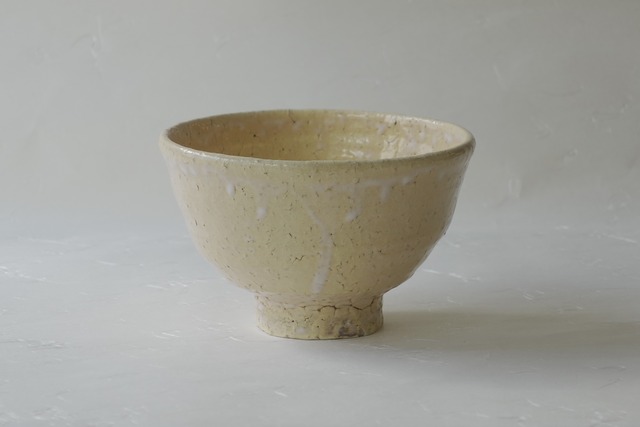
萩焼 小松結心 作 びわ釉 かいらぎ 井戸茶碗
¥18,000($114.03)
萩焼から小松結心 作の井戸茶碗の ご紹介です。 井戸茶碗は元々、朝鮮茶碗の一種で李朝の 比較的早い時期に作られたものと見られ、 室町時代以後に渡来した朝鮮茶碗の中でも 第一等の位に置かれ、唐物茶碗の王者と されています。 井戸茶碗の特徴として、土は鉄分の強い 荒目のもので赤褐色をしています。 この荒目の土を速いろくろで挽いているため 表面にあばら状のろくろ目が目立つことが 多くなっています。 高台は竹の節高台といわれ釉薬をかける時に 茶碗をつかみやすくする利便性として 生じたものと言われています。 これは削り出し高台で、高台内をさらえる ヘラが斜めに入るため高台内の中央が渦を 巻いたように高まるのが特徴です。 釉掛けは高台内側までずぶ掛けにする 総釉掛けのため高台の土を直接見れる部分が ほとんどありません。 井戸茶碗の約束の一つになっています。 全体がビワ色に仕上がっており、やわらかい 風合いとなっています。 全体が、「かいらぎ」と呼ばれる、 釉薬が縮れた風合いに作られており、 その亀裂は不規則で形、大きさ、長さは 様々で力強い雰囲気が出ています。 貫入やピンホールも数多くあり、萩焼特有の 荒々しさが感じられます。 所々に白釉が掛けられており釉薬の垂れや 流れ方などの変化が見所となっています。 表面の釉薬には艶があり、やさしい雰囲気が 漂っています。 大ぶりでどっしりと重厚感があり 存在感にあふれています。 こっくりとした萩焼らしい深い味わいが ありながら、明るい印象があります。 使い込んで「萩の七変化」を楽しみながら 永く使える逸品です。 口径 14.3cm 高さ 9cm Hagi Ware – Ido Tea Bowl by Komatsu Yushin Biwa Glaze, Kairagi Texture We are pleased to introduce this Ido tea bowl by Komatsu Yushin from Hagi ware. The Ido tea bowl originally belongs to a type of Korean tea bowl and is believed to have been made during the relatively early period of the Yi (Joseon) Dynasty. Among the Korean tea bowls that were brought to Japan after the Muromachi period, it has been placed in the highest rank and is regarded as the king of Karamono (Chinese-style) tea bowls. A characteristic of the Ido tea bowl is its coarse clay, rich in iron content, which has a reddish-brown color. Because this coarse clay is thrown on a fast-spinning wheel, rib-like wheel marks often stand out prominently on the surface. The foot is known as a “bamboo-joint foot” (take-no-fushi kodai), said to have originated from the practical need to grip the bowl easily when applying the glaze. This example features a carved foot; since the trimming tool enters at an angle when hollowing out the inside of the foot, the center within the foot rises in a spiral-like form—one of its distinctive traits. The glazing is applied in a full coating, including the inside of the foot (so-called “zubugake” overall glazing), leaving very little of the bare clay of the foot visible. This is considered one of the established conventions of an Ido tea bowl. The entire piece is finished in a loquat (biwa) tone, giving it a soft and gentle appearance. The surface is covered throughout with what is called “kairagi,” a texture created by the shrinkage of the glaze. The cracks are irregular, varying in shape, size, and length, producing a powerful and dynamic impression. There are numerous crazing lines and pinholes, conveying the rustic character distinctive to Hagi ware. In places, white glaze has been applied, and the drips and flow of the glaze create points of visual interest. The surface glaze has a subtle sheen, exuding a calm and refined atmosphere. The bowl is generously sized, solid, and weighty, with an impressive presence. While it possesses the rich, mellow depth characteristic of Hagi ware, it also gives a bright overall impression. This is a superb piece that can be enjoyed for many years, especially as you appreciate the “Seven Transformations of Hagi” that develop beautifully with use. Diameter: 14.3 cm Height: 9 cm 萩烧 小松结心 作 枇杷釉 梅花皮(かいらぎ) 井户茶碗 现为您介绍来自萩烧、小松结心所作的井户茶碗。 井户茶碗原本是朝鲜茶碗的一种,被认为是朝鲜李朝时期较早阶段制作的器物。在室町时代以后传入日本的朝鲜茶碗之中,被置于第一等级的地位,被誉为唐物茶碗之王。 井户茶碗的特点之一是胎土含铁量高,质地粗犷,呈红褐色。由于以较快的拉坯速度在陶轮上成形,因此器表常可见肋骨状明显的旋轮纹。 高台被称为“竹节高台”,据说是在施釉时为了便于手持茶碗而形成的结构。这种高台为削出式高台,由于修整高台内部的刀具以斜向切入,因此高台内中央呈现出仿佛漩涡般隆起的特征。 施釉方式为“总釉挂”,连高台内侧也完全浸釉覆盖,因此几乎看不到高台胎土直接裸露的部分。这也是井户茶碗的一个约定特征。 整器呈现枇杷色调,质感柔和温润。整体施以被称为“梅花皮(かいらぎ)”的釉面效果,釉药收缩形成的裂纹不规则分布,其形状、大小与长度各异,营造出强烈而有力的气息。 同时可见大量开片与针孔,展现出萩烧特有的粗犷之美。局部点施白釉,釉药的垂流与流动变化亦为观赏重点。 表面釉层富有光泽,散发出柔和温雅的氛围。器形硕大厚重,稳重端庄,充满存在感。 在拥有萩烧特有醇厚深邃韵味的同时,又带有明亮的印象。可在长期使用中欣赏“萩之七变化”的妙趣,是一件可长久珍用的佳品。 口径:14.3cm 高度:9cm
-

萩焼 小川浩延 作 白萩 抹茶碗 十文字高台
¥14,000($88.69)
SOLD OUT
萩焼から手づくり抹茶碗のご紹介です。 茶色の土をろくろ成形し、白い釉薬を掛けて 作られています。 胴にはろくろ目が残り、所々に下地の土が 見えている部分があって 特徴となっています。 切立型で口が広く少し羽反口になっている ので、口当たりが良く飲みやすく なっています。 高台は十文字に切り込んだ「十文字高台」で 切り込みが大きく、残った部分が 独立しているように見えます。 どっしりとして存在感のある力強い 抹茶碗です。 何年も使い込んで「萩の七変化」を 楽しんで頂けます。 口径 11.5cm 高さ 8cm Hagi Ware Tea Bowl (Matcha Chawan) White Hagi Glaze Created by Hironobu Ogawa Cross-Shaped Foot (Jūmonji Kōdai) We are pleased to introduce this handcrafted matcha tea bowl from Hagi ware. It is formed on the potter’s wheel using brown clay and finished with a white glaze. The wheel marks remain visible on the body, and in places the underlying clay can be seen beneath the glaze, which serves as a distinctive characteristic of the piece. The bowl features a straight-sided form with a wide mouth that gently flares outward, creating a comfortable feel against the lips and making it easy to drink from. The foot is a “Jūmonji Kōdai” (cross-shaped foot), carved in a cross pattern. The cuts are deep and bold, giving the remaining sections an appearance of standing independently. This is a solid and powerful matcha bowl with a strong presence. With years of use, you can enjoy the “Seven Transformations of Hagi,” as the glaze gradually changes and develops character over time. Diameter: 11.5 cm Height: 8 cm 萩烧 小川浩延 作 白萩 抹茶碗 十文字高台 现为您介绍一款来自萩烧的手工抹茶碗。 以茶色陶土经拉坯成形,施以白色釉药烧制而成。 碗身保留着拉坯纹理,局部可见露出的胎土,形成其独特的特色。 器型为切立型,碗口较为开阔,并略呈羽反口造型, 因此口感舒适,饮用顺口。 高台为切刻成十字形的“十文字高台”, 切口较大,留下的部分仿佛相互独立, 呈现出鲜明的造型特征。 这是一件厚重稳实、极具存在感与力量感的抹茶碗。 可经多年使用,尽情欣赏“萩之七变”的变化之美。 口径 11.5cm 高度 8cm
-

清水焼 青紫釉流彩 紫雲 手づくり 抹茶碗
¥7,700($48.78)
SOLD OUT
清水焼から手づくり抹茶碗のご紹介です。 薄茶色の土をろくろ成形し、青紫色の釉薬を 掛けて作られています。 青と紫が入り混じった釉薬の流れが見所に なっており、窯変して複雑な風合いを 呈しています。 白のふんわりした風合いは雲を イメージしています。 不規則な釉薬の流れは、さわやかで 美しさがあります。 表面は艶深く、清涼感のある風合いと なっており、抹茶の色が映えます。 丸みのある形で、胴にくびれがあり 手にしっくりときます。 生地は薄手で軽いので扱いやすく 口径が大きめなので、飲みやすく なっています。 シンプルで釉薬の変化を楽しめる、 飽きの来ない永く使える抹茶碗といえます。 口径 12cm 高さ 7cm Kiyomizu Ware – Blue-Purple Flowing Glaze “Shiun” (Purple Clouds) – Handcrafted Matcha Bowl We are pleased to introduce this handcrafted matcha bowl from Kiyomizu Ware. It is wheel-thrown from light brown clay and finished with a blue-purple glaze. The highlight of this piece is the flowing glaze in which blue and purple intermingle, creating complex kiln effects and a richly textured appearance. The soft white nuances evoke the image of clouds. The irregular flow of the glaze gives the bowl a refreshing and beautiful character. The surface has a deep luster and a cool, refreshing quality that enhances the vibrant green color of matcha. It has a rounded form with a gentle waist at the body, fitting comfortably in the hand. The clay body is thin and lightweight, making it easy to handle. With a slightly wider rim, it is also easy to drink from. Simple in design yet allowing one to fully appreciate the natural variations of the glaze, this is a matcha bowl that never grows tiresome and can be enjoyed for many years. Diameter: 12 cm Height: 7 cm 清水烧 青紫釉流彩 紫云 手工制作 抹茶碗 为您介绍一款来自清水烧的手工抹茶碗。 采用浅茶色的陶土以拉坯成形,施以青紫色釉药烧制而成。 青与紫交织流动的釉色为其主要观赏点,经过窑变呈现出复杂而丰富的质感。 柔和的白色风韵令人联想到云朵的意象。 不规则流淌的釉色清新自然,富有美感。 器表光泽深润,带有清凉感的质地,更能衬托抹茶的色泽。 整体造型圆润,器身略有收腰,握持时贴合手感。 胎体较薄且轻巧,使用方便;口径较大,饮用顺畅。 造型简洁,可欣赏釉色变化,是一款耐看耐用、久用不厌的抹茶碗。 口径 12cm 高度 7cm