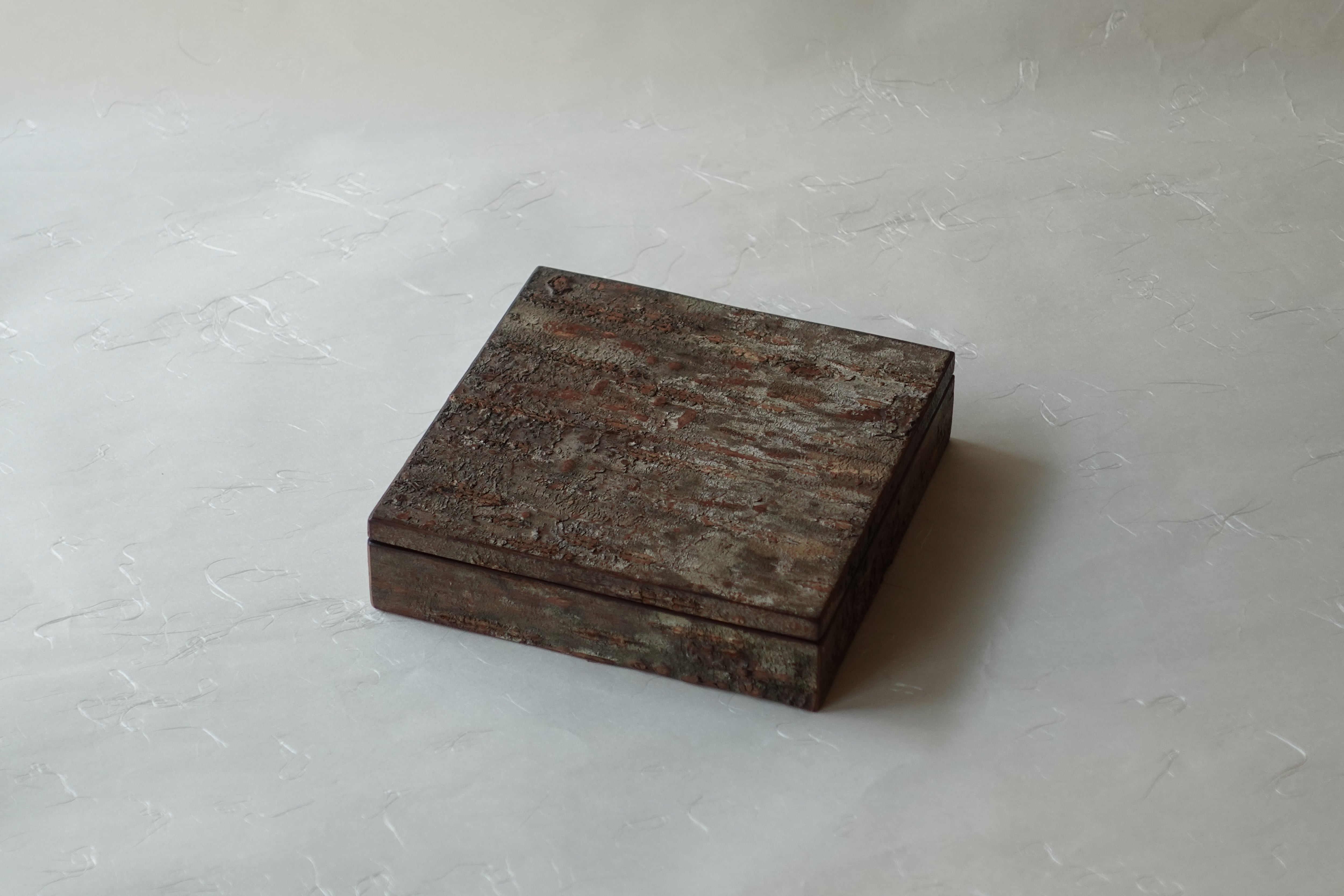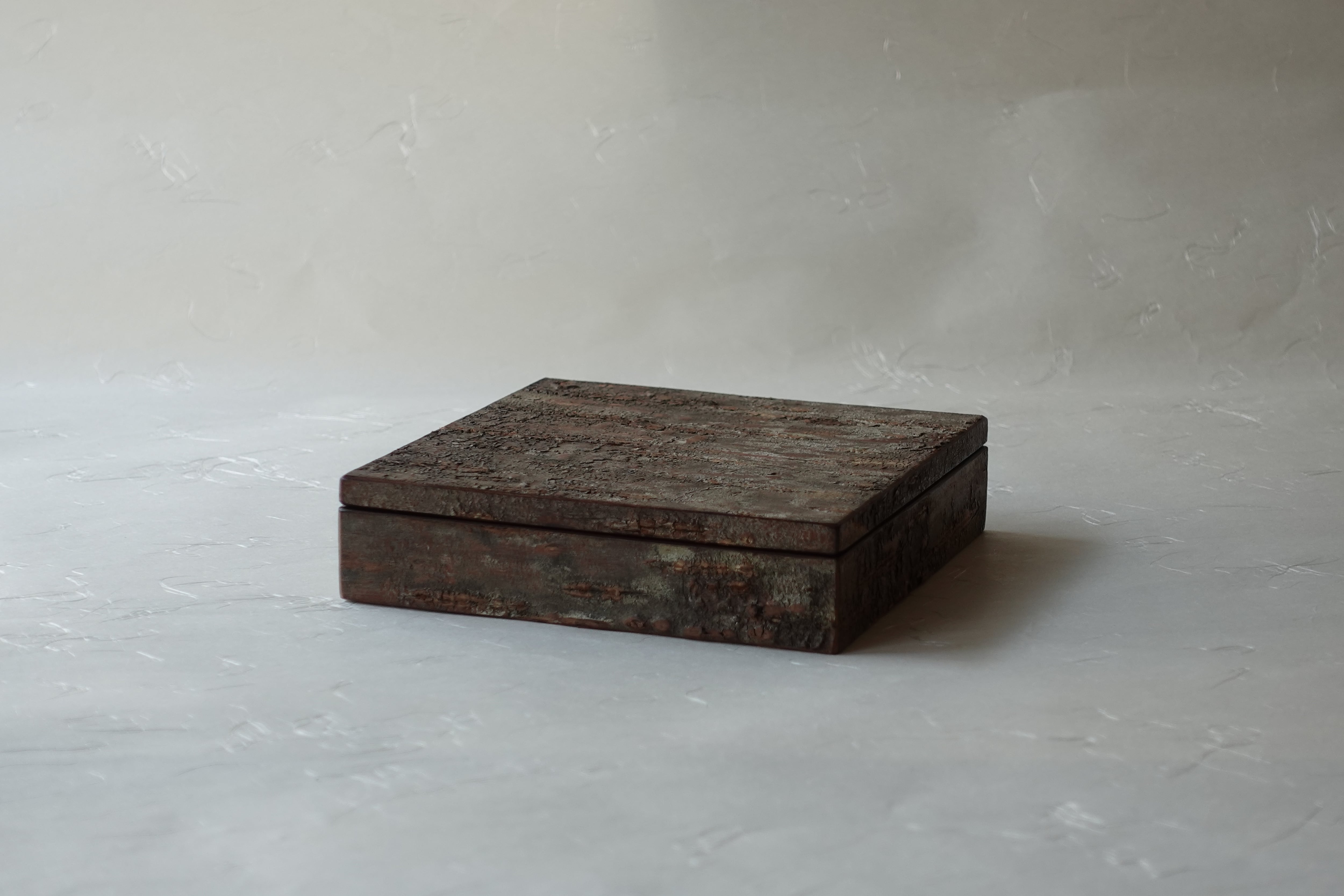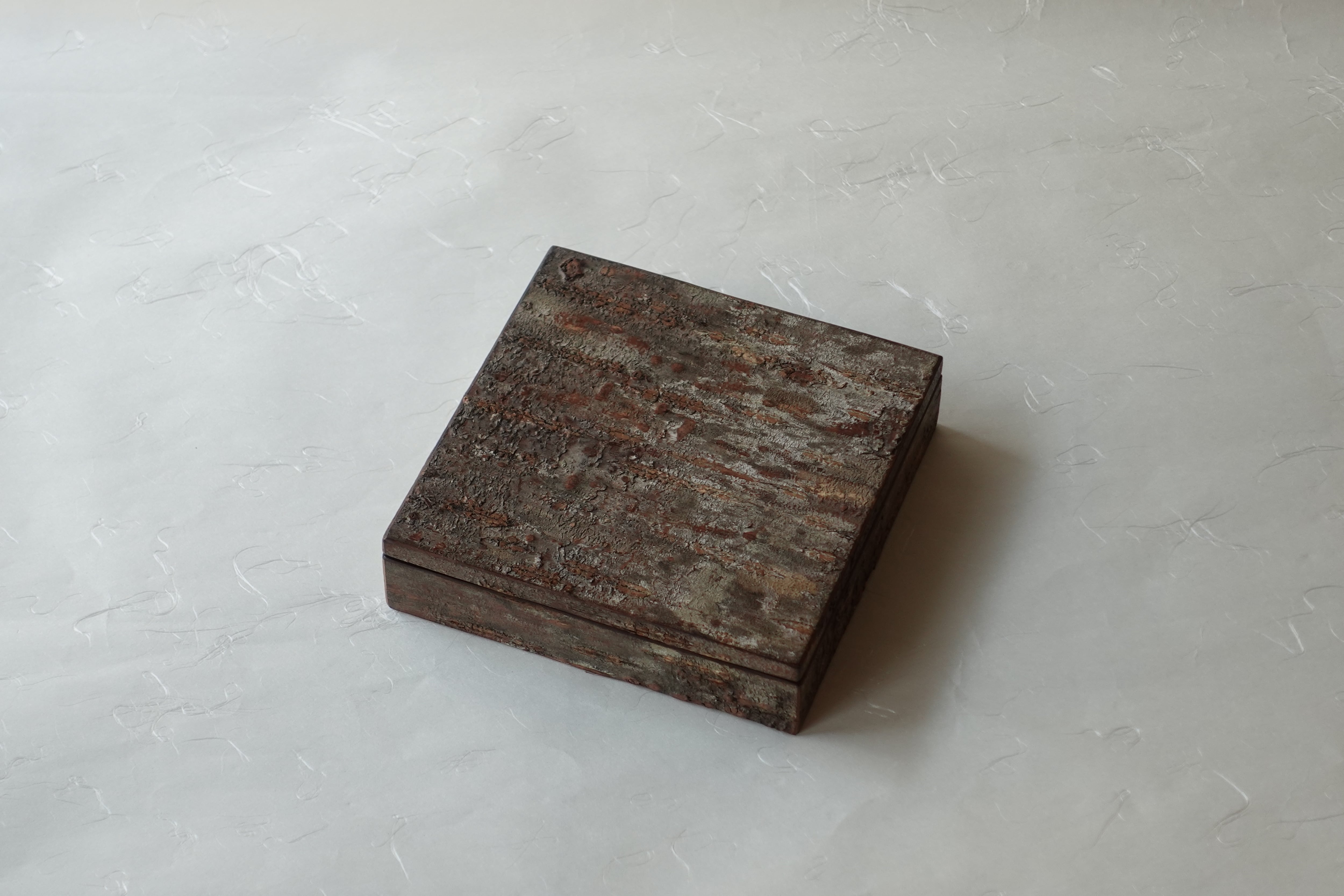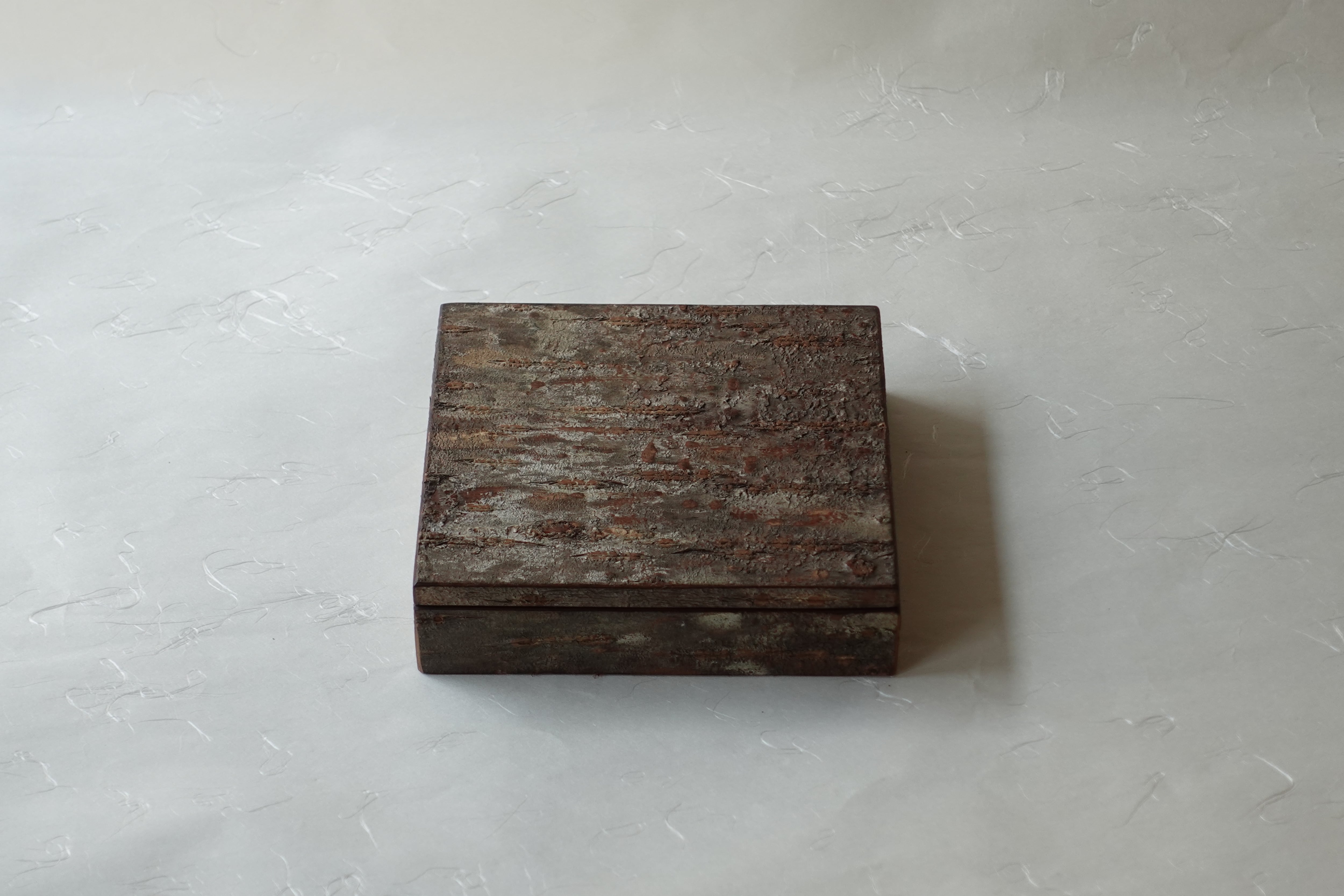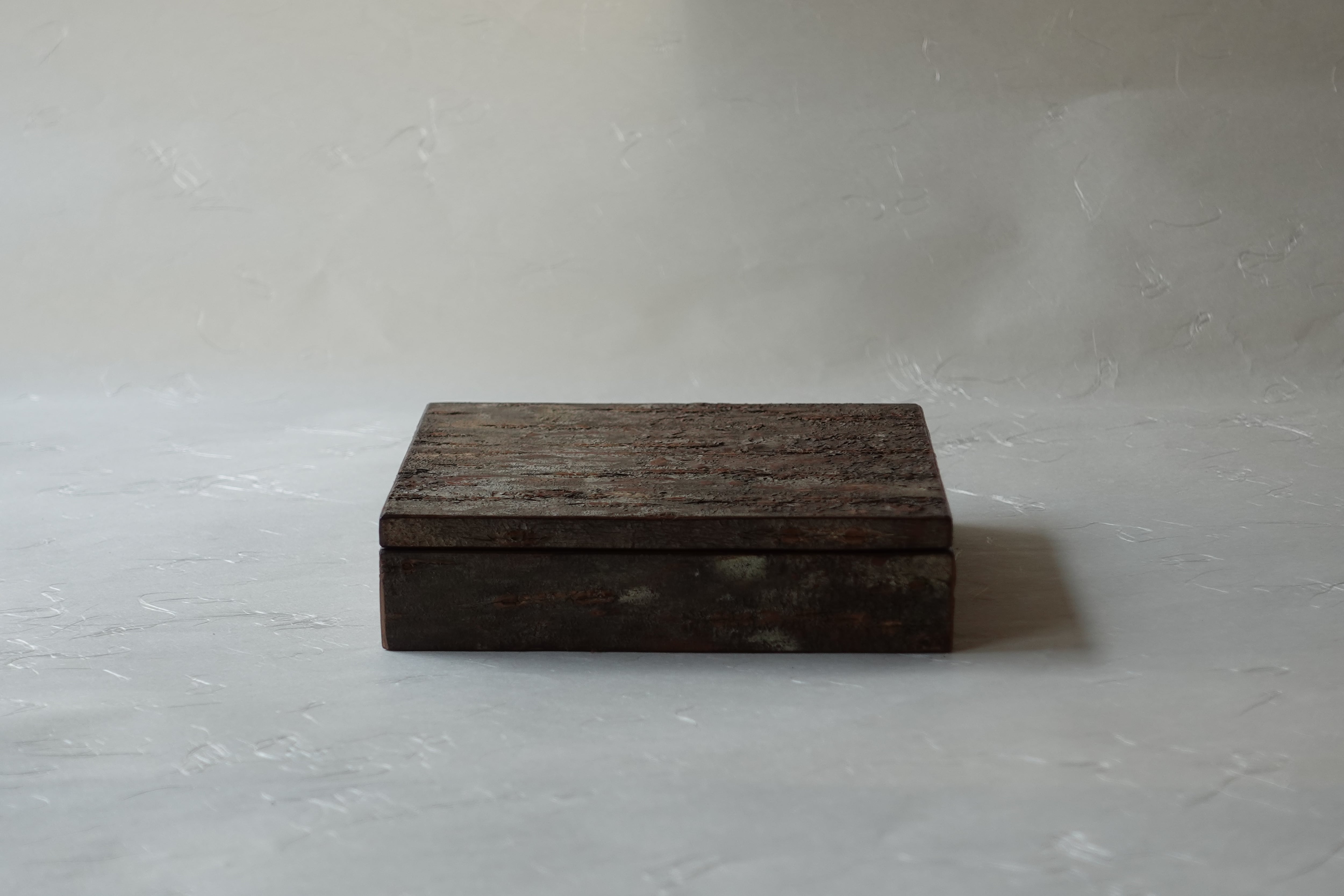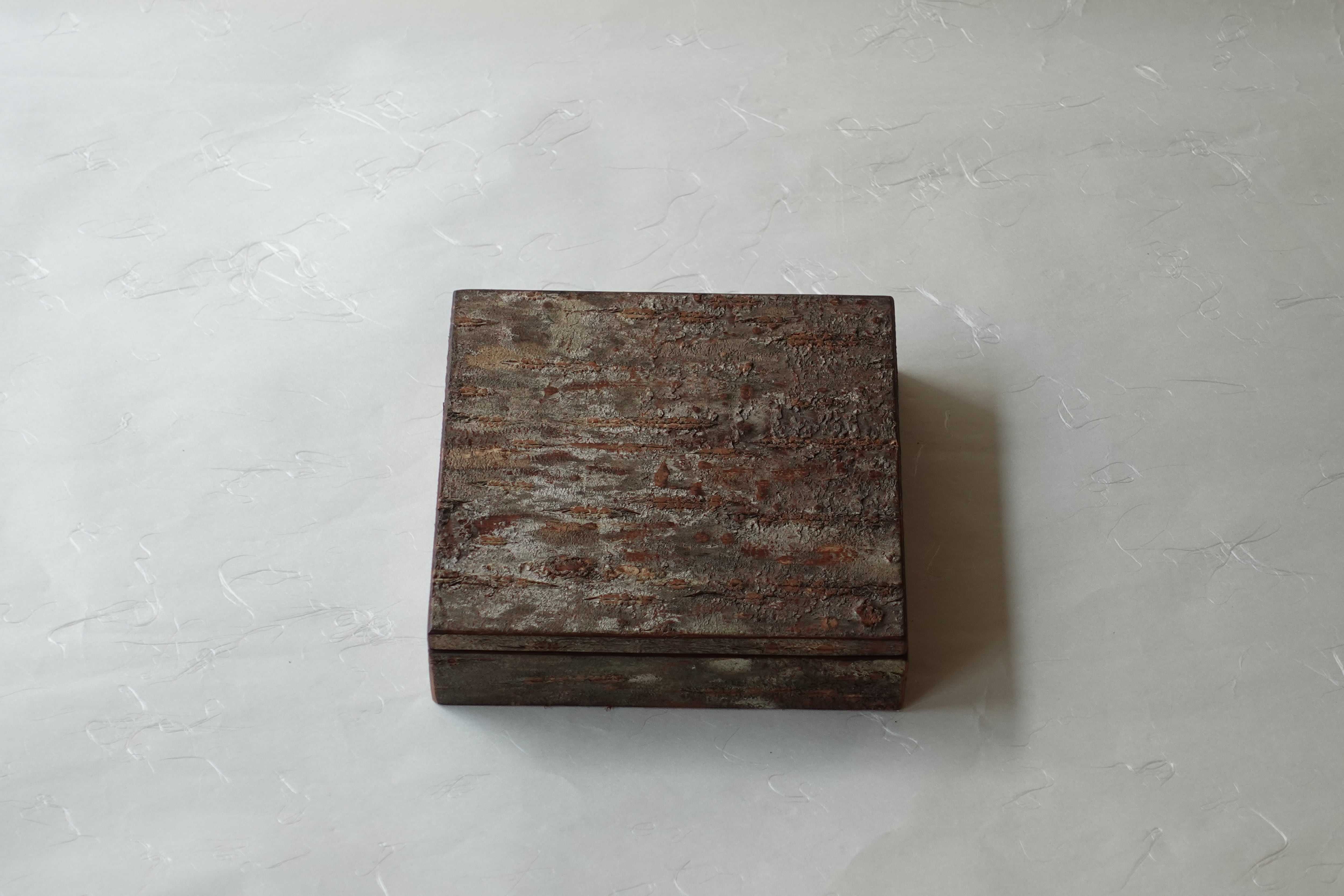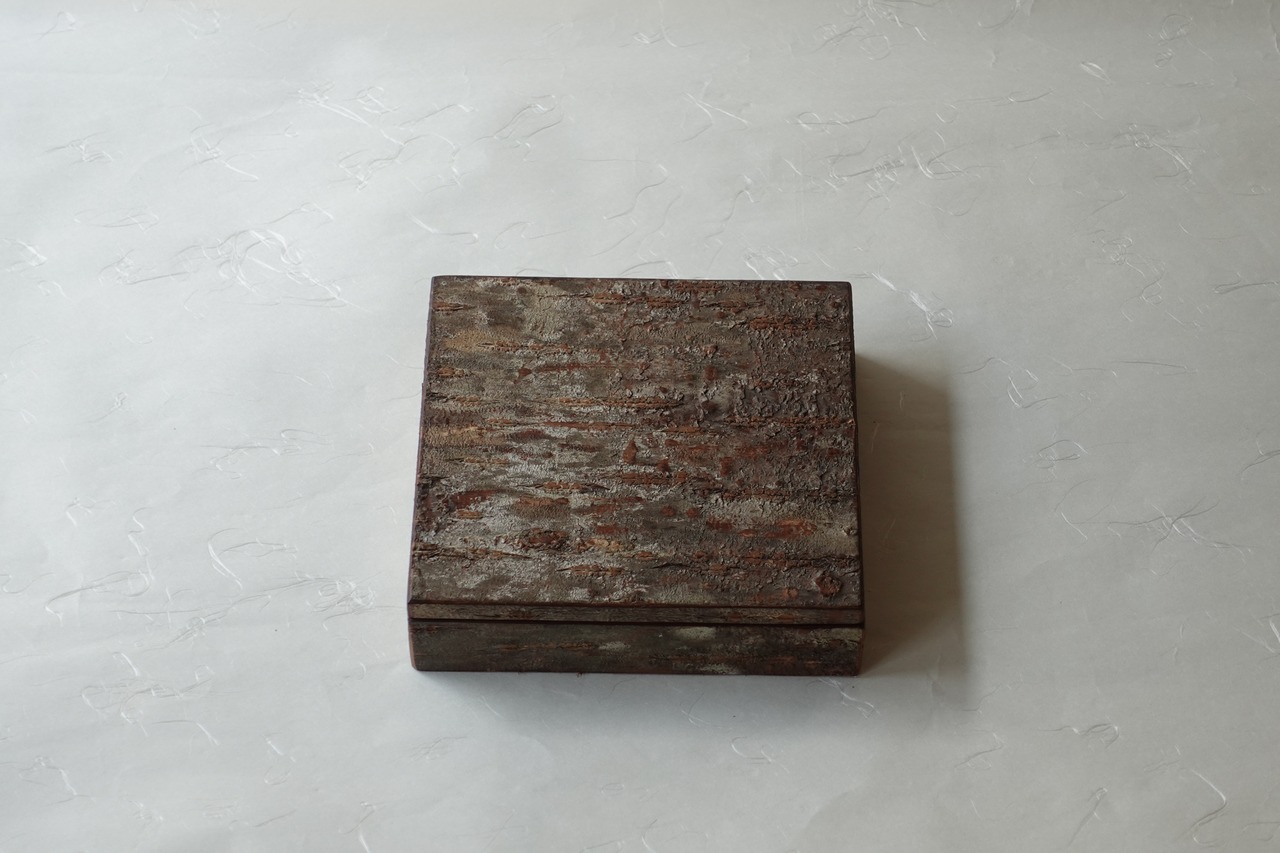


桜皮 樺細工 木製 小箱 スクエア チラシ皮
¥11,000($69.59)
残り1点
International shipping available
桜皮細工(樺細工)の木製小箱の
ご紹介です。
桜皮を使用した細工物の美しさは、古く
万葉集や源氏物語でも称えられており
正倉院の御物にも筆 弓 刀の鞘(さや)などに
桜の皮を使ったものが見られます。
樹皮加工は今から200年前、江戸時代中期
に秋田県北部の阿仁地方から藤村彦六が
角館に伝えられたとされ、佐竹城主の庇護の
もと下級武士の手内織から生業へと
変遷を重ねました。
高度な技術の蓄積、多様性の追求により、
我が国固有の樹皮加工を工芸品へと
発展させました。
桜皮の持つシックな光沢と、桜皮の特性で
ある通気性、通湿性を生かした生活用品は、
日本の格調ある手工芸品として、広く
愛されています。
昭和51年、通産大臣による伝統工芸品の
指定を受けています。
この樺細工に使われる桜は東北地方の山桜で
厳しい気候で育った山桜ほど美しく耐久性が
高いと言われています。
桜の樹皮を幹から丁寧に剥がし、1、2年
陰干しして乾燥させたものを使います。
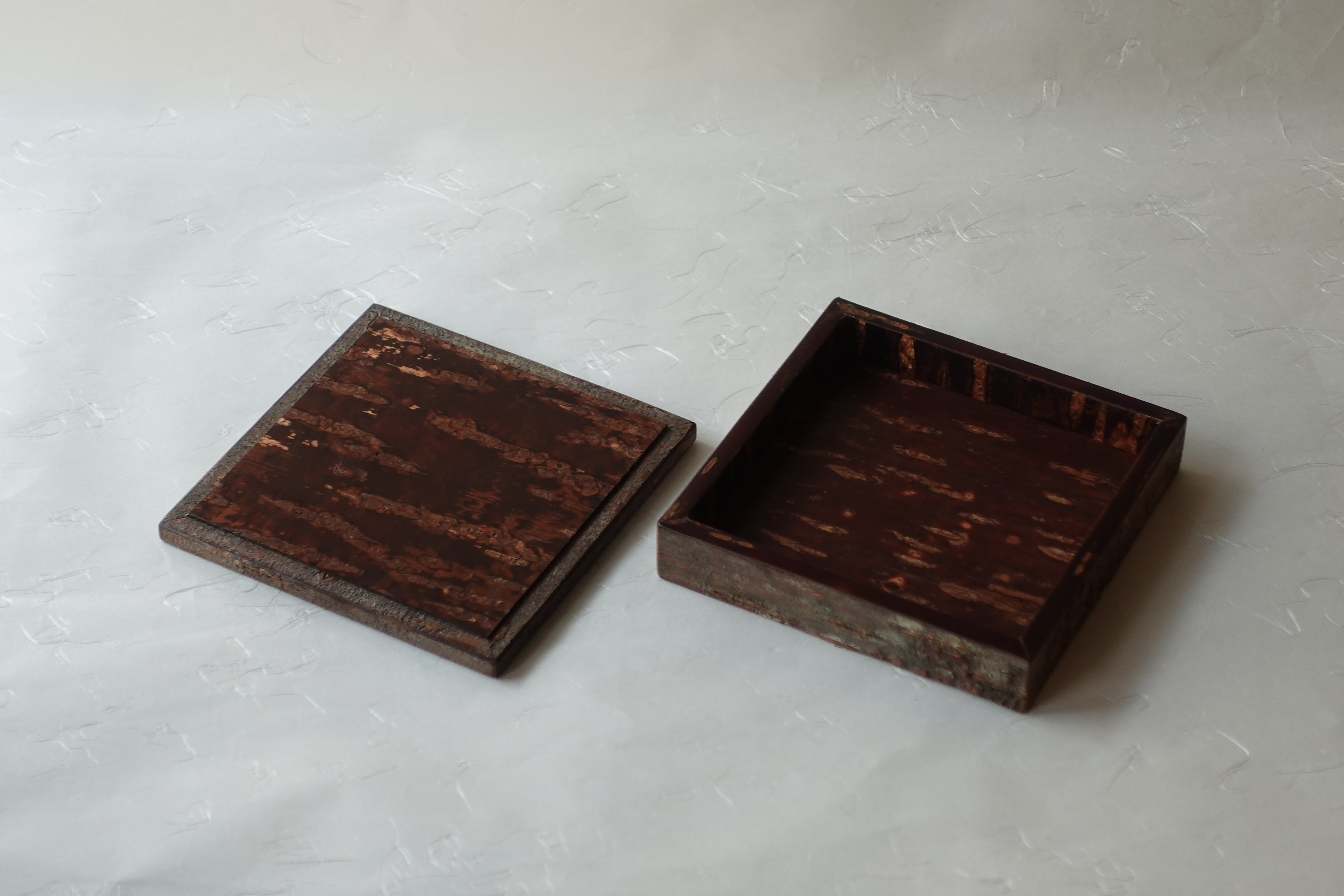
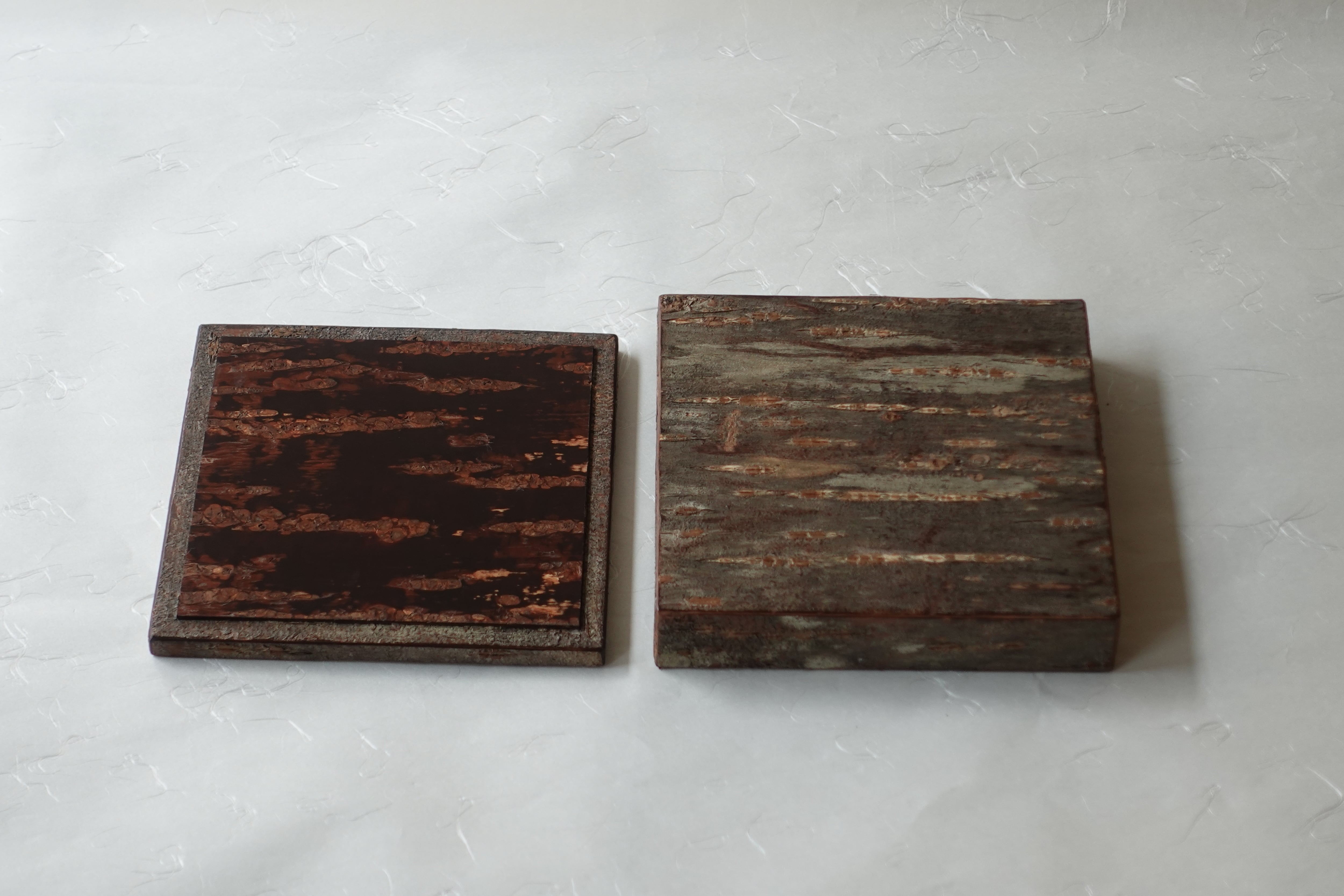
この小箱は、外側はもちろん内側も裏面に
至るまで全面に桜皮が貼り付けられて
います。
外側全面にチラシ皮が使われています。
チラシ皮は、表面が灰色で部分的に白っぽい
ものをいい、山桜の樹皮の中でも趣きがあり
渋い色調であることから、大変希少価値が
あり、削らないで自然の風合いを残したまま
使われています。
内側には無地皮といって、通常よく使われる
山桜の表面を削り、丁寧に磨いたものを
使っています。
近年、程度のいい桜の皮が採れにくくなって
おり、深刻な材料不足で一枚皮を惜しみなく
使ってあるものが少なく、希少品と
なっております。
天然素材の素朴さや美しさ、使い込む程、
時を経る程、変化する色調、奥行のある光沢
などに優れた特徴があります。
秘蔵せずに日常使い込む事が最良の
手入れ方法です。
桜の樹皮には自然の抗菌効果があり、
安心してお使い頂けます。
輸入による樺細工の類似品が出回って
おりますので、信用のおける専門店での
ご購入をおすすめいたします。
14.5cm × 14.5cm
高さ 3.5cm
木製 桜皮
Cherry Bark Craft (Kabazaiku) Wooden Small Box
Square Shape – Chirashi Bark
We are pleased to introduce this wooden small box made with sakura bark craft (Kabazaiku).
The beauty of crafts made using cherry bark has been admired since ancient times and is praised in classical literature such as the Man’yōshū and The Tale of Genji.
Items preserved in the Shōsōin treasury also include objects such as writing brushes, bows, and sword scabbards that utilize cherry bark.
The technique of processing tree bark is said to have been introduced to Kakunodate about 200 years ago, in the mid-Edo period, when Hikoroku Fujimura brought the craft from the Ani region in northern Akita Prefecture. Under the patronage of the Satake feudal lord, the craft gradually evolved from a sideline activity practiced by lower-ranking samurai into a full-fledged livelihood.
Through the accumulation of advanced techniques and the pursuit of variety, this unique Japanese bark-processing technique developed into a refined traditional craft.
Everyday items made from cherry bark, which features a refined natural luster along with the bark’s inherent breathability and moisture permeability, are widely loved as elegant Japanese handicrafts.
In 1976, it was officially designated as a Traditional Craft Product by the Minister of International Trade and Industry.
The cherry bark used in this craft comes from yamazakura (wild mountain cherry trees) grown in the Tōhoku region. It is said that mountain cherry trees that grow in harsher climates produce bark that is both more beautiful and more durable.
The bark is carefully peeled from the trunk of the tree and then dried in the shade for one to two years before being used.
For this small box, cherry bark is applied not only to the exterior but also to the interior and even the underside, covering the entire surface.
The entire exterior is finished with “chirashi bark.”
Chirashi bark refers to bark whose surface is gray with partially whitish areas. Among mountain cherry bark, this type is particularly tasteful and valued for its subdued, elegant coloration. Because of its rarity, it is used without shaving the surface so that the natural texture is preserved.
The interior uses “muji-kawa” (plain bark)—a commonly used material in which the surface of mountain cherry bark is shaved and carefully polished.
In recent years, it has become increasingly difficult to obtain cherry bark of good quality. Due to this serious shortage of raw materials, pieces that generously use large sheets of bark have become rare and highly valued.
This craft possesses distinctive qualities such as the natural simplicity and beauty of the material, as well as the color tones and deep luster that gradually change and develop with continued use over time.
Rather than storing it away, the best way to care for it is to use it regularly in everyday life.
Cherry bark also has natural antibacterial properties, allowing it to be used with confidence.
Imitation Kabazaiku products imported from overseas are circulating on the market, so we recommend purchasing from a reliable specialty store.
Dimensions
14.5 cm × 14.5 cm
Height: 3.5 cm
Material: Wood, Cherry Bark
樱皮 桦细工 木制 小盒 方形 散花皮
下面为您介绍一件樱皮细工(桦细工)的木制小盒。
使用樱树皮制作的工艺品之美,自古以来便备受赞誉,在《万叶集》和《源氏物语》中亦有称颂;在正仓院所藏的御物中,也可以见到使用樱树皮制作的物品,如毛笔、弓以及刀鞘等。
据说樱树皮加工技艺约在两百年前的江户时代中期,由秋田县北部阿仁地区的藤村彦六传入角馆,并在佐竹藩主的庇护下,由下级武士的内职手工逐渐发展为谋生的产业。
通过长期积累的高度技艺与对多样性的不断追求,这种我国特有的树皮加工技艺逐渐发展成为精美的工艺品。
樱树皮所具有的沉稳光泽,以及其特有的透气性与透湿性,使得以其制成的生活用品既实用又美观,作为日本格调高雅的传统手工艺品而广受喜爱。
昭和51年(1976年),该工艺被通商产业大臣指定为传统工艺品。
用于制作桦细工的樱树,多为东北地区的山樱。一般认为,在严酷气候中生长的山樱,其树皮更加美观且耐久性更高。
制作时,将樱树的树皮从树干上仔细剥离后,需阴干一至两年使其充分干燥,然后方可使用。
这件小盒不仅外侧,连内侧以及底部背面也全部贴覆樱树皮制作而成。
盒子外侧整体使用了“散花皮”。
所谓“散花皮”,是指表面呈灰色并带有部分泛白斑点的樱树皮。这种树皮在山樱树皮中尤具风味,色调沉稳雅致,因此极为珍贵,通常不进行刮削处理,而是保留其天然的自然风貌加以使用。
盒子内侧则使用称为“无地皮”的材料,即将常用的山樱树皮表面轻轻刮削后,再经过细致打磨而成。
近年来,品质优良的樱树皮愈发难以取得,材料严重不足,因此能够像本品这样大量使用整张樱树皮制作的作品已十分稀少,因而更显珍贵。
樱皮工艺品具有天然素材特有的朴素之美;随着使用时间的增长,其色泽会逐渐变化,并呈现出深邃而富有层次的光泽,这是其卓越的魅力所在。
最好的保养方式并不是收藏不用,而是在日常生活中经常使用。
樱树皮本身具有天然的抗菌作用,因此可以安心使用。
近年来市面上也出现了一些进口的仿制桦细工作品,因此建议在值得信赖的专业店铺购买。
尺寸:14.5 cm × 14.5 cm
高度:3.5 cm
材质:木制 樱皮(樱树皮)
-
レビュー
(55)