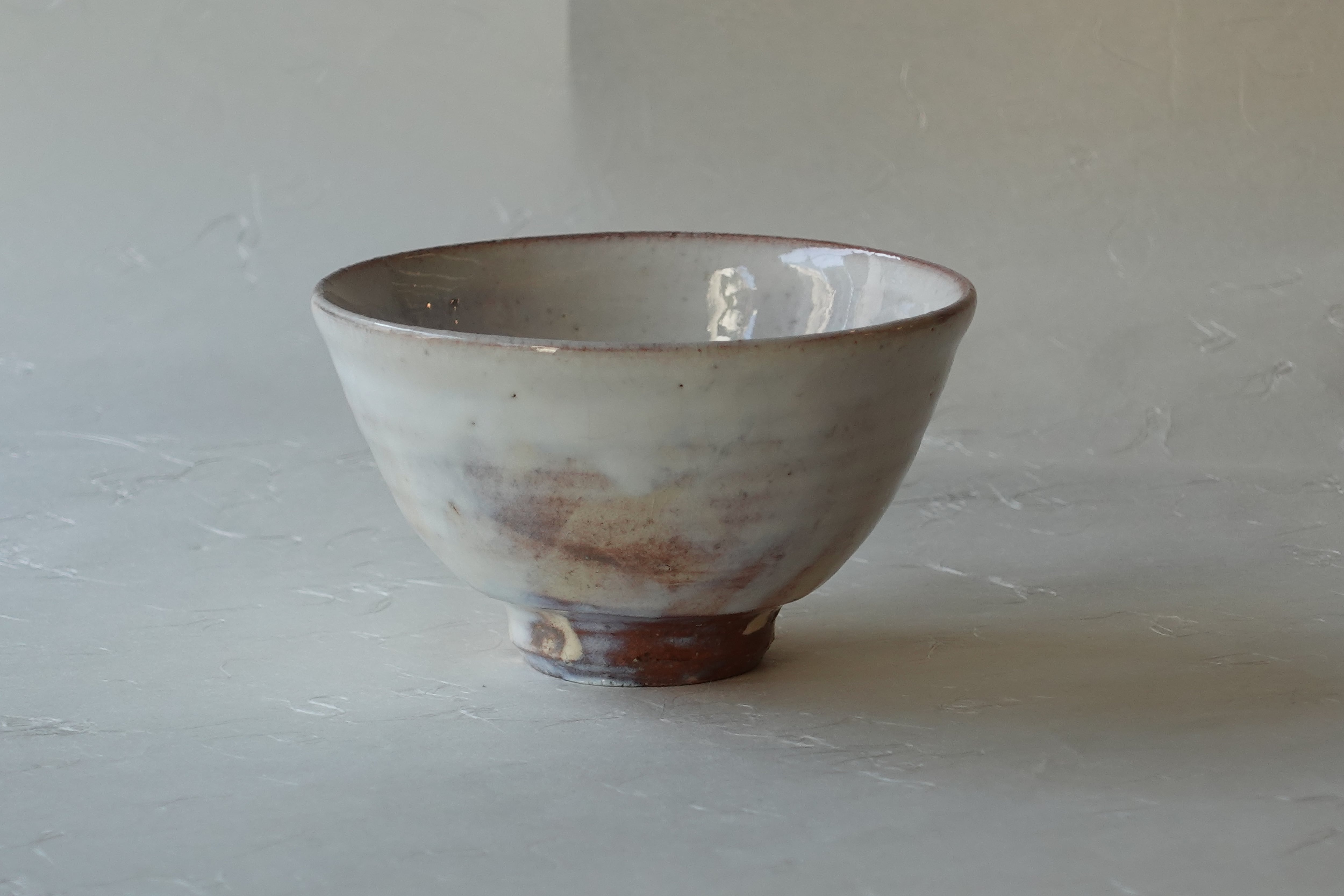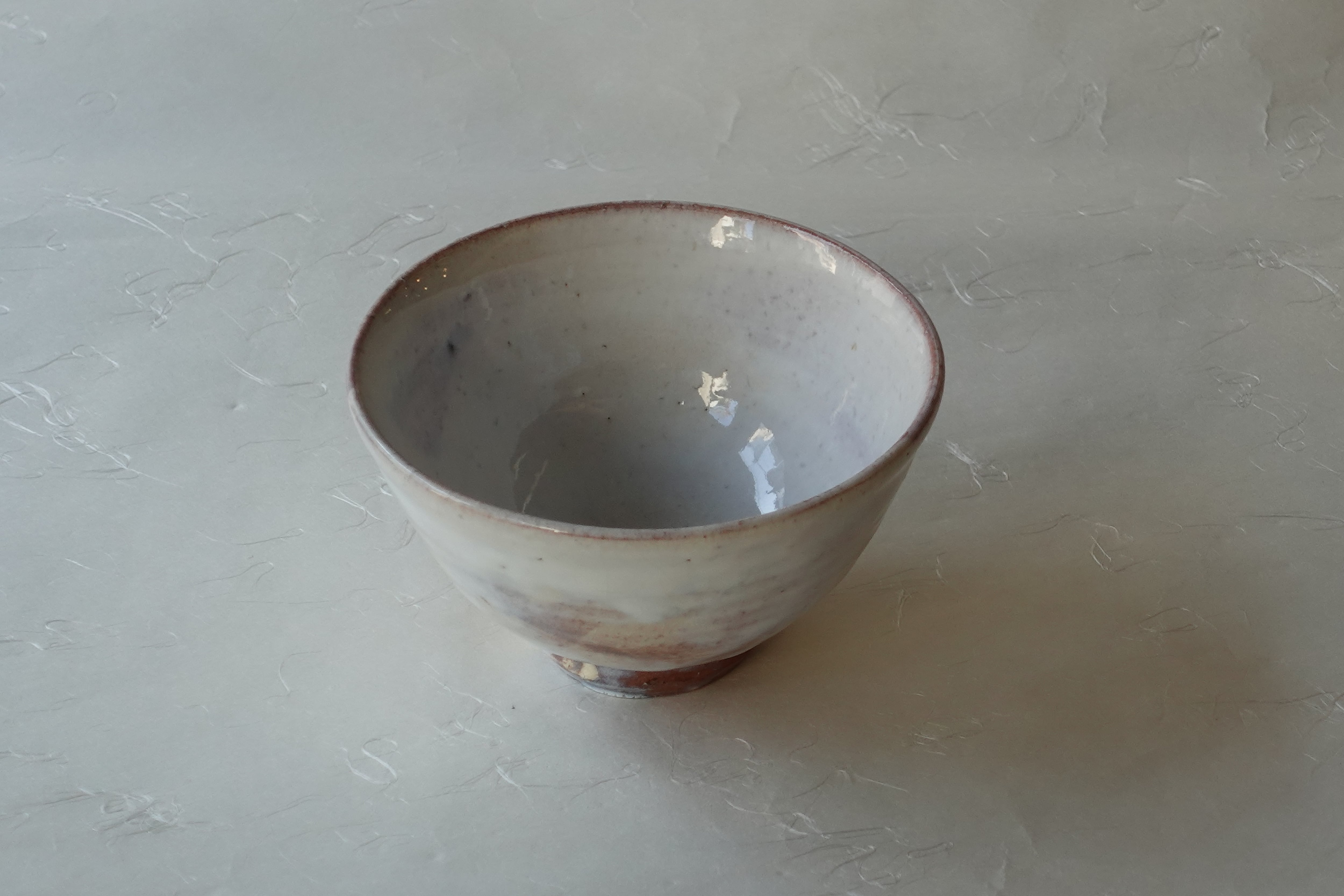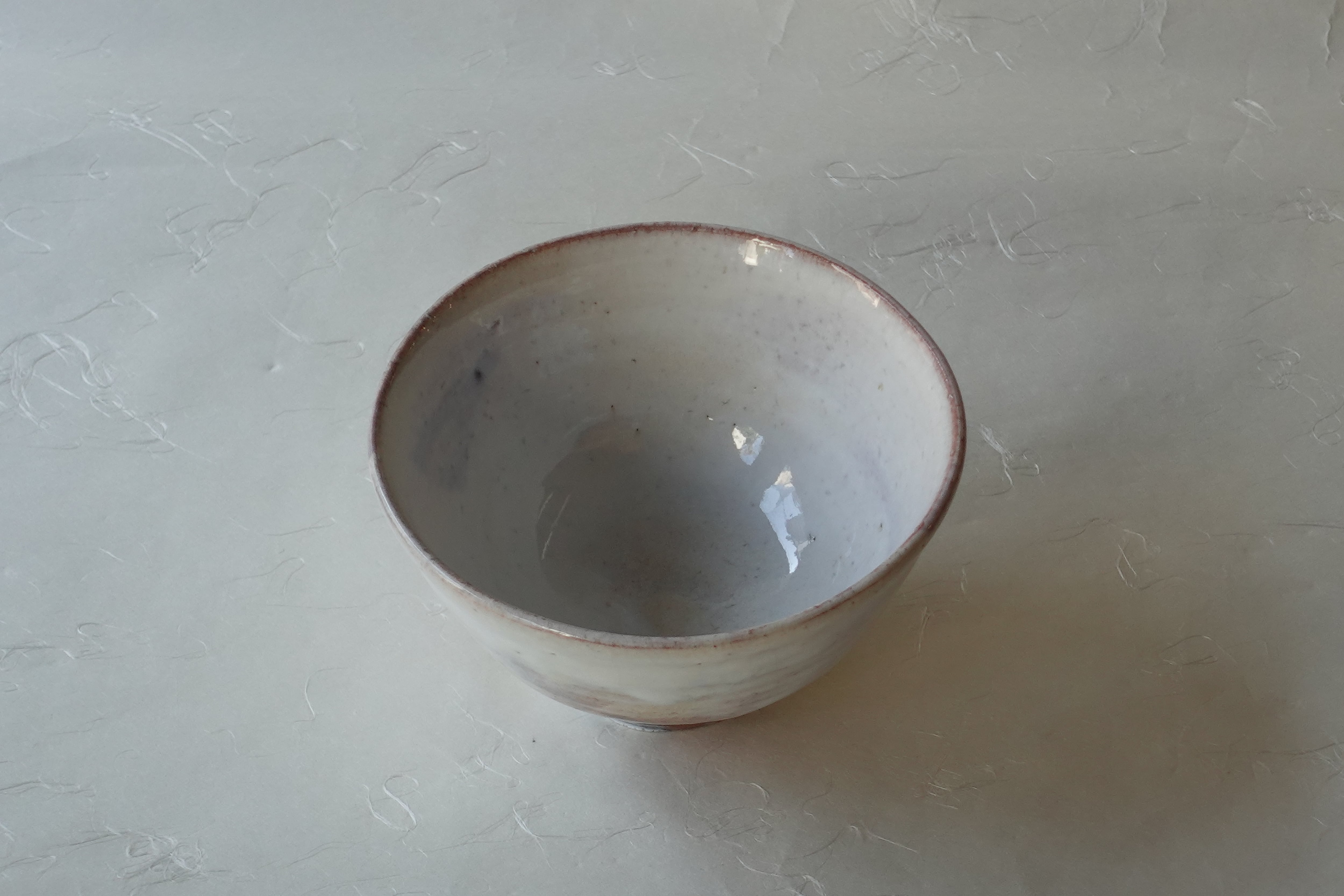



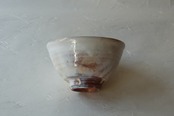


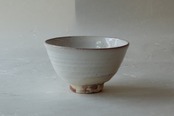


萩焼 林紅陽 作 白釉 井戸 抹茶碗
¥16,500($104.53)
残り1点
International shipping available
萩焼から林紅陽 作の井戸茶碗のご紹介です。
井戸茶碗は元々、朝鮮茶碗の一種で李朝の
比較的早い時期に作られたものと見られ、
室町時代以後に渡来した朝鮮茶碗の中でも
第一等の位に置かれ、唐物茶碗の王者と
されています。
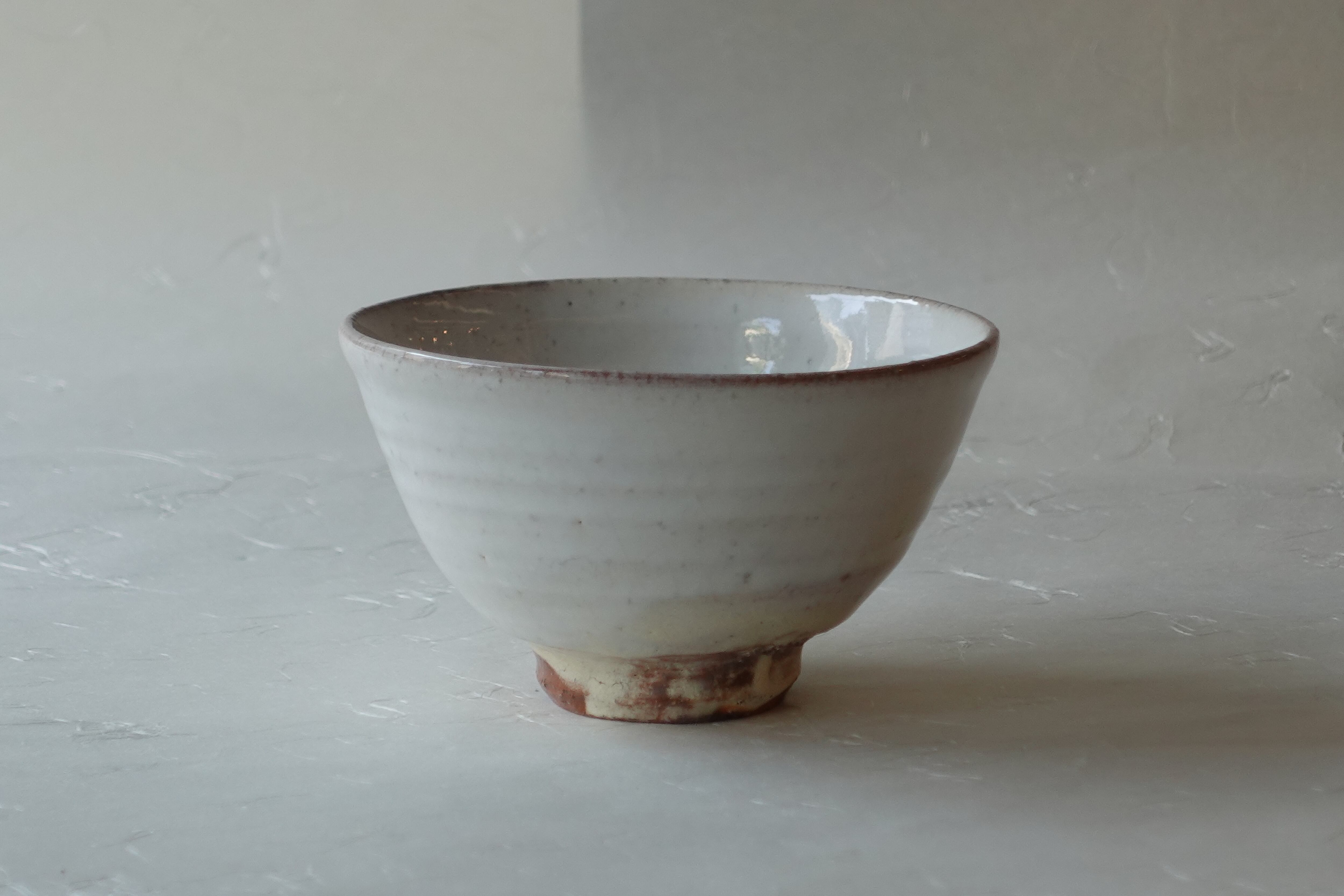
井戸茶碗の特徴として、土は鉄分の強い
荒目のもので赤褐色をしています。
この荒目の土を速いろくろで挽いているため
表面にあばら状のろくろ目が目立つことが
多くなっています。
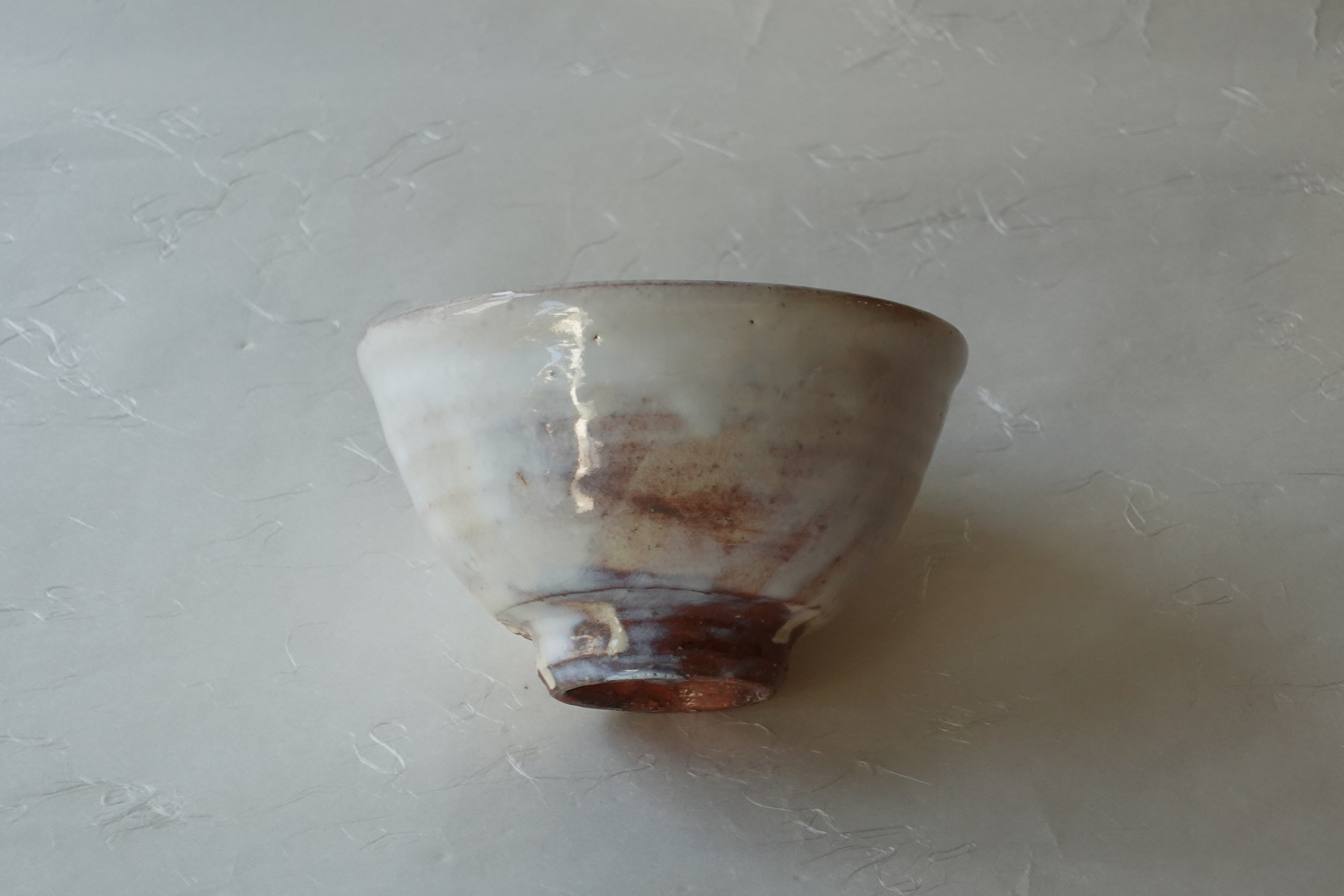
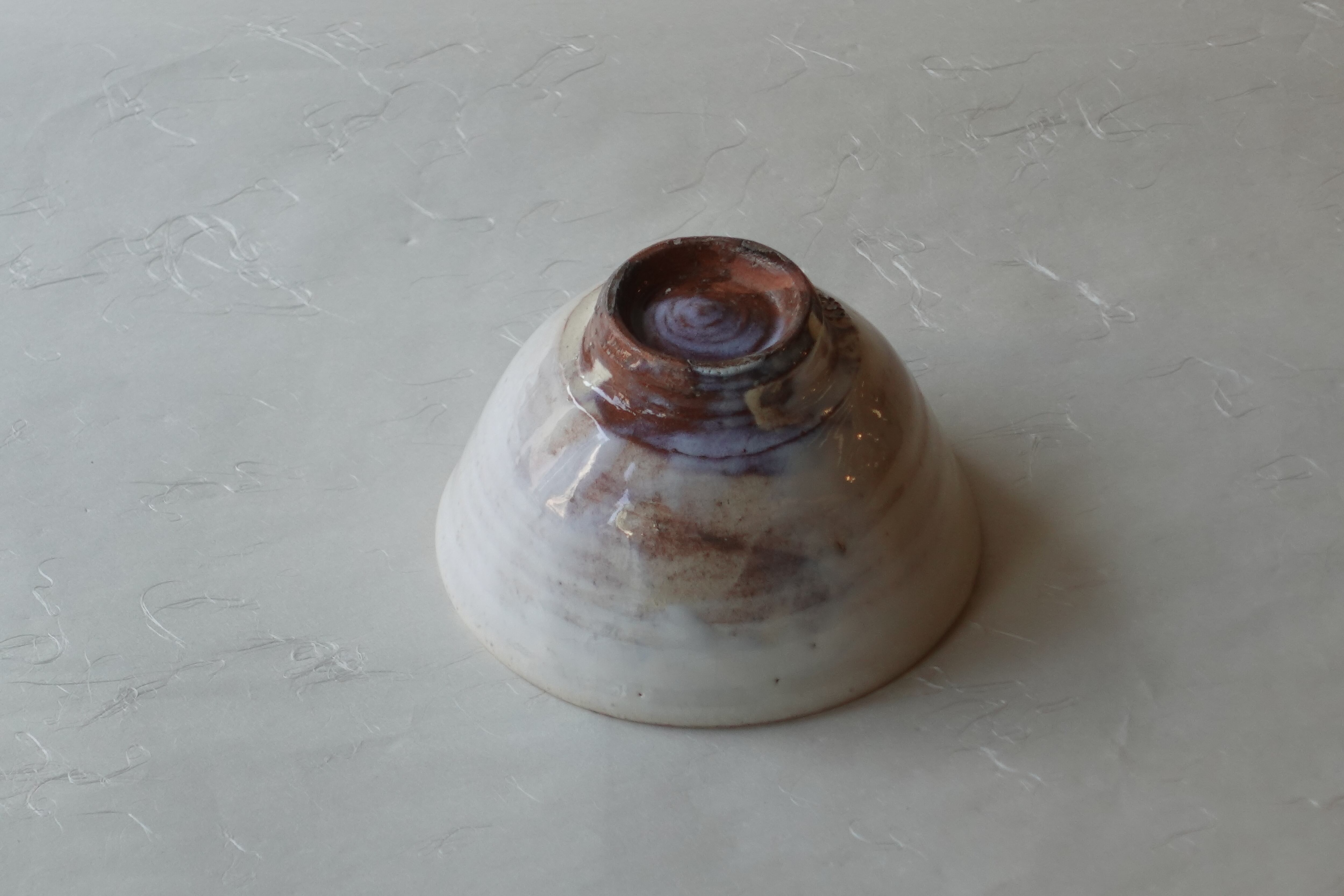
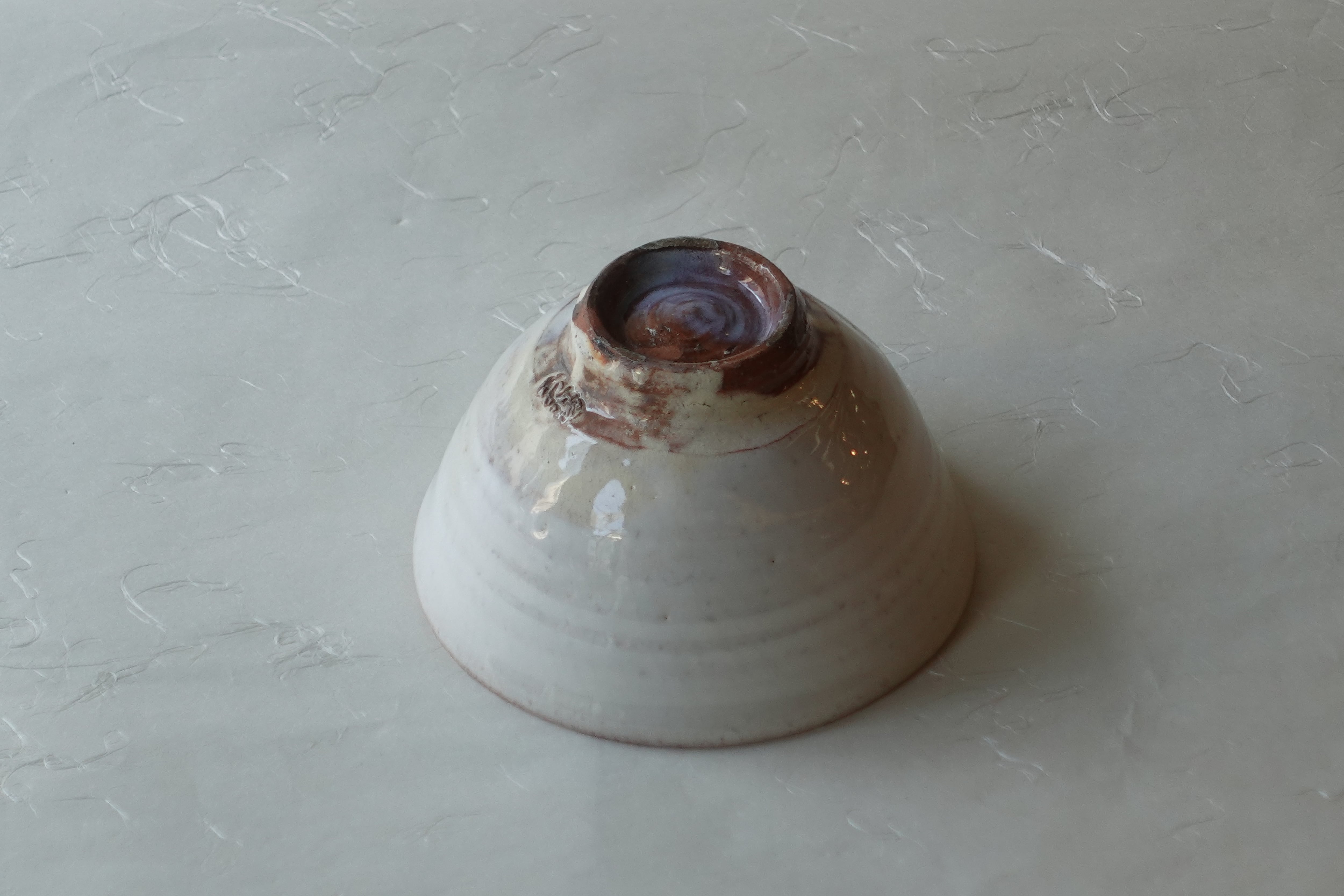
高台は竹の節高台といわれ釉薬をかける時に
茶碗をつかみやすくする利便性として
生じたものと言われています。
これは削り出し高台で、高台内をさらえる
ヘラが斜めに入るため高台内の中央が渦を
巻いたように高まるのが特徴です。
釉掛けは高台内側までずぶ掛けにする
総釉掛けのため高台の土を直接見れる部分が
ほとんどありません。
井戸茶碗の約束の一つになっています。
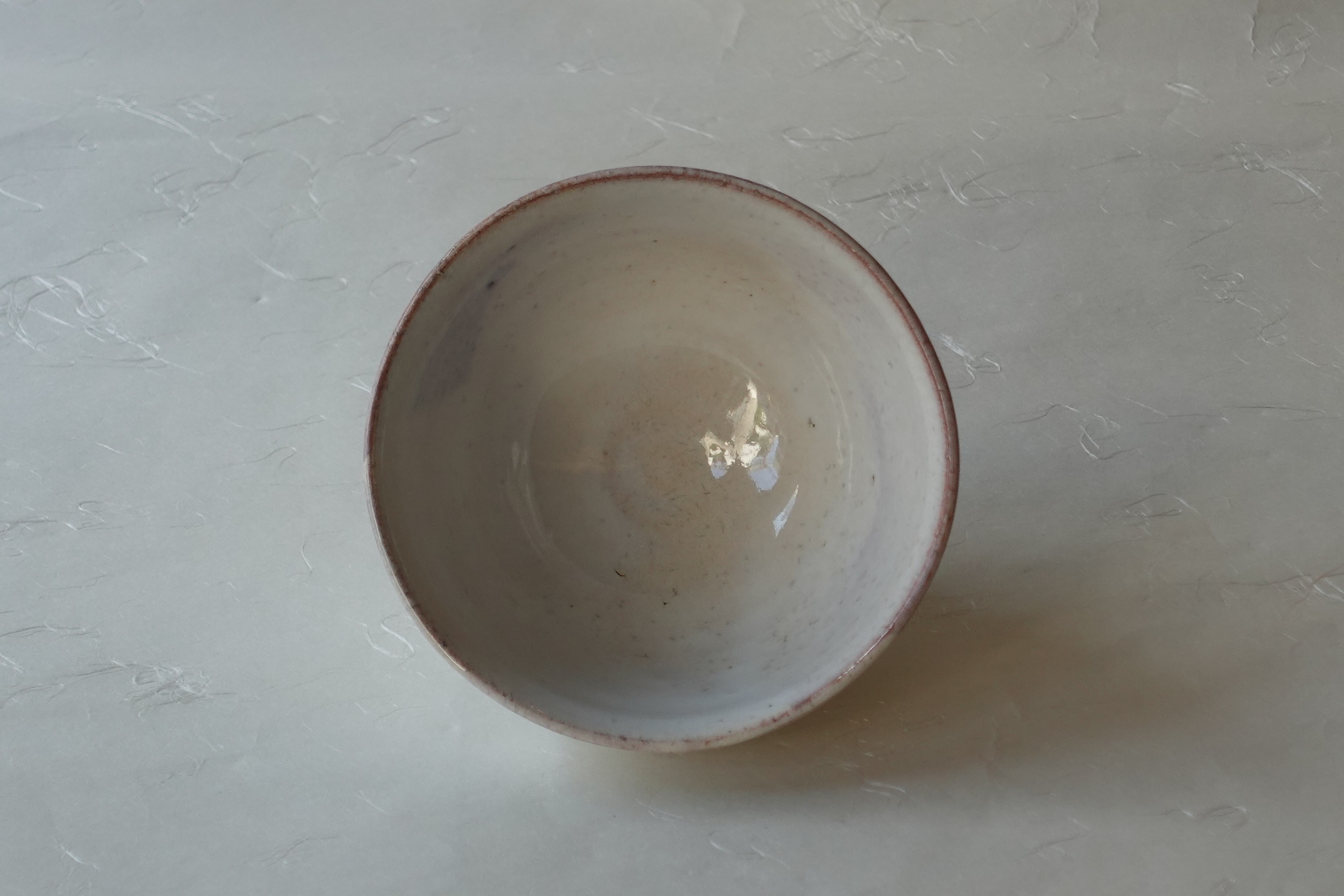
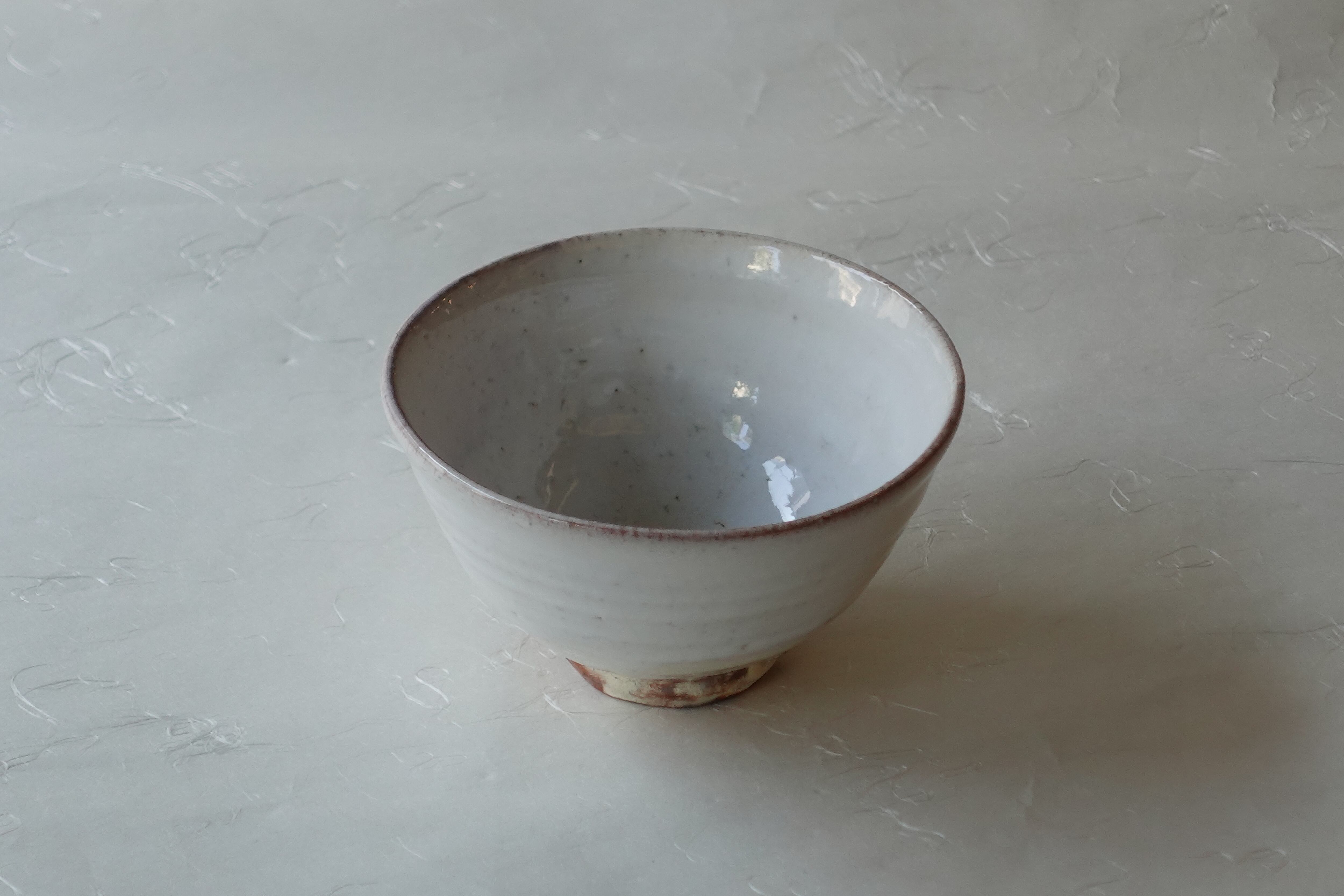
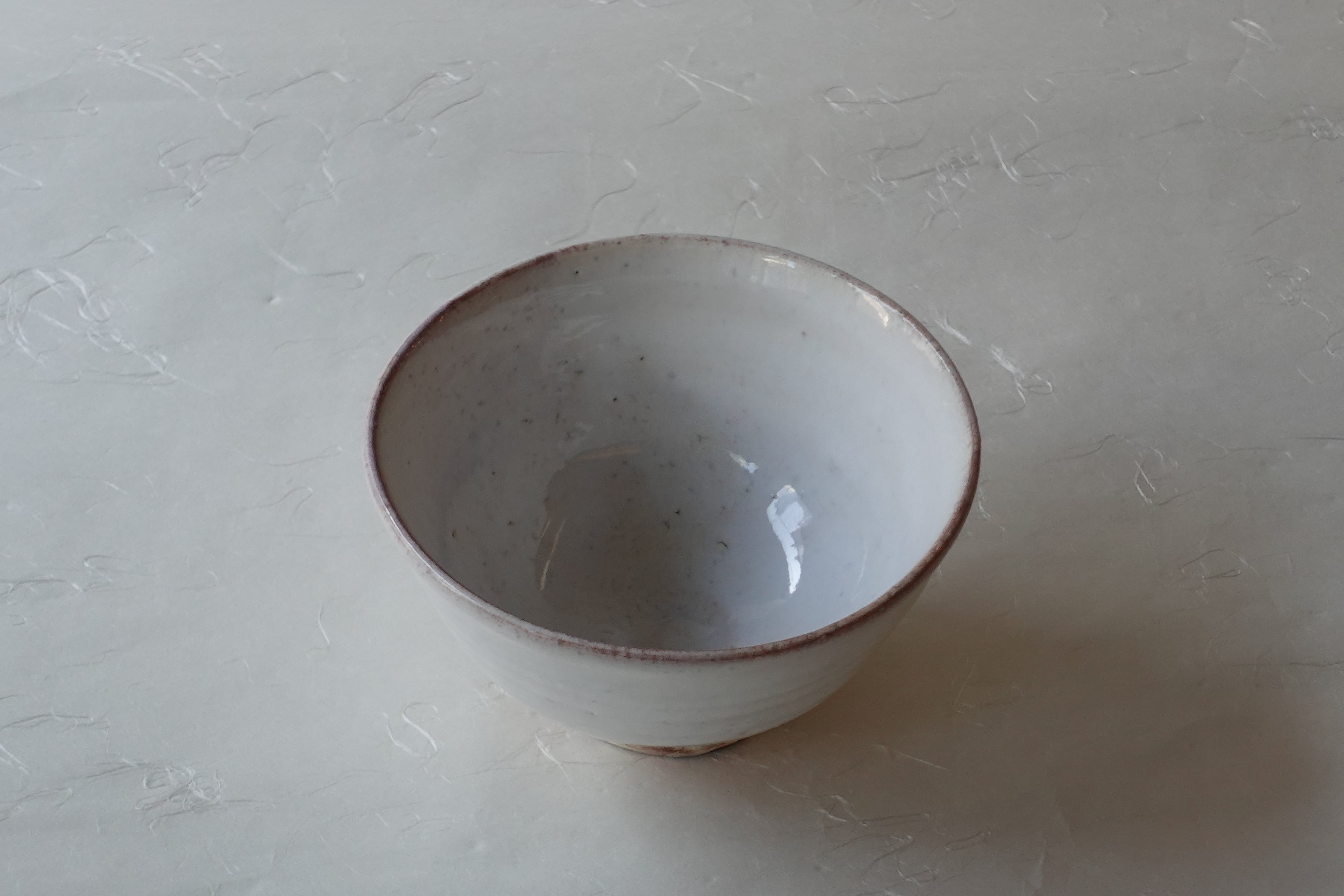
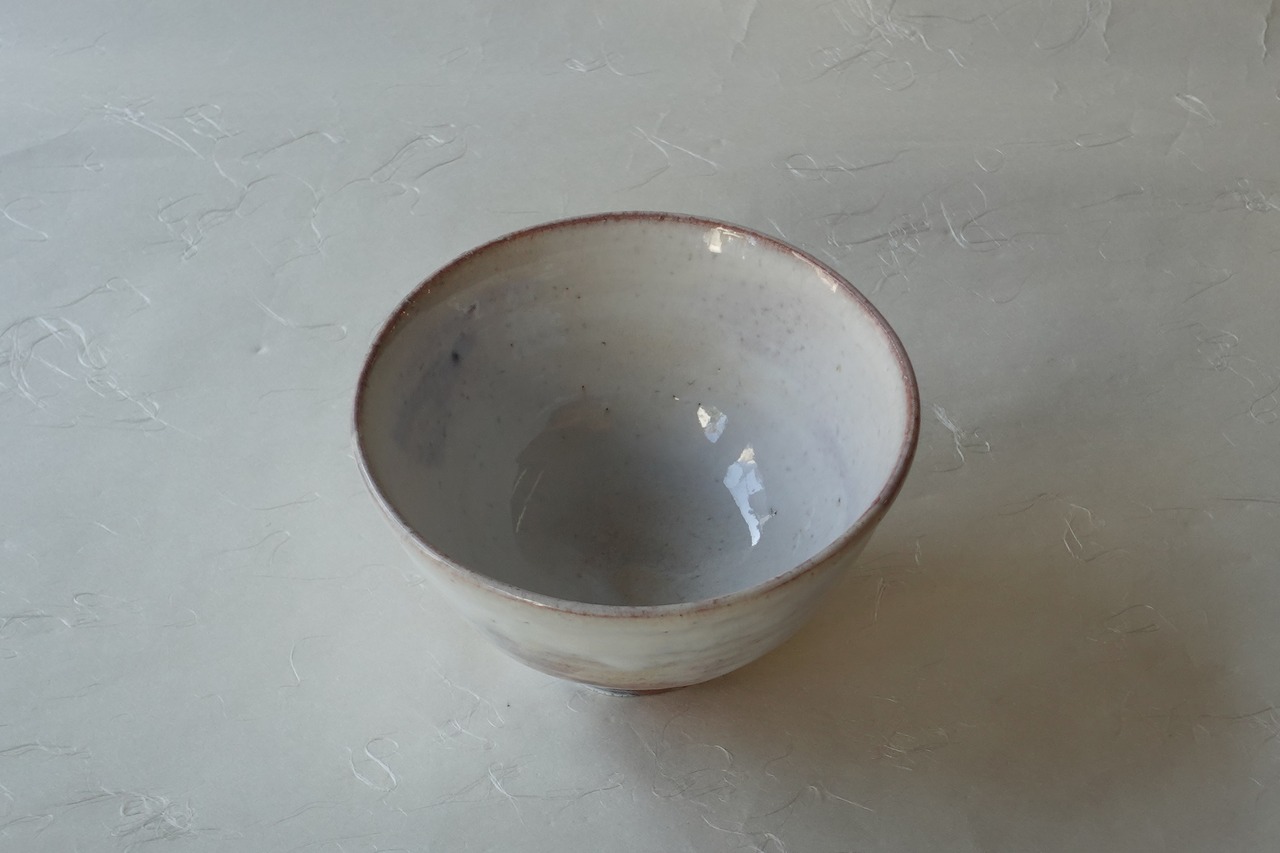
全体に艶のある白い釉薬が掛けられており
やわらかい雰囲気があります。
表面の釉薬はぼってりと厚めに掛けられ、
濃淡があり下地の土の風合いが感じられ、
その変化が見所となっています。
全体に細かな貫入やピンホールなどが見られ
萩焼の特徴がよく出ています。
どっしりと重厚感があり高級感があります。
大井戸茶碗よりも少し小ぶりなので、
薄茶としても使えるサイズです。
白い釉薬の部分が多く、明るい印象です。
使い込んで「萩の七変化」を楽しみながら
永く使える逸品です。
口径 13.7cm 高さ 7.8cm
Hagi Ware – Kōyō Hayashi, White-Glazed Ido Matcha Tea Bowl
We are pleased to introduce this Ido-style tea bowl by Kōyō Hayashi of Hagi ware.
The Ido tea bowl was originally a type of Korean tea bowl, believed to have been made during the relatively early period of the Joseon Dynasty. Among the Korean tea bowls that were brought to Japan after the Muromachi period, Ido tea bowls were regarded as being of the highest rank and came to be considered the king of karamono tea bowls.
One of the characteristics of an Ido tea bowl is its coarse clay, which contains a high amount of iron and has a reddish-brown color.
Because this coarse clay was thrown on the wheel at high speed, prominent rib-like throwing marks are often visible on the surface.
The foot is known as a “take no fushi” or bamboo-joint-style foot. It is said to have developed as a practical feature that made it easier to hold the tea bowl when applying glaze.
This tea bowl has a carved foot. Because the spatula used to hollow out the inside of the foot enters at an angle, the center of the interior of the foot rises in a characteristic spiral-like form.
The glaze is applied over the entire bowl, including the inside of the foot, in a technique known as complete glazing. As a result, there is almost no area where the bare clay of the foot can be seen directly.
This is regarded as one of the established characteristics, or traditional formal features, of an Ido tea bowl.
The entire bowl is covered with a glossy white glaze, creating a soft and gentle atmosphere.
The glaze on the surface has been applied relatively thickly, with variations in its depth and tone that allow the texture of the underlying clay to be appreciated. These subtle changes are one of the highlights of the piece.
Fine crazing and pinholes can be seen throughout the surface, bringing out the distinctive characteristics of Hagi ware.
The bowl has a substantial weight and a dignified, robust presence, giving it a luxurious appearance.
It is slightly smaller than an Oiido tea bowl, making it a suitable size for use with usucha, or thin tea.
Because a large portion of the surface is covered in white glaze, it gives a bright and refreshing impression.
This is a superb piece that can be enjoyed and used for many years while appreciating the famous “seven transformations of Hagi,” as the appearance of Hagi ware gradually changes through continued use.
Diameter: 13.7 cm
Height: 7.8 cm
萩烧 林红阳 作 白釉 井户 抹茶碗
下面为您介绍萩烧林红阳老师制作的井户茶碗。
井户茶碗原本是朝鲜茶碗的一种,被认为制作于李朝相对早期的时期。在室町时代以后传入日本的朝鲜茶碗之中,井户茶碗被置于最高等级,被誉为唐物茶碗之王。
井户茶碗的特点之一,是使用含铁量较高、质地粗糙的陶土,呈红褐色。
由于这种粗质陶土是在较快的旋转速度下拉坯成型,因此器物表面往往可以明显看到类似肋骨状的旋坯纹。
圈足被称为「竹节高台」,据说这是为了在施釉时便于抓握茶碗而形成的设计。
此碗采用削制高台,由于用于削刮高台内部的竹篦以倾斜的角度进入,因此高台内部中央部分会呈现出如同漩涡般隆起的特点。
施釉时一直覆盖到高台内部,采用将茶碗整体浸釉的「总釉施挂」工艺,因此几乎没有能够直接看到高台陶土的部分。
这也是井户茶碗所具有的传统特征之一。
整件茶碗施以带有光泽的白色釉药,呈现出柔和温润的气氛。
表面的釉药施得较为厚实,釉色具有浓淡变化,同时可以感受到胎土本身的质感,这些丰富的变化也成为欣赏此碗的一大看点。
整件茶碗可以看到细密的开片以及针孔等萩烧特有的窑变景象,充分展现了萩烧的特色。
整体造型沉稳厚重,具有十足的分量感与高级质感。
尺寸比大井户茶碗略小一些,因此作为薄茶茶碗使用也非常合适。
由于白色釉药所占面积较大,整体给人明亮而清雅的印象。
随着长久使用,欣赏所谓「萩之七变化」的釉色与器物变化,是一件可以陪伴您长久使用、值得珍藏的精品。
**口径:**13.7cm **高度:**7.8cm
-
レビュー
(55)