


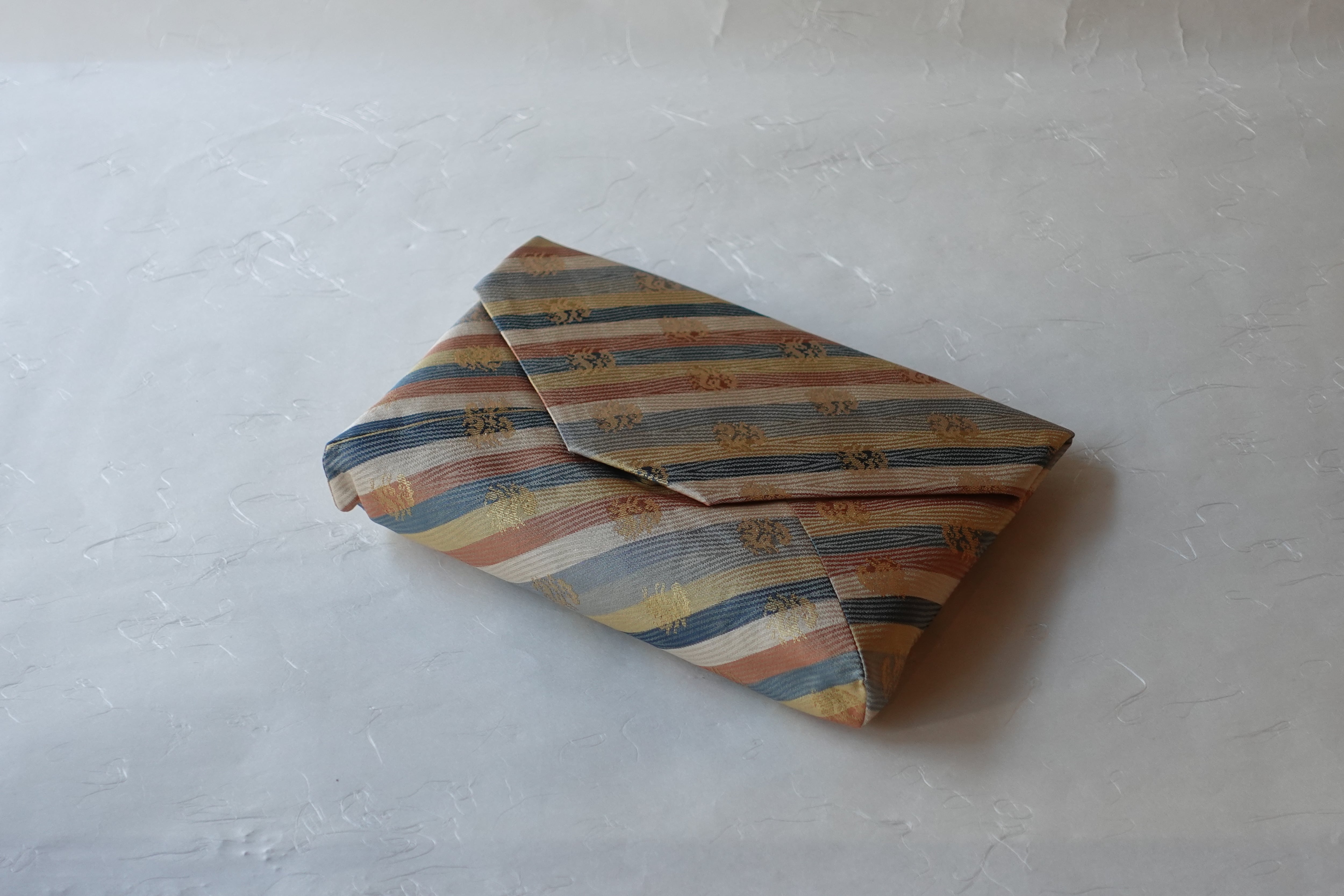
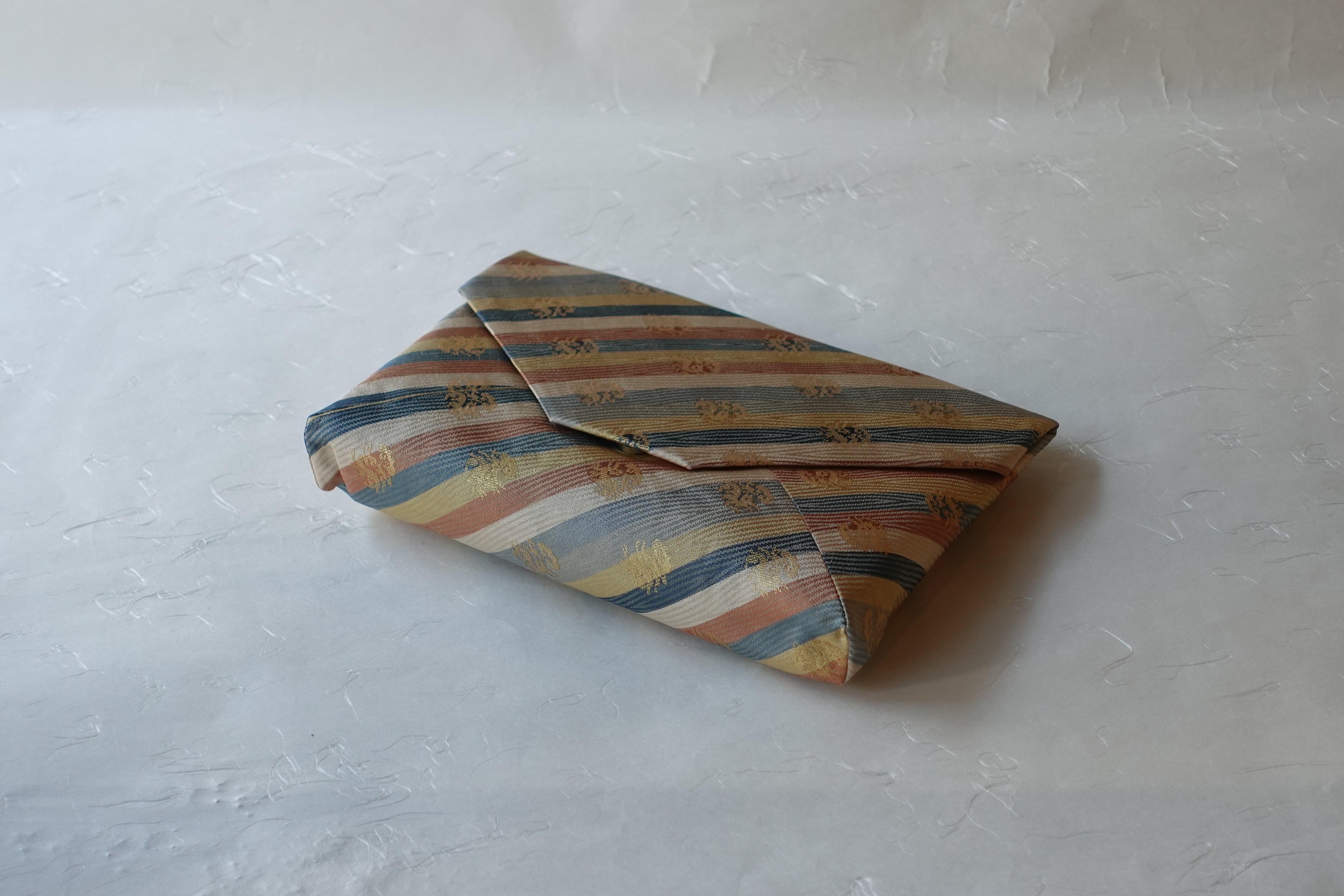
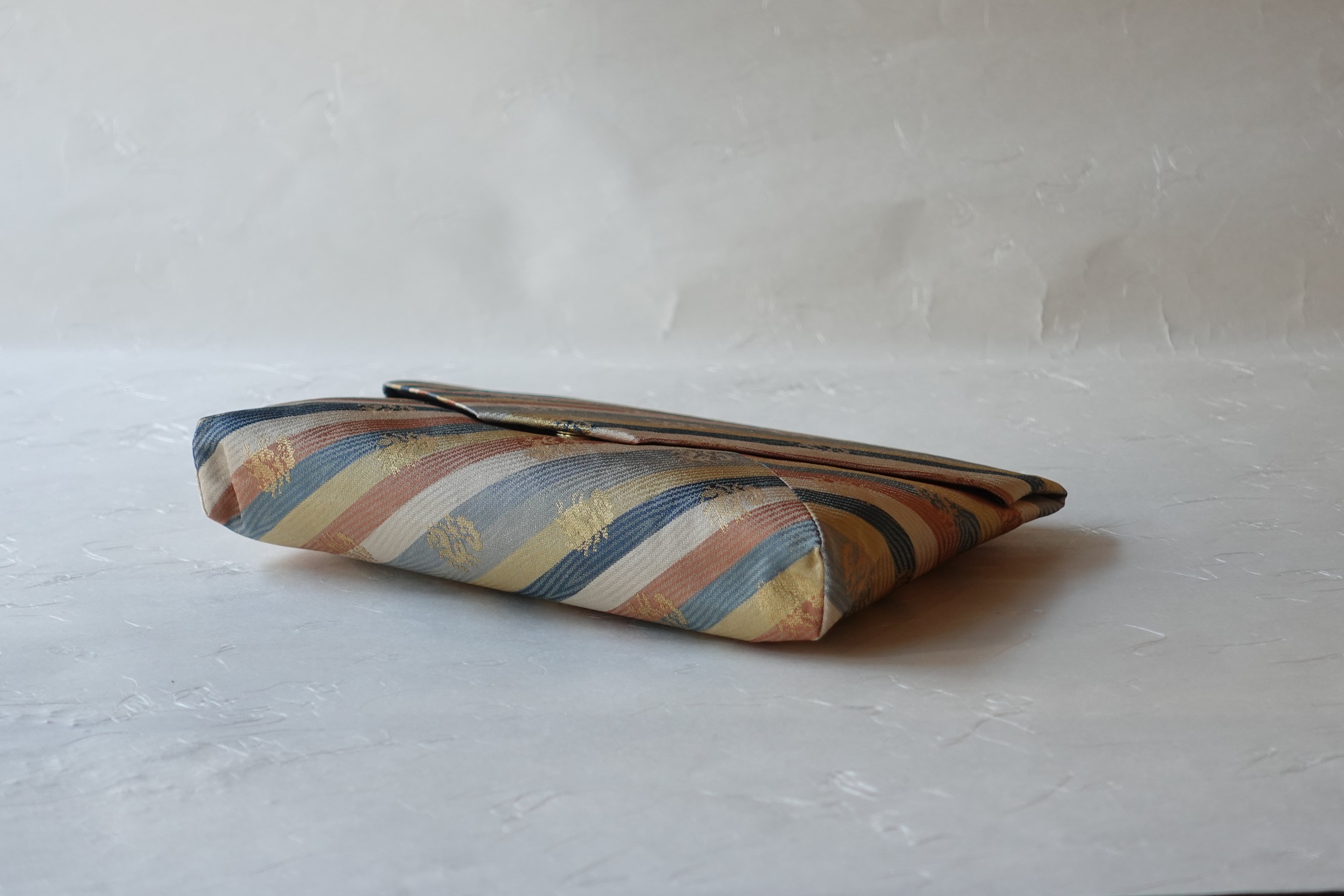
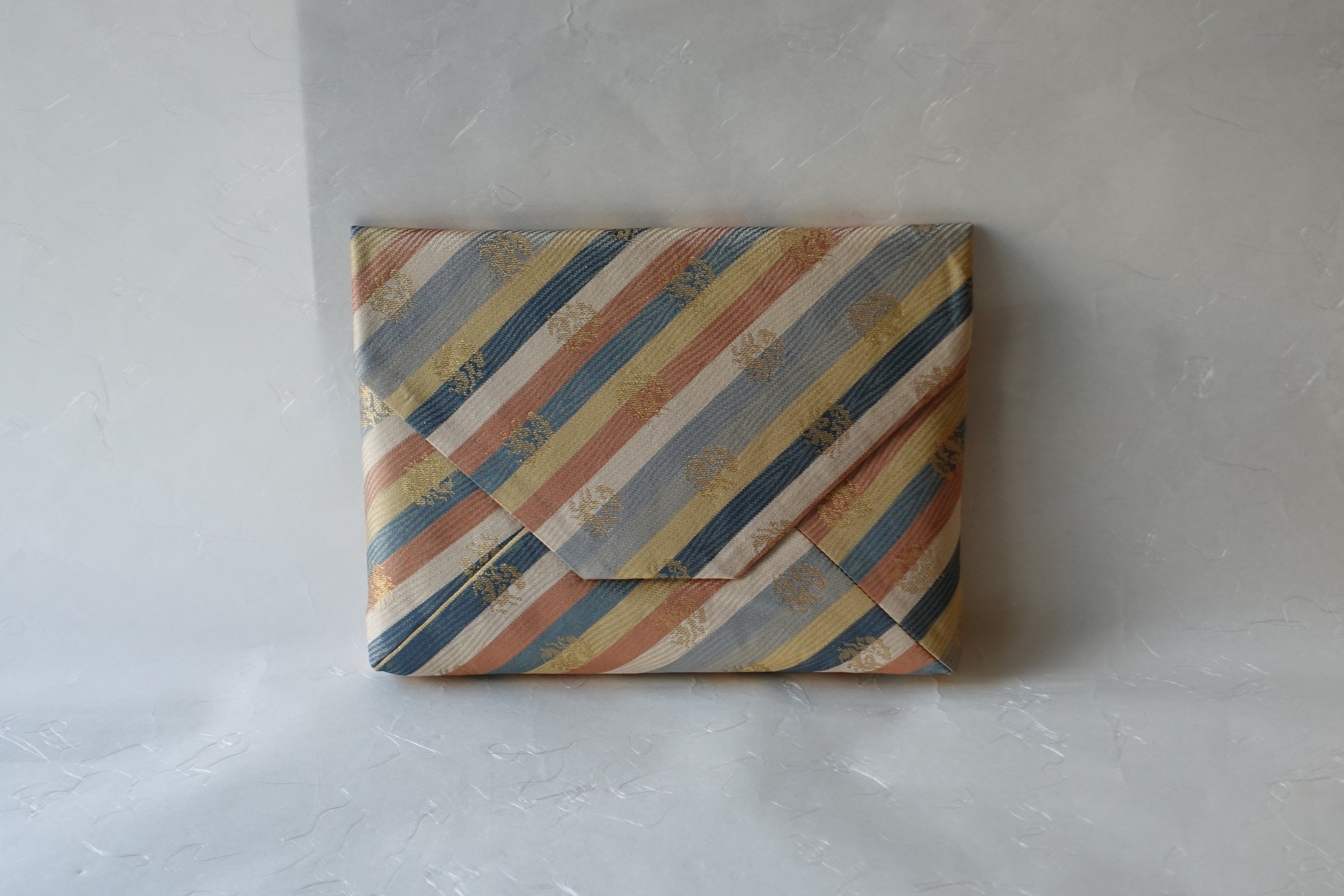
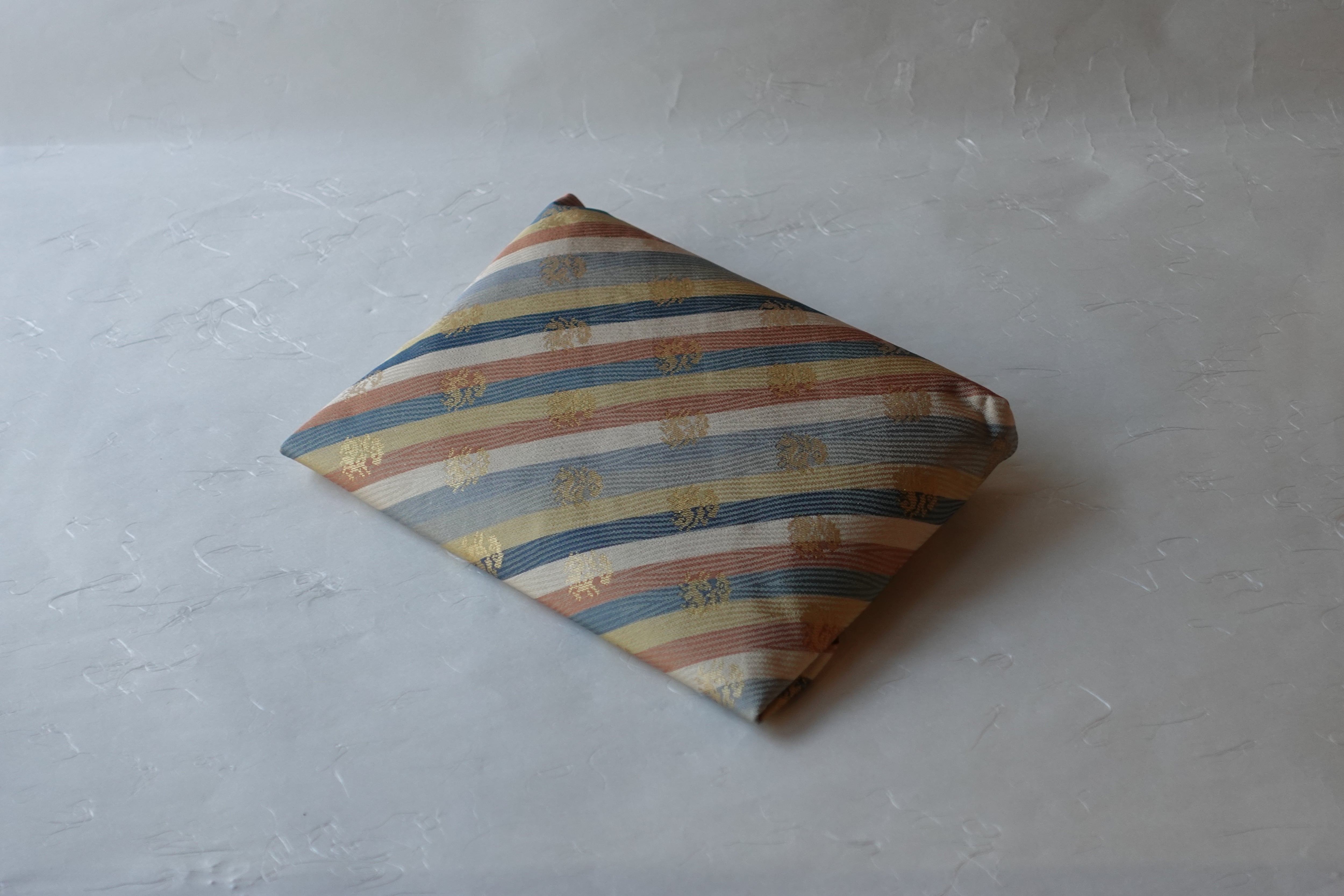
日本製 正絹(しょうけん) 数寄屋袋(すきやぶくろ) 紹智花兎(しょうちはなうさぎ)
JPY9,600(USD60.25)
残り1点
International shipping available
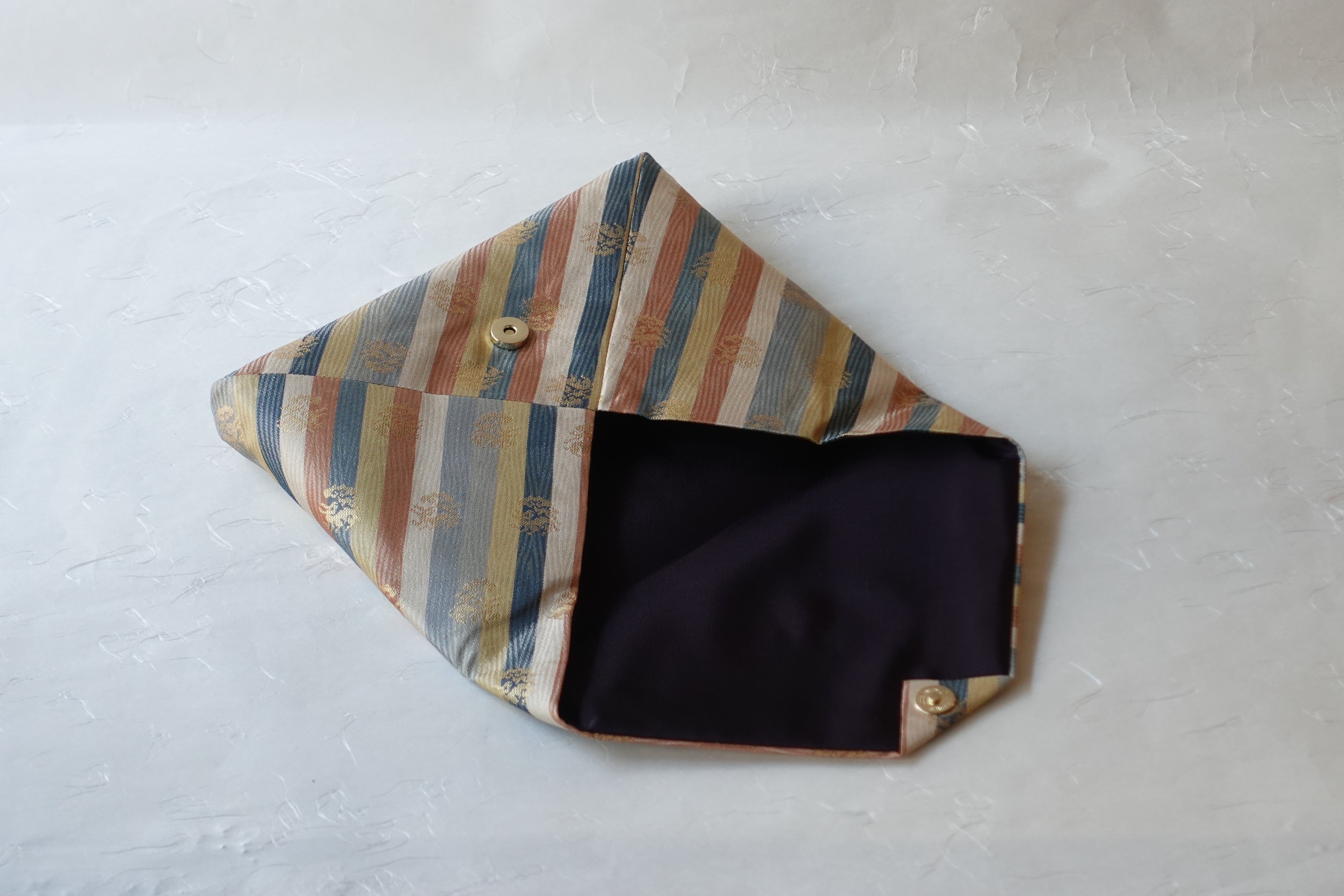
日本製の正絹(しょうけん)の数寄屋袋
(すきやぶくろ)のご紹介です。
数寄屋袋とは、茶道で使う帛紗や扇子、
楊枝、懐紙、志野袋などを入れて携帯する
袋物のことです。
和装の時に持つハンドバッグのようなもの
なので、茶道の時だけではなく和服で
お出かけの際にも使って頂けます。
この裂地は、茶道の流派の一つである
藪内流(やぶのうちりゅう)の流祖・
藪内剣仲紹智(けんちゅうじょうち)が
終生愛用したことからその名がつきました。
藪内剣仲紹智は安土桃山時代から
江戸時代初期にかけての茶人で、武野紹鷗に
師事し、千利休とは同門の相弟子(弟弟子)
にあたります。
のちに武家茶道を確立する古田織部の妹を
妻に迎えており、利休がその媒酌人を務める
ほど深い関わりがありました。
現在でも藪内流において、この紹智花兎は
祖堂の打敷(仏壇の敷物)や帛紗に
用いられる最高峰のお家好みとして
大切に受け継がれています。
名物裂における「花兎文様」は、元々
中国・明の時代に織られた金襴です。
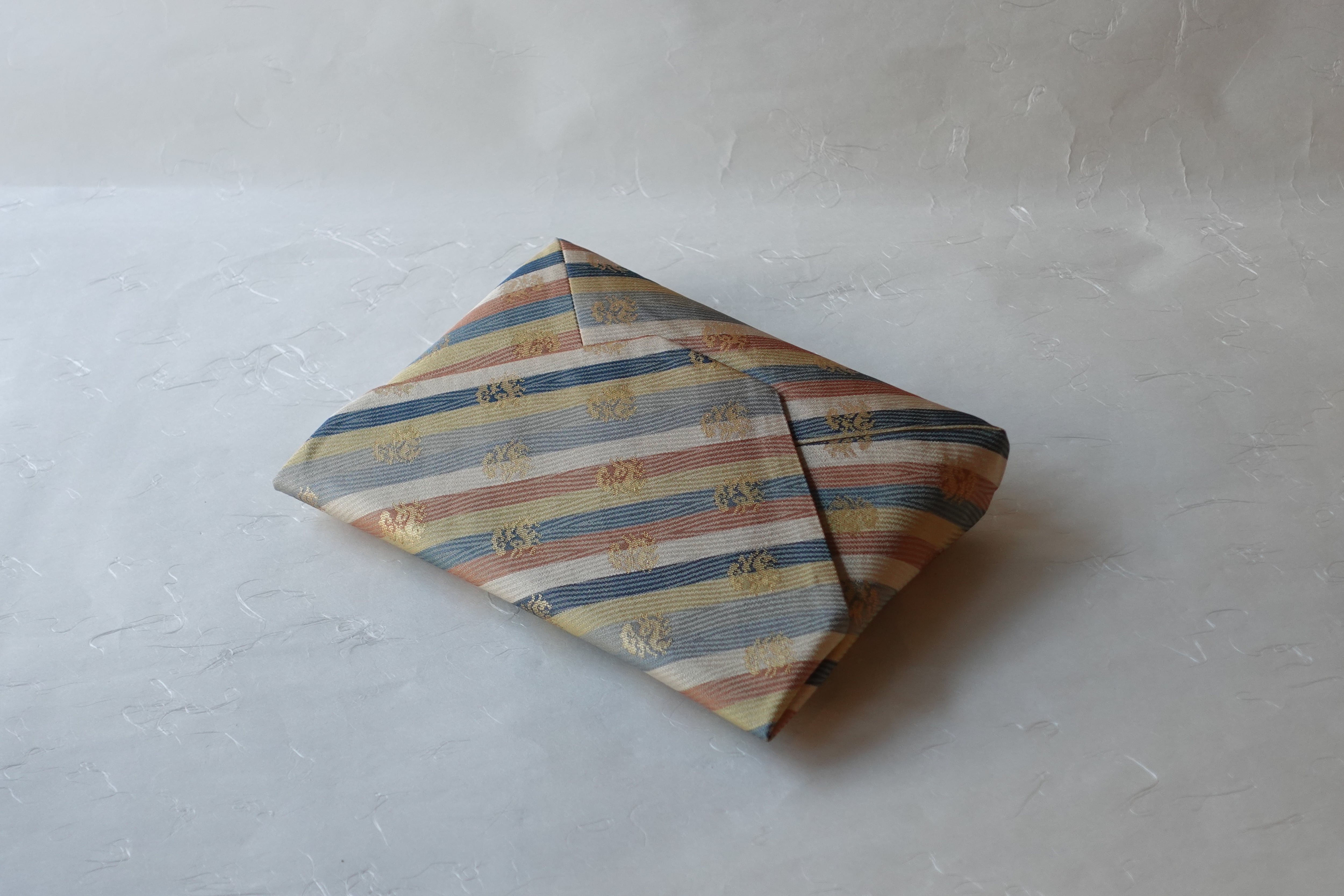
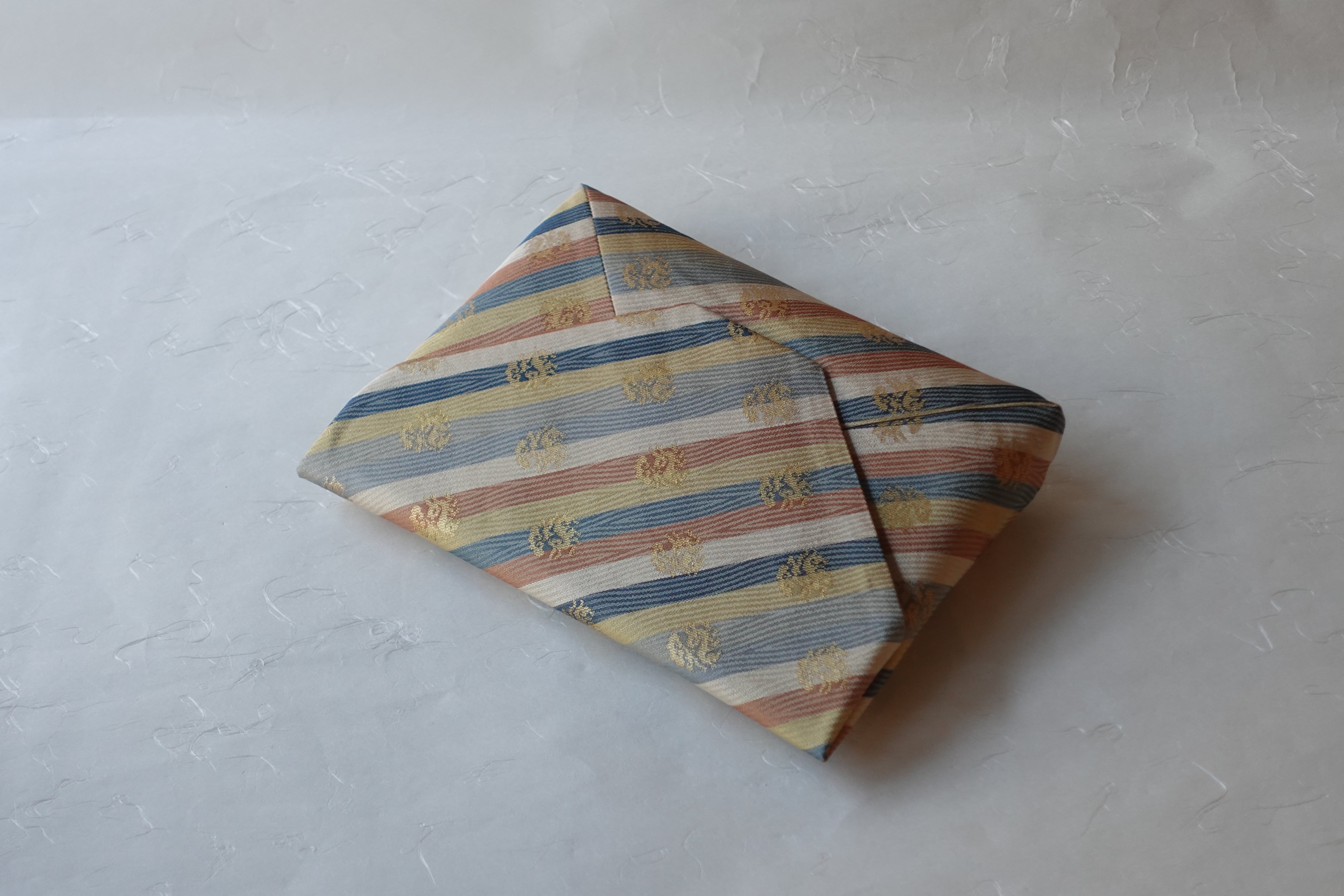
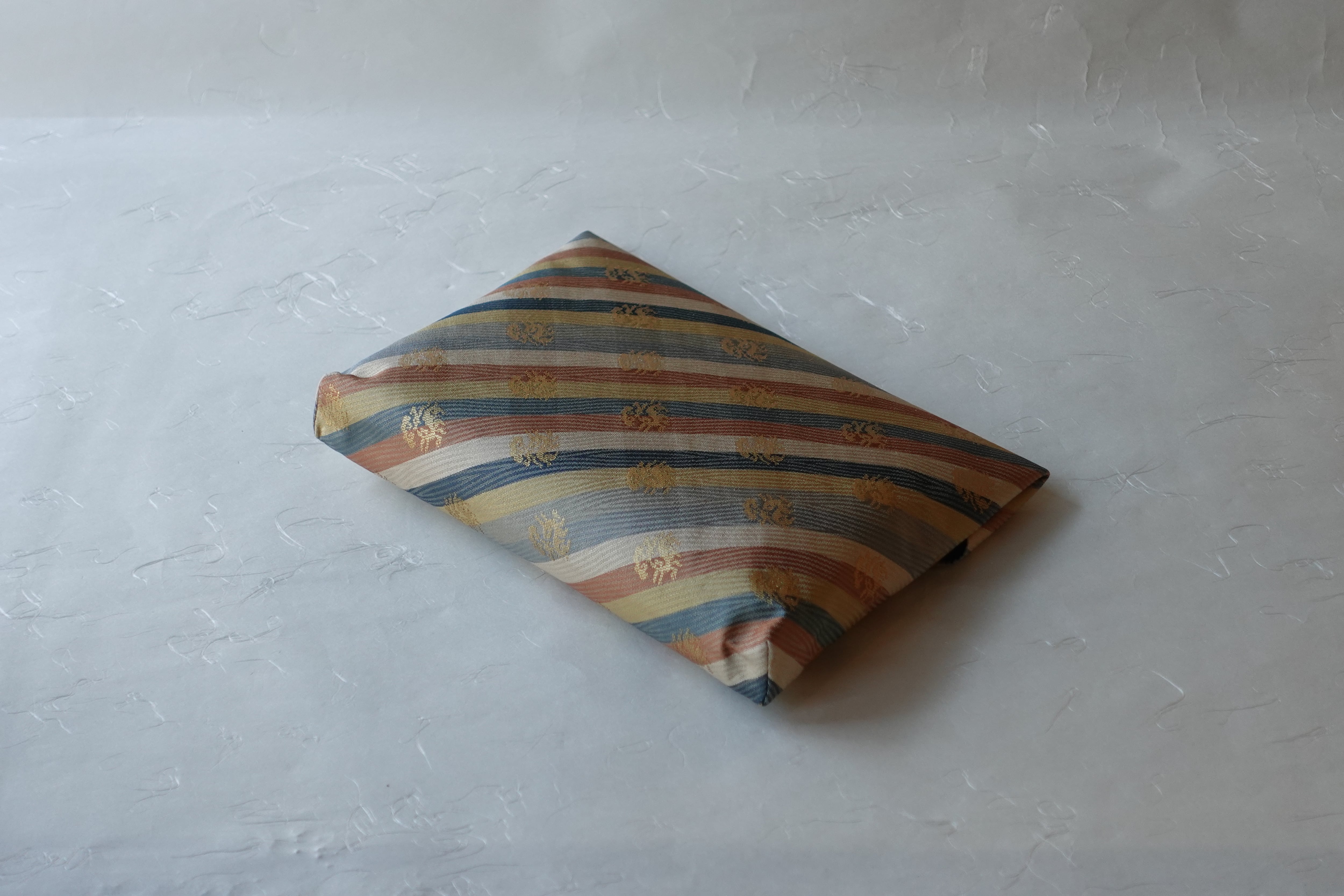
白茶色の地に、まるで麦藁や木目のように
ゆるやかに波打つ「よろけ縞(筋)」が
細かく織り出されています。
波打つ地紋の上に、金糸を用いて小さな
花兎の文様が整然と並べられています。
一般的な金襴のようなギラギラとした
派手さはなく、非常に上品で静かな情緒を
持っています。
大名物「円乗坊肩衝」や
中興名物「振鼓(ふりつづみ)」
の仕覆として使われています。
23cm × 17cm × 4cm
正絹
Made in Japan: Pure Silk Sukiya Pouch – Shochi Hana Usagi (Floral Rabbit Pattern)
We are pleased to introduce this Japanese-made sukiya pouch crafted from pure silk.
A sukiya pouch is a traditional pouch used in the Japanese tea ceremony to carry essential items such as a fukusa (silk cloth used in tea preparation), a folding fan, a yoji (tea pick), kaishi (Japanese paper used during the tea ceremony), and a shino-bukuro (small pouch).
Similar to a handbag carried with traditional Japanese clothing, it can be used not only for the tea ceremony but also when going out dressed in a kimono.
This textile is named after Yabunouchi Kenshu Jochi, the founder of the Yabunouchi school, one of the schools of Japanese tea ceremony, who cherished and used it throughout his life.
Yabunouchi Kenshu Jochi was a tea master who lived from the Azuchi-Momoyama period to the early Edo period. He studied under Takeno Joo and was a fellow disciple of Sen no Rikyu, though he was junior to Rikyu in their line of study.
He later married the younger sister of Furuta Oribe, who would go on to establish the samurai style of tea ceremony. Their relationship was so close that Sen no Rikyu himself served as the matchmaker at their wedding.
Even today, within the Yabunouchi school, this Shochi Hana Usagi textile is carefully preserved and passed down as one of the most prestigious textiles favored by the school. It is used for uchishiki (decorative cloths placed on Buddhist altars) in the ancestral hall, as well as for fukusa.
The Hana Usagi (floral rabbit) pattern, classified among Japan's celebrated historical textiles known as meibutsu-gire, originated as a gold brocade woven in China during the Ming dynasty.
On a pale beige-brown ground, fine, gently undulating stripes known as yore-jima are woven into the fabric, resembling straw or the grain of wood.
Against this softly undulating background, small floral rabbit motifs are arranged in orderly rows using gold thread.
Unlike the glittering flamboyance of typical gold brocade, this textile possesses an exceptionally refined elegance and a quiet, understated charm.
This textile has also been used for shifuku (protective pouches for tea ceremony utensils) for the celebrated tea caddies known as Enjobo Katatsuki, classified as a oomeibutsu (a great tea treasure), and Furitsuzumi, classified as a chuko meibutsu (a tea treasure recognized in a later period).
Dimensions: 23 × 17 × 4 cm
Material: Pure silk
日本制造 正绢(纯丝)数寄屋袋(茶道用收纳袋)绍智花兔
为您介绍这款日本制造的正绢(纯丝)数寄屋袋。
数寄屋袋是用于收纳和携带茶道中使用的帛纱、折扇、楊枝、怀纸、志野袋等物品的袋子。
它类似于穿着和服时携带的手提包,因此不仅可以在茶道活动时使用,也适合穿着和服外出时携带。
这种织物的名称源于薮内流的创始人薮内剑仲绍智。薮内流是日本茶道的一个流派,剑仲绍智一生都十分喜爱这种织物,因此得名「绍智花兔」。
薮内剑仲绍智是活跃于安土桃山时代至江户时代初期的茶人,曾师从武野绍鸥,与千利休属于同门师兄弟关系,是千利休的师弟。
后来,他迎娶了古田织部的妹妹为妻。古田织部是后来确立武家茶道的重要人物,而千利休甚至担任了这桩婚姻的媒人,由此可见他们之间有着深厚的交情。
时至今日,在薮内流中,「绍智花兔」依然被视为最具代表性的流派传承纹样之一,深受珍视。它作为家元特别钟爱的高级织物,被用于祖堂的打敷(佛坛上的铺垫)及帛纱,并世代传承至今。
名物裂中的「花兔纹样」,原本是一种织造于中国明代的金襕织物。
织物以白茶色为底色,细致地织出了缓缓起伏的「摇曳条纹」,其形态宛如麦秆或木纹,呈现出柔和的波浪状线条。
在起伏的底纹之上,采用金线将小巧的花兔纹样整齐地排列开来。
它不像一般金襕织物那样具有耀眼华丽的视觉效果,而是呈现出十分高雅、含蓄而宁静的韵味。
这种织物曾被用作大名物「圆乘坊肩冲」以及中兴名物「振鼓」的仕覆(用于包裹和保护茶道名物茶入的锦缎袋)。
尺寸: 23厘米 × 17厘米 × 4厘米
材质: 正绢(纯丝)
-
レビュー
(56)















JPY9,600 (USD60.25)