

-

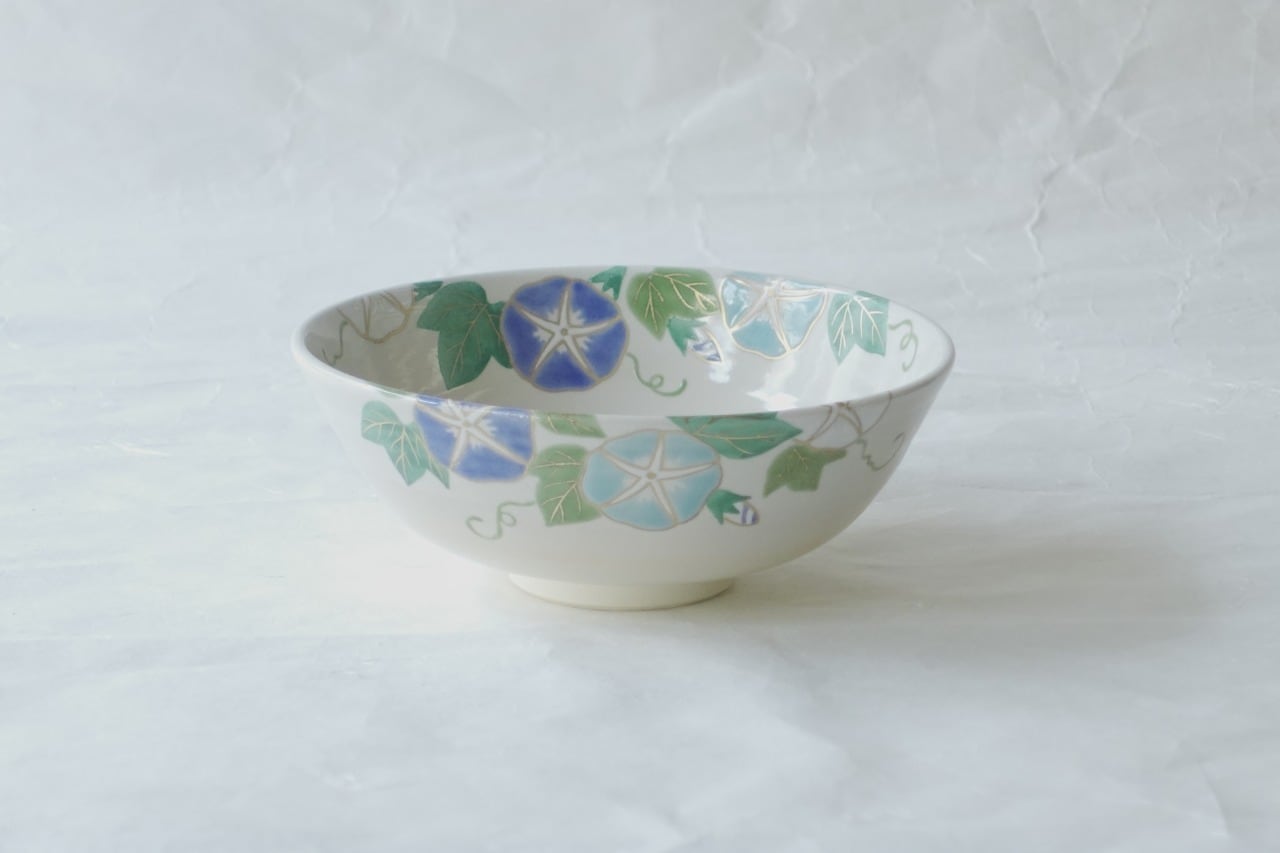
万古焼 円形 水盤(花器) スカイブルー パープルライン
¥5,390
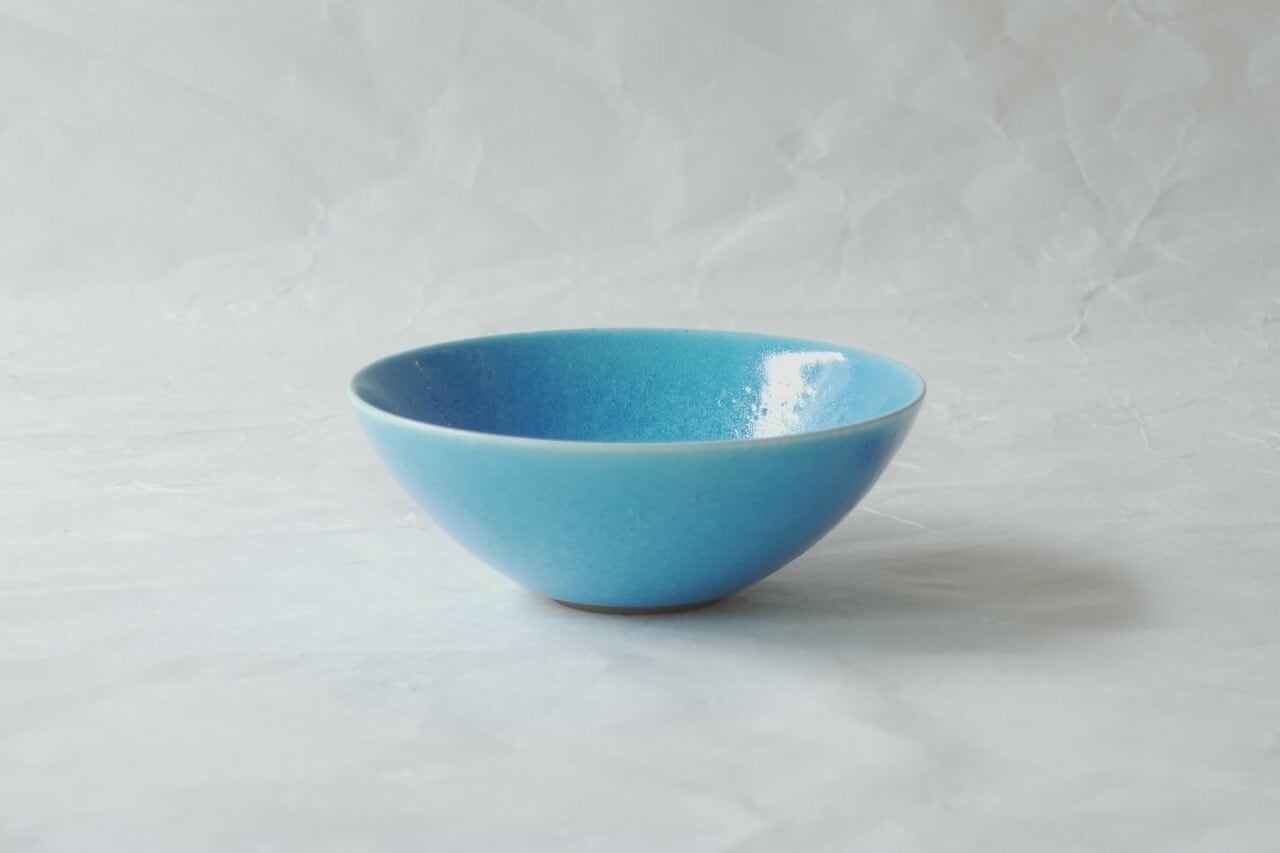
万古焼から円形の水盤(花器)の ご紹介です。 ある程度の深さがあり、縁が反り上がった 端正な形をしています。 内側は緩やかなカーブを描いた造形で スタイリッシュでやわらかい風合いと なっています。 色は薄いきれいなブルーで、さわやかで 涼し気な美しい色合いとなっています。 薄めの色の花器なので、花の色を選ばず ほとんどの花を生けることができます。 縁の上部に薄紫色のラインがフリーハンドの ように入っておりワンポイントのデザインが アクセントになっています。 この境目の部分はグラデーションが かかっており、美しい色合いが出ています。 外側にはろくろ目のような造形となっており 手づくり感を感じます。 大きさの割に軽量で持ち運びも 苦になりにくいと思われます。 シンプルですが花が引き立ち、明るく現代の 洋風の邸宅にもよくマッチします。 生ける花も飾る場面も幅広く、 汎用性の高い花器といえます。 径 34cm 高さ 8.5cm 箱なし Banko Ware – Round Water Basin (Flower Vase), Sky Blue with Purple Line We are pleased to introduce this round water basin (flower vase) from Banko ware. It has a moderate depth and a well-proportioned, refined shape with an upturned rim. The inside is gently curved, creating a stylish form with a soft and graceful feel. The color is a beautiful, pale blue with a fresh and cool appearance. Because the flower vase is finished in a light color, it does not restrict the choice of flowers and can be used with almost any type of flower. A pale purple line has been added freehand-style along the upper part of the rim, providing a distinctive accent to the simple design. The area where the colors meet has a subtle gradation, creating a beautiful transition of tones. The exterior has a form resembling marks left by wheel throwing, giving the piece a distinctly handmade character. Despite its relatively large size, it is lightweight and should be relatively easy to carry and move. Although simple in design, it beautifully highlights the flowers and matches well with bright, contemporary Western-style homes. It can be used with a wide variety of flowers and in many different settings, making it a highly versatile flower vase. Diameter: 34 cm Height: 8.5 cm No box included. 万古烧 圆形水盘(花器) 天蓝色 紫色线条 下面为您介绍一款万古烧圆形水盘(花器)。 器皿具有一定的深度,边缘向上翘起,整体造型端庄而规整。 内侧采用舒缓的弧形设计,呈现出时尚而柔和的质感。 颜色为清淡而漂亮的蓝色,清爽宜人,呈现出美丽而凉爽的色调。 由于花器的颜色较为淡雅,不挑花色,几乎可以搭配各种花卉进行插花。 器缘上部以类似手绘的方式加入了一道淡紫色线条,作为点缀的设计,为整体增添了视觉上的亮点。 这条线条与器身颜色的交界处带有渐变效果,呈现出优美的色彩层次。 外侧带有类似陶轮纹的造型,能够感受到手工制作的质感。 相对于其尺寸而言,整体重量较轻,搬动和摆放时也不容易感到负担。 虽然造型简洁,但能够很好地衬托花朵,也非常适合明亮、现代风格的西式住宅。 无论是所插的花卉,还是摆放的场景,都具有很大的选择空间,可以说是一款用途广泛、实用性很高的花器。 **直径:**34cm **高度:**8.5cm 无盒
-
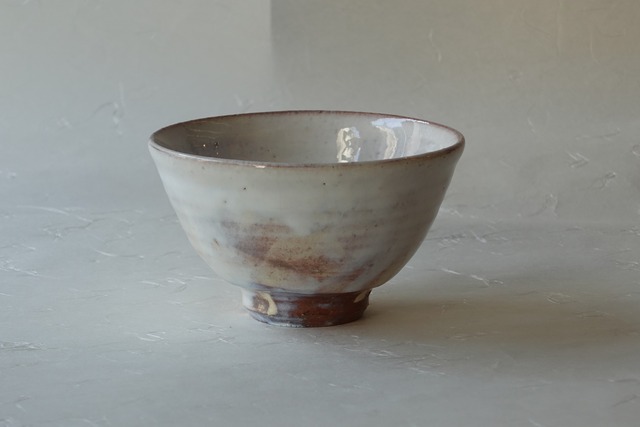
萩焼 林紅陽 作 白釉 井戸 抹茶碗
¥16,500
萩焼から林紅陽 作の井戸茶碗のご紹介です。 井戸茶碗は元々、朝鮮茶碗の一種で李朝の 比較的早い時期に作られたものと見られ、 室町時代以後に渡来した朝鮮茶碗の中でも 第一等の位に置かれ、唐物茶碗の王者と されています。 井戸茶碗の特徴として、土は鉄分の強い 荒目のもので赤褐色をしています。 この荒目の土を速いろくろで挽いているため 表面にあばら状のろくろ目が目立つことが 多くなっています。 高台は竹の節高台といわれ釉薬をかける時に 茶碗をつかみやすくする利便性として 生じたものと言われています。 これは削り出し高台で、高台内をさらえる ヘラが斜めに入るため高台内の中央が渦を 巻いたように高まるのが特徴です。 釉掛けは高台内側までずぶ掛けにする 総釉掛けのため高台の土を直接見れる部分が ほとんどありません。 井戸茶碗の約束の一つになっています。 全体に艶のある白い釉薬が掛けられており やわらかい雰囲気があります。 表面の釉薬はぼってりと厚めに掛けられ、 濃淡があり下地の土の風合いが感じられ、 その変化が見所となっています。 全体に細かな貫入やピンホールなどが見られ 萩焼の特徴がよく出ています。 どっしりと重厚感があり高級感があります。 大井戸茶碗よりも少し小ぶりなので、 薄茶としても使えるサイズです。 白い釉薬の部分が多く、明るい印象です。 使い込んで「萩の七変化」を楽しみながら 永く使える逸品です。 口径 13.7cm 高さ 7.8cm Hagi Ware – Kōyō Hayashi, White-Glazed Ido Matcha Tea Bowl We are pleased to introduce this Ido-style tea bowl by Kōyō Hayashi of Hagi ware. The Ido tea bowl was originally a type of Korean tea bowl, believed to have been made during the relatively early period of the Joseon Dynasty. Among the Korean tea bowls that were brought to Japan after the Muromachi period, Ido tea bowls were regarded as being of the highest rank and came to be considered the king of karamono tea bowls. One of the characteristics of an Ido tea bowl is its coarse clay, which contains a high amount of iron and has a reddish-brown color. Because this coarse clay was thrown on the wheel at high speed, prominent rib-like throwing marks are often visible on the surface. The foot is known as a “take no fushi” or bamboo-joint-style foot. It is said to have developed as a practical feature that made it easier to hold the tea bowl when applying glaze. This tea bowl has a carved foot. Because the spatula used to hollow out the inside of the foot enters at an angle, the center of the interior of the foot rises in a characteristic spiral-like form. The glaze is applied over the entire bowl, including the inside of the foot, in a technique known as complete glazing. As a result, there is almost no area where the bare clay of the foot can be seen directly. This is regarded as one of the established characteristics, or traditional formal features, of an Ido tea bowl. The entire bowl is covered with a glossy white glaze, creating a soft and gentle atmosphere. The glaze on the surface has been applied relatively thickly, with variations in its depth and tone that allow the texture of the underlying clay to be appreciated. These subtle changes are one of the highlights of the piece. Fine crazing and pinholes can be seen throughout the surface, bringing out the distinctive characteristics of Hagi ware. The bowl has a substantial weight and a dignified, robust presence, giving it a luxurious appearance. It is slightly smaller than an Oiido tea bowl, making it a suitable size for use with usucha, or thin tea. Because a large portion of the surface is covered in white glaze, it gives a bright and refreshing impression. This is a superb piece that can be enjoyed and used for many years while appreciating the famous “seven transformations of Hagi,” as the appearance of Hagi ware gradually changes through continued use. Diameter: 13.7 cm Height: 7.8 cm 萩烧 林红阳 作 白釉 井户 抹茶碗 下面为您介绍萩烧林红阳老师制作的井户茶碗。 井户茶碗原本是朝鲜茶碗的一种,被认为制作于李朝相对早期的时期。在室町时代以后传入日本的朝鲜茶碗之中,井户茶碗被置于最高等级,被誉为唐物茶碗之王。 井户茶碗的特点之一,是使用含铁量较高、质地粗糙的陶土,呈红褐色。 由于这种粗质陶土是在较快的旋转速度下拉坯成型,因此器物表面往往可以明显看到类似肋骨状的旋坯纹。 圈足被称为「竹节高台」,据说这是为了在施釉时便于抓握茶碗而形成的设计。 此碗采用削制高台,由于用于削刮高台内部的竹篦以倾斜的角度进入,因此高台内部中央部分会呈现出如同漩涡般隆起的特点。 施釉时一直覆盖到高台内部,采用将茶碗整体浸釉的「总釉施挂」工艺,因此几乎没有能够直接看到高台陶土的部分。 这也是井户茶碗所具有的传统特征之一。 整件茶碗施以带有光泽的白色釉药,呈现出柔和温润的气氛。 表面的釉药施得较为厚实,釉色具有浓淡变化,同时可以感受到胎土本身的质感,这些丰富的变化也成为欣赏此碗的一大看点。 整件茶碗可以看到细密的开片以及针孔等萩烧特有的窑变景象,充分展现了萩烧的特色。 整体造型沉稳厚重,具有十足的分量感与高级质感。 尺寸比大井户茶碗略小一些,因此作为薄茶茶碗使用也非常合适。 由于白色釉药所占面积较大,整体给人明亮而清雅的印象。 随着长久使用,欣赏所谓「萩之七变化」的釉色与器物变化,是一件可以陪伴您长久使用、值得珍藏的精品。 **口径:**13.7cm **高度:**7.8cm
-
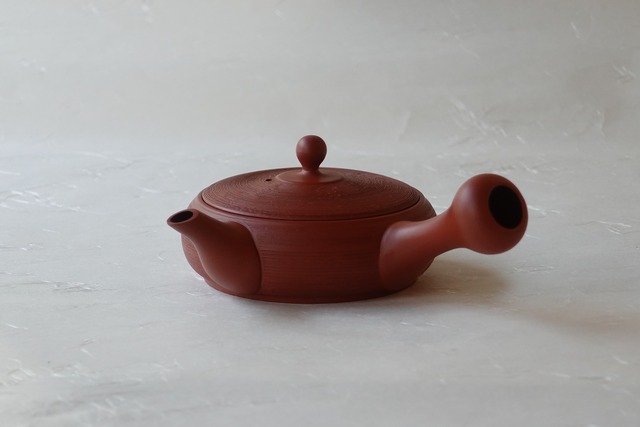
常滑焼の伝統工芸士が作った究極の手づくり平型急須 朱泥 千筋 松皮 160cc
¥8,250
常滑焼の伝統工芸士が作った 「究極の極平型急須」のご紹介です。 常滑焼の代名詞といえる「朱泥」は陶土に 多く含まれる鉄分がお茶の渋みを抑え、 まろやかな味を楽しむことが出来ます。 ほとんどの急須は丸型ですが、お茶の味を 最大限に引き出すために低く平たく作られた 究極の形をした急須です。 この急須は平型の中でも特に平たい 極平型となっています。 径が大きいため茶葉が最大限に、より早く 開いて、広がりも良くなり、よりおいしく お茶を抽出できる急須です。 湯の量が少なくても、茶葉が広がりやすく 茶葉の味を引き出しやすくなります。 茶葉が早く、より大きく広がるので 「水出し冷茶」にもお使い頂けます。 「水出し冷茶」は水で淹れた煎茶のことで 湯を使わないことでお茶の苦み成分を抑える ことが出来、甘みや旨みが多い煎茶と なります。 容量が160㏄なので、一人分を注ぎきる 急須となります。 金網を使うと金気がお茶の味に影響を与える ので、注ぎ口の内側に陶器製の精巧な 茶こし網が付けられています。 この茶こし網も急須本体も全て手づくり されており、熟練の職人技を注ぎ込んで 作られています。 口径と全体と底部の径がほぼ同じなので、 急須の内側が洗いやすく乾燥させやすいので 常に清潔さを保つことが出来 とても衛生的です。 蓋と本体の外側表面にはろくろ目のような 筋が横方向に入れられ、松皮のような 風合いがあり手間が掛けられています。 蓋は落ちにくいよう、がたつきなく、 きっちりと重めに作られ注ぎ口は液だれ しにくい作りとなっています。 極平型ですが全体が丸みを帯びた形をして おり、やわらかい雰囲気を感じられます。 蓋も平たいので、片手でも親指で蓋を 押さえながらお茶を注ぐことが出来、機能的 でもあります。 細部までよく考えられて作られ飽きの来ない 永く使える「究極の急須」と言える 逸品です。 16.5cm × 13.5cm 高さ 6cm 口径 8.5cm 容量 160cc 満水時 Tokoname Ware – Ultimate Handmade Flat Teapot, Shudei (Red Clay), “Sen-suji” Pine-Bark Texture, 160 cc Made by a Traditional Craftsman of Tokoname Ware We are pleased to introduce this “Ultimate Ultra-Flat Teapot,” handmade by a traditional craftsman of Tokoname ware. “Shudei,” the red clay that can be regarded as a hallmark of Tokoname ware, contains a high amount of iron. This helps reduce the astringency of tea, allowing you to enjoy a smoother and more mellow flavor. Most teapots have a rounded shape, but this teapot has been made exceptionally low and flat in order to bring out the flavor of tea to the fullest. It is an ultimate form designed specifically for extracting the best possible taste from tea. Among flat teapots, this one is an especially low-profile “ultra-flat” style. Because of its large diameter, the tea leaves can open more fully and quickly, spreading out well inside the teapot. This allows the tea to be extracted more deliciously. Even when using a smaller amount of hot water, the tea leaves can spread easily, making it easier to draw out their natural flavor. Because the tea leaves open quickly and spread widely, this teapot can also be used to prepare “cold-brewed green tea.” “Cold-brewed green tea” is sencha brewed with water rather than hot water. Since no hot water is used, the bitter components of the tea can be reduced, resulting in sencha with more sweetness and umami. With a capacity of 160 cc, this teapot is ideally sized for pouring out a single serving completely. Using a metal mesh strainer can cause the metallic properties of the metal to affect the flavor of the tea. Therefore, an intricately crafted ceramic tea strainer is fitted to the inside of the spout. Both the ceramic tea strainer and the body of the teapot are entirely handmade, incorporating the highly refined skills of an experienced craftsman. The diameter of the opening is almost the same as the overall diameter and the diameter of the bottom. As a result, the inside of the teapot is easy to wash and dry, allowing it to be kept clean at all times and making it highly hygienic. Horizontal lines resembling marks left by wheel throwing have been carefully applied to the outer surfaces of both the lid and the body. They create a texture reminiscent of pine bark and reflect the considerable time and craftsmanship invested in its creation. The lid is made relatively heavy and fits securely without wobbling, so that it is less likely to fall off. The spout is also designed to minimize dripping when pouring. Although it is an ultra-flat teapot, the entire form has softly rounded contours, giving it a gentle and warm appearance. The lid is also flat, allowing you to hold it down with your thumb while pouring tea with one hand, making it highly functional as well. Every detail has been carefully considered in its design. It is a refined, timeless piece that will not become tiresome even after years of use, and can truly be described as an “ultimate teapot.” Dimensions: 16.5 cm × 13.5 cm Height: 6 cm Opening Diameter: 8.5 cm Capacity: 160 cc (when filled to capacity) 常滑烧传统工艺士手工制作的究极型极平型急须 朱泥 千筋 松皮 160cc 下面为您介绍由常滑烧传统工艺士亲手制作的「究极型极平型急须」。 常滑烧的代名词之一「朱泥」,由于陶土中含有丰富的铁分,可以抑制茶汤的涩味,使茶汤更加醇和柔顺,能够品尝到更加圆润的茶味。 大多数急须都是圆形的,而这款急须为了最大限度地发挥茶叶的风味,特意制作得低矮而扁平,是一款追求极致造型的急须。 在平型急须之中,这款尤其扁平,属于「极平型」。 由于口径较大,茶叶能够最大限度地、更快地舒展开来,同时茶叶的扩散性也更好,因此能够更加充分地萃取出美味的茶汤。 即使使用较少的热水,茶叶也容易舒展开来,更容易将茶叶本身的滋味充分引出。 由于茶叶能够更快、更充分地舒展开来,因此也可以用于制作「冷水冷泡茶」。 所谓「冷水冷泡茶」,就是用冷水冲泡煎茶。由于不使用热水,可以抑制茶叶中苦味成分的析出,使冲泡出的煎茶具有更多的甘甜味和鲜味。 容量为160cc,是一款能够将一人份茶水一次注尽的急须。 如果使用金属网茶滤,金属成分可能会影响茶汤的味道,因此在出水口内侧安装了精巧的陶制茶滤网。 这款茶滤网以及急须本体全部采用手工制作,倾注了熟练工匠的精湛技艺精心打造而成。 由于急须的口径、整体直径以及底部直径几乎相同,因此内部容易清洗,也容易晾干,可以始终保持清洁,非常卫生。 壶盖和壶身外侧表面横向刻有类似陶轮纹的细密筋纹,呈现出如松树树皮般的独特质感,制作工艺十分讲究。 壶盖为了不易脱落,制作得严密而稳固,没有晃动感,并且具有一定的重量;出水口的设计也不易发生滴漏。 虽然属于极平型,但整体呈现圆润柔和的形状,给人一种温和而柔美的感觉。 壶盖同样采用扁平设计,因此即使单手也可以用拇指按住壶盖,同时倒出茶水,兼具实用性与功能性。 从细节之处都经过周密考量与精心制作,是一款不会令人厌倦、能够长久使用,可以称得上是「究极急须」的精品。 **尺寸:**16.5cm × 13.5cm 高度6cm **口径:**8.5cm **容量:**160cc(满水时)
-

萩焼 御本手 えくぼ 手づくり 組湯呑
¥7,480
萩焼から御本手の組湯呑のご紹介です。 赤茶色の粗めの土をろくろ成形し作られて おり萩焼らしい土ものの特徴がよく出ている 湯呑に仕上がっています。 所々に赤っぽい御本(ごほん)が不規則に 出ていて温かみのある味わい深い風合いが よく出ています。 寸胴型で内外ともにろくろ目が出ており、 持つと手にしっくりと馴染みます。 正面にはえくぼが作られ、親指を置く ポイントとなって持ちやすくなっています。 えくぼ周辺とその下は灰色のツートンに なっており、デザインの変化が見られます。 口は外側に若干反っており、飲みやすく なっています。 高台は切り高台にされて萩焼の特徴が みられます。 見た目の重厚さよりも軽くて扱いやすく なっています。 使い込んで頂き「萩の七変化」を楽しんで 頂ける逸品です。 大 口径 7.8cm 高さ 8.8cm 小 口径 7.3cm 高さ 8.5cm Hagi Ware — Gohon-de, “Dimpled” Handmade Pair of Yunomi Tea Cups We are pleased to introduce this pair of handmade Yunomi tea cups in the Gohon-de style from Hagi Ware. These tea cups are made by throwing coarse, reddish-brown clay on a potter’s wheel, bringing out the characteristic earthy quality of Hagi Ware. Irregular reddish Gohon markings appear in various places on the surface, creating a warm, rich, and deeply appealing character. The cups have a cylindrical form, with throwing marks from the potter’s wheel visible both inside and outside. When held, the cups fit comfortably and naturally in the hand. A “dimple” (ekubo) has been formed on the front of each cup, providing a natural resting point for the thumb and making the cups easy to hold. The area around the dimple and below it features a two-tone gray coloration, adding visual variation to the design. The rim curves slightly outward, making the cups comfortable to drink from. The foot has a cut-foot (kirikōdai) design, one of the characteristic features of Hagi Ware. Despite their substantial appearance, the cups are lighter and easier to handle than they might seem. This is a fine pair of Hagi Ware tea cups that can be enjoyed even more as they are used over time, allowing you to appreciate the famous “Seven Transformations of Hagi” (Hagi no Nanahenge)—the gradual changes in color, texture, and character that develop through continued use. Large: Opening diameter: 7.8 cm Height: 8.8 cm Small: Opening diameter: 7.3 cm Height: 8.5 cm 萩烧 御本手 凹痕 手工制作 成对汤杯 下面为您介绍一套来自萩烧的御本手成对汤杯。 采用赤褐色的粗质陶土,经由陶轮拉坯成形制作而成,充分展现了萩烧特有的土质陶器风格。 器身各处不规则地呈现出带有红色调的“御本(ごほん)”纹理,营造出温暖而富有韵味的质感。 整体为直筒型,内外均保留着陶轮成形时留下的旋纹,拿在手中能够自然贴合手掌,握感十分舒适。 正面制作有“凹痕”,可以作为拇指放置的位置,因此拿握起来更加方便。 凹痕周围及其下方呈现灰色的双色变化,使整体设计富于层次与变化。 杯口略微向外翻,饮用起来更加顺畅。 底部采用“切高台”造型,可以欣赏到萩烧的传统特色。 虽然外观看起来具有厚重感,但实际重量较轻,使用和拿取都十分方便。 这是一件值得长期使用,并在日常使用过程中慢慢欣赏萩烧“七变”之美的佳品。 大号 口径:7.8厘米 高度:8.8厘米 小号 口径:7.3厘米 高度:8.5厘米
-

美濃焼 林亮次 荘山窯 鉄釉 志野 ぐい呑み 小
¥6,050
美濃焼から林亮次 荘山窯の志野のぐい呑みの ご紹介です。 美濃焼の代名詞ともいえる志野焼の器です。 志野焼は大変手間のかかる焼き方をするため 専門のノウハウがあり、独自の技術が 必要となります。 従って、他の産地で真似て作ることが 非常に難しくなっています。 そのため志野焼は美濃焼でしか見られなく なっており美濃焼独自の焼き物といえます。 人が完全にコントロールできない焼き物の 独自の世界がそこにはあります。 気温や湿度、天候などの様々な条件で 変化して、同じものが絶対に出来ない 独自の炎の芸術といっても 過言ではありません。 力強いイメージで作られており、微妙な 釉薬の色合いと焼成で志野独特の世界観を 作りあげています。 このぐい呑みは正面の鉄釉の柄が特徴と なっており茶褐色の草画が描かれ 独特の風合いを出しています。 また、白い釉薬の垂れや赤茶色に変化した 跡も見られ志野焼きの窯変の特徴がいくつも 見ることが出来ます。 切立型ですが、胴には若干丸みがあり 口の下で一旦くびれ、その上の口は外側に 反っており、飲みやすくなっています。 胴回りにはろくろ目があったり、削ぎが あったり全体にピンホールが無数にあったり とても変化に富んでいます。 その変化が手にしっくりと馴染み、 持ちやすく安定感もあります。 自家用でもプレゼントでも海外のお土産でも 使える価値ある逸品です。 口径 6cm 高さ 5cm Mino Ware — Ryoji Hayashi, Shozan Kiln — Iron-Glazed Shino Sake Cup, Small We are pleased to introduce this Shino sake cup made by Ryoji Hayashi of Shozan Kiln, Mino Ware. This is a piece of Shino ware, a style of pottery that can be considered synonymous with Mino Ware. Because Shino ware requires a highly labor-intensive firing process, specialized know-how and unique techniques are essential. Therefore, it is extremely difficult to reproduce Shino ware in other pottery-producing regions using the same methods. For this reason, Shino ware is now seen almost exclusively in Mino Ware, and can be regarded as a distinctive style of pottery unique to Mino. It possesses a unique world of pottery that cannot be completely controlled by human hands. The appearance changes according to various conditions such as temperature, humidity, and weather, making it absolutely impossible to create two pieces that are exactly alike. It is no exaggeration to call Shino ware a unique art of fire. This sake cup has been created with a bold and powerful impression, while subtle variations in the glaze colors and the firing process create the distinctive world of Shino ware. The most distinctive feature of this cup is the iron-glazed pattern on the front. A tea-brown botanical design has been applied, giving the piece a unique character and texture. There are also traces where the white glaze has flowed down, as well as areas that have changed to a reddish-brown color. These are some of the characteristic effects of kiln transformation, or kohen, found in Shino ware. Although the cup has a straight-sided form, the body has a slight rounded shape. It narrows slightly just below the rim, while the upper rim flares outward, making it comfortable to drink from. The body is rich in variation, with visible throwing marks from the potter's wheel, areas that have been shaved, and countless tiny pinholes across the surface. These variations fit comfortably and naturally in the hand, making the cup easy to hold while also providing a sense of stability. This is a valuable piece that can be enjoyed for personal use, given as a gift, or purchased as a special souvenir from Japan for someone overseas. Dimensions: Diameter of opening: 6 cm Height: 5 cm 美浓烧 林亮次 庄山窑 铁釉 志野酒杯 小型 下面为您介绍一款由美浓烧林亮次庄山窑制作的志野酒杯。 这是一件可以说是美浓烧代表性风格之一的志野烧器物。 由于志野烧采用的是非常费工夫的烧制方法,因此需要专业的制作诀窍以及独特的技术。 因此,要在其他产地仿制志野烧,是非常困难的。 也正因为如此,如今志野烧几乎只能在美浓烧中见到,可以说是美浓烧独有的陶艺品种。 其中蕴含着一个人无法完全控制的陶瓷独特世界。 它会随着气温、湿度、天气等各种条件而发生变化,因此绝不可能烧制出完全相同的作品,说它是一种独特的“火焰艺术”也毫不为过。 这件作品以强劲有力的形象制作而成,通过微妙的釉药色泽变化以及烧成效果,营造出志野烧独有的世界观。 这件酒杯的特点在于正面的铁釉纹样,绘有茶褐色的草纹图案,呈现出独特的质感与风韵。 此外,还可以看到白色釉药自然流淌的痕迹,以及釉色变化为红褐色的烧成痕迹,可以欣赏到志野烧窑变所呈现出的多种独特特征。 器形为切立型,但杯身略带圆润,在杯口下方稍微收紧,而上方的杯口则向外翻展,因此饮用起来十分顺畅。 杯身周围既有轱辘成形时留下的旋纹,也有削削的痕迹,整体还布满了无数针孔状的小孔,呈现出非常丰富多变的表情。 这些丰富的变化与手部十分贴合,拿握舒适,同时具有良好的稳定感。 无论自用、作为礼物,还是作为赠送海外亲友的日本伴手礼,都是一件具有收藏与使用价值的佳品。 口径:6厘米 高度:5厘米
-

常滑焼の伝統工芸士が作った究極の極平型急須 千段 黒泥 窯変 200cc
¥8,250
常滑焼の伝統工芸士が作った 「究極の極平型急須」のご紹介です。 常滑焼の急須は鉄分を多く含んでいるため お茶の味がまろやかになると 言われています。 ほとんどの急須は丸型ですが、お茶の味を 最大限に引き出すために低く平たく作られた 究極の形をした急須です。 この急須は平型の中でも特に平たい 極平型となっています。 径が大きいため茶葉が最大限に、より早く 開いて、広がりも良くなり、よりおいしく お茶を抽出できる急須です。 湯の量が少なくても、茶葉が広がりやすく 茶葉の味を引き出しやすくなります。 茶葉が早く、より大きく広がるので 「水出し冷茶」にもお使い頂けます。 「水出し冷茶」は水で淹れた煎茶のことで 湯を使わないことでお茶の苦み成分を抑える ことが出来、甘みや旨みが多い煎茶と なります。 容量が200㏄なので、余裕のある 一人用の急須となります。 金網を使うと金気がお茶の味に影響を与える ので、注ぎ口の内側に陶器製の精巧な 茶こし網が付けられています。 この茶こし網も急須本体も全て手づくり されており、熟練の職人技を注ぎ込んで 作られています。 口径と全体と底部の径がほぼ同じなので、 急須の内側が洗いやすく乾燥させやすいので 常に清潔さを保つことが出来 とても衛生的です。 蓋と本体の外側表面にはろくろ目のような 筋が横方向にかすかに見られ手間が 掛けられています。 また、全体に窯変がうっすらと現れており 侘びた雰囲気があります。 蓋は落ちにくいよう、がたつきなく、 きっちりと重めに作られ注ぎ口は液だれ しにくい作りとなっています。 極平型ですが全体が丸みを帯びた形をして おり、やわらかい雰囲気を感じられます。 蓋も平たいので、片手でも親指で蓋を 押さえながらお茶を注ぐことが出来、機能的 でもあります。 細部までよく考えられて作られ飽きの来ない 永く使える「究極の急須」と言える 逸品です。 16cm × 13cm 高さ 7cm 口径 9cm 容量 200cc (満水時) The “Ultimate Extremely Flat Kyusu,” handcrafted by a certified traditional craftsman of Tokoname ware, is introduced here. Tokoname ware teapots are said to produce a mellow, smooth taste because the clay contains a high amount of iron. Most teapots have a rounded shape, but this teapot has been designed in an extremely low and flat form to bring out the maximum flavor of the tea. It is an ultimate shape developed specifically for this purpose. Among flat-shaped teapots, this one is particularly flat and is known as an “extremely flat” kyusu. Because it has a large diameter, the tea leaves can open more fully and quickly, allowing them to spread out well and making it possible to extract the tea more deliciously. Even when using a relatively small amount of hot water, the tea leaves can spread easily, making it easier to draw out their full flavor. Since the tea leaves open quickly and spread widely, this teapot can also be used to make “cold-brewed green tea.” “Cold-brewed green tea” refers to sencha brewed with cold water rather than hot water. By not using hot water, the extraction of bitter components can be reduced, resulting in sencha with more sweetness and umami. With a capacity of 200 cc, it is a generously sized teapot for one person. Because using a metal mesh strainer can cause the metallic properties of the metal to affect the flavor of the tea, a finely crafted ceramic tea strainer is fitted inside the spout. Both this tea strainer and the teapot itself are entirely handmade, incorporating the skills and craftsmanship of an experienced artisan. Since the diameter of the opening, the main body, and the bottom are almost the same, the inside of the teapot is easy to wash and dry, allowing it to be kept clean at all times and making it highly hygienic. On the outer surfaces of the lid and main body, faint horizontal lines resembling marks left by the potter’s wheel can be seen, showing the considerable amount of craftsmanship that has gone into its creation. A subtle kiln-change effect, known as “yohen,” appears across the entire surface, giving the teapot a refined, rustic and understated atmosphere. The lid is made relatively heavy so that it fits securely without wobbling or easily coming off, while the spout is designed to prevent tea from dripping after pouring. Although it is an extremely flat kyusu, the entire body has gently rounded contours, giving it a soft and pleasant appearance. The lid is also flat, allowing you to hold it down with your thumb while pouring tea with one hand, making it highly functional as well. Every detail has been carefully considered in its design. It is an enduring piece that will not become tiresome with use and can be enjoyed for many years. It can truly be described as an “ultimate kyusu.” Dimensions: 16 cm × 13 cm Height: 7 cm Opening diameter: 9 cm Capacity: 200 cc (when filled to the brim) 常滑烧传统工艺士手制的“究极极平型”茶壶 千段 黑泥窑变 200cc 现为您介绍一款由常滑烧传统工艺士亲手制作的“究极极平型茶壶”。 据说,常滑烧茶壶由于含有丰富的铁分,因此能够使茶的味道更加醇和。 大多数茶壶都是圆形的,而这款茶壶为了最大限度地发挥茶叶的风味,采用低矮扁平的设计,打造出极为讲究的究极造型。 这款茶壶在平型茶壶之中,尤其属于非常扁平的“极平型”。 由于壶径较大,茶叶能够最大限度地、更快速地舒展开来,同时茶叶的扩散效果也更好,因此能够更充分地萃取出茶的美味。 即使使用的热水量较少,茶叶也容易舒展开来,更容易将茶叶本身的滋味充分释放出来。 由于茶叶能够快速且充分地舒展开来,因此也可以用来冲泡“冷水出冷茶”。 所谓“冷水出冷茶”,就是使用冷水冲泡煎茶。由于不使用热水,可以抑制茶中的苦味成分,从而泡出甜味和鲜味更加丰富的煎茶。 容量为200cc,因此是一款容量较为充裕、适合一人使用的茶壶。 如果使用金属滤网,金属成分可能会影响茶的味道,因此在壶嘴内侧安装了精巧的陶制茶滤网。 这款茶滤网以及茶壶本体全部采用手工制作,倾注了熟练工匠的精湛技艺。 由于壶口直径、壶身整体直径以及底部直径几乎相同,因此茶壶内部容易清洗,也容易干燥,可以始终保持清洁,非常卫生。 壶盖及壶身外侧表面,可以隐约看到如同拉坯痕迹般横向的细微纹路,制作十分讲究。 此外,整体表面还淡淡地呈现出窑变效果,散发出一种古朴而含蓄的侘寂气息。 壶盖为了不易滑落,制作得严密稳固,没有松动感,并且具有一定重量;壶嘴的设计也不易产生滴漏。 虽然属于极平型,但整体造型带有柔和的圆润曲线,给人一种温和柔美的感觉。 壶盖同样较为扁平,因此单手注茶时,可以用拇指按住壶盖,同时进行倒茶,兼具良好的实用性。 这是一件从细节之处都经过周密考量、经久耐看且能够长久使用的作品,可以称得上是一把真正的“究极茶壶”。 尺寸:16cm × 13cm 高度:7cm 壶口直径:9cm 容量:200cc(满水时)
-

萩焼 紫釉 夫婦茶碗 (ペア)
¥8,470
萩焼から松尾邑華 白景山窯の夫婦茶碗の ご紹介です。 赤茶色の荒めの土をろくろで挽き、成形した 手づくりのご飯茶碗です。 紫色の釉薬が掛けられその上から白い釉薬が 掛けられているように見えます。 茶碗の内側は、口の部分が白い釉薬に覆われ その他の部分は紫釉となっておりツートンの デザインできれいな色合いになっています。 外側は白と紫の釉薬が混在しており、白釉の 垂れの合間に紫釉が所々に表れています。 うっすらとろくろ目が見えて手作りの 良さを感じます。 全体の形はある程度の丸みを帯び口の部分は 外側に開いており食べやすく口当たりが よくなっています。 表面は艶やかで全体に貫入が見られ、 ピンホールも少し見られます。 使い込んで頂くと、「萩の七変化」を 楽しんで頂けます。 美しい薄紫の釉薬がどのように変化して いくのか楽しみになりそうな逸品です。 大 口径 12.5cm 高さ 6.3cm 小 口径 11cm 高さ 6cm Hagi Ware Purple-Glazed Pair of Rice Bowls We are pleased to introduce this pair of rice bowls from Hagi Ware, made by Yūka Matsuo of Hakkeizan Kiln. These handmade rice bowls are shaped on a potter’s wheel using coarse, reddish-brown clay. A purple glaze has been applied, with a white glaze appearing to have been applied over it. Inside the bowls, the rim is covered with white glaze, while the rest of the interior is finished in purple glaze, creating a beautiful two-tone design. On the outside, the white and purple glazes intermingle, with the purple glaze appearing here and there between the areas where the white glaze has flowed downward. The faint traces of the potter’s wheel can be seen on the surface, giving the bowls a distinct handmade character. The overall shape has a gentle roundness, while the rim opens slightly outward, making the bowls comfortable to eat from and pleasant on the lips. The surface has a glossy finish, with fine crazing visible throughout, as well as a few small pinholes. With continued use, you can enjoy the phenomenon known as “Hagi no Shichihenka” (the Seven Transformations of Hagi Ware), in which the appearance of the glaze and surface gradually changes over time. This is a beautiful and exceptional pair of rice bowls that will make you look forward to seeing how the delicate pale-purple glaze changes with use. Large: Diameter 12.5 cm / Height 6.3 cm Small: Diameter 11 cm / Height 6 cm 萩烧 紫釉 夫妻饭碗(成对) 现为您介绍一款来自萩烧、由松尾邑华白景山窑制作的夫妻饭碗。 这是以带有红褐色、质地较粗的陶土,经拉坯成形制作而成的手工饭碗。 器物施以紫色釉药,其上又似乎覆盖了一层白色釉药。 饭碗内侧,碗口部分覆盖着白色釉药,其余部分则为紫釉,呈现出白、紫双色相间的设计,色彩非常漂亮。 外侧则是白釉与紫釉相互交融,紫釉在白釉自然流淌的间隙中若隐若现。 可以隐约看到拉坯时留下的旋纹,充分感受到手工制作所带来的独特韵味。 整体造型带有一定的圆润感,碗口向外自然张开,入口方便,触感也十分舒适。 表面光润细腻,整体可见开片纹,并有少量针孔。 随着长期使用,可以欣赏到萩烧特有的“七变”之美。 美丽的淡紫色釉药在使用过程中将如何发生变化,令人充满期待,是一件值得品味的佳作。 大号 口径:12.5厘米 高度:6.3厘米 小号 口径:11厘米 高度:6厘米
-
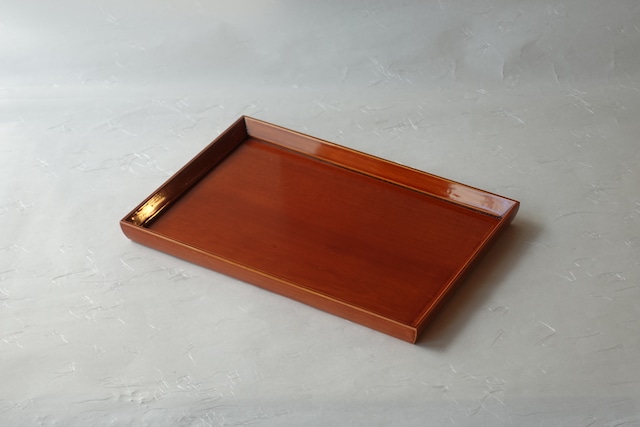
春慶塗 木製 進物盆(金封盆)大 うるし塗
¥5,280
飛騨春慶塗から木製の進物盆(金封盆)の ご紹介です。 材料は樹齢200年以上の天然木を使い、 板状に挽いたものを反りや変形を防ぐために 数年間乾燥させます。 こうして初めて木地を使うことが出来ます。 また、塗りに関しても、本うるし塗りと なっており、うるし塗りの何とも言えない、 艶や風合いは一流品といえるものです。 これも熟練の技術が必要となります。 塗りの工程は木地磨き、目止め、着色と 下塗り、仕上げ磨き、すり漆、コクソ巻き、 すり漆、上塗り、乾燥と少なくとも、 9つの塗の工程があります。 乾燥時には、ゴミやホコリが付かないように 注意したり、「塗りだれ」を防ぐために、 一定の時間ごとに反回転させながら、 乾燥させていきます。 本物のうるし塗は、時が経っても風合いの 良さが持続し耐久性もあります。 「金封盆」は、お礼やお祝いなどのお金を 祝儀袋や封筒に入れて先方に差し出す時に、 上にのせて使うお盆のことです。 冠婚葬祭すべて正式な行事に使われる お盆です。 別名、祝儀盆とか切手盆とも言いますが、 お寺様にお布施を出す時にも使うため ここでは「金封盆」という名前と なっています。 正式には、特にお寺様にお布施を出す時に、 直接手渡すのは良くないと言われています ので、金封盆にのせてお出しすることが よしとされています。 この金封盆は木製のうるし塗の高級漆器で あり、「本物」志向のお盆です。 一旦ご購入頂ければ、ずっと使って頂くこと が出来ます。 慶事でも仏事でもどちらもお使い頂けます。 持つと軽く、独特な艶と風合いがあります。 より「いいもの」をお求めの方は、 是非ご検討下さい。 縁のある長角盆であることから、 湯呑とお菓子をのせて使うことも可能です。 同じ春慶塗と称して、木製ではないものや うるし塗ではないものがございますので、 信用のある専門店でのご購入を おすすめいたします。 木製 うるし塗 26.7cm × 18.5cm × 高さ 2cm Hida Shunkei Lacquerware Wooden Gift Tray (Money Envelope Tray), Large — Genuine Urushi Lacquer This is a wooden gift tray (money envelope tray) from Hida Shunkei Lacquerware. The material is natural wood from trees that are more than 200 years old. The wood is cut into boards and then dried for several years to prevent warping and deformation. Only after this process can the wood be used as a proper wooden base. The tray is also finished with genuine urushi lacquer. The indescribable gloss and texture characteristic of urushi lacquer can truly be considered those of a high-quality, first-class product. This finishing process also requires highly skilled craftsmanship. The lacquer finishing process consists of at least nine stages: polishing the wooden base, sealing the pores, coloring and applying the undercoat, final polishing, applying suri-urushi (wiped lacquer), applying kokuso filler, applying suri-urushi again, applying the final coat, and drying. During the drying process, great care is taken to prevent dust and dirt from adhering to the surface. To prevent the lacquer from running or sagging, the tray is rotated 180 degrees at regular intervals while it dries. Genuine urushi lacquer maintains its beautiful texture over time and is also highly durable. A “kinpūbon” (money envelope tray) is a tray used when presenting money in a ceremonial envelope or other envelope to someone as a gift for occasions such as congratulations or as a token of appreciation. It is a tray used for formal occasions, including weddings, funerals, and other important ceremonies. It is also known as a shūgibon (ceremonial gift tray) or kittebon (formal presentation tray). However, because it is also used when presenting a monetary offering to a Buddhist priest or temple, this item is referred to here as a “kinpūbon.” Traditionally, particularly when presenting an offering to a Buddhist priest, it is considered improper to hand the money directly to the recipient. It is therefore appropriate to place the offering on a kinpūbon and present it in this manner. This kinpūbon is a high-quality wooden lacquerware piece finished with genuine urushi lacquer, made for those who value the authenticity and quality of the materials and craftsmanship. Once purchased, it can be used for many years to come. It can be used for both celebratory occasions and Buddhist ceremonies. It is lightweight when held and has the distinctive gloss and texture characteristic of genuine urushi lacquerware. For those looking for something of particularly high quality, we highly recommend considering this piece. As it is a rectangular tray with raised edges, it can also be used for serving a teacup and sweets. Please note that there are products sold under the name “Shunkei Lacquerware” that are not made of wood or are not finished with genuine urushi lacquer. We therefore recommend purchasing from a reputable specialty store. Material: Wood Finish: Urushi lacquer Dimensions: 26.7 cm × 18.5 cm × 2 cm high 春庆涂 木制 进物盆(金封盆)大号 本漆涂 现为您介绍一款飞驒春庆涂木制进物盆(金封盆)。 所使用的材料为树龄超过200年的天然木材,将木材锯制成板材后,为防止翘曲和变形,需要经过数年的干燥处理。 经过这样的处理后,木材方可作为木地使用。 此外,在涂漆方面,采用的是本漆涂工艺。本漆所特有的难以言喻的光泽与质感,可以说是上等品质的体现。 这同样需要熟练的工艺技术。 整个涂漆工序包括木地打磨、填木孔、着色与底漆、最后打磨、擦漆、涂抹木粉漆灰、擦漆、上涂以及干燥等,至少需要经过9道涂漆工序。 在干燥过程中,为防止灰尘和杂物附着,还需要特别注意,同时为了防止出现“流漆”,需要每隔一定时间将器物翻转,使其反向旋转后继续干燥。 真正的本漆涂,即使经过长时间使用,依然能够保持良好的质感,同时具有很好的耐久性。 所谓“金封盆”,是在人们将感谢或庆祝等场合所赠送的钱装入红包袋或信封,并递交给对方时,将红包或信封放在上面使用的托盆。 这是可用于婚礼、葬礼等各种正式场合的盆。 也称为“祝仪盆”或“切手盆”,由于在向寺院僧侣奉上布施时也会使用,因此这里采用“金封盆”这一名称。 按照正式礼仪,尤其是在向寺院僧侣奉上布施时,一般认为直接用手递交并不合适,因此将其放在金封盆上奉上,是较为正式的做法。 这款金封盆是木制本漆涂的高级漆器,是一款追求“真正品质”的金封盆。 一旦购买后,可以长久使用。 无论是喜庆的场合还是佛事,都可以使用。 拿在手中轻盈,并具有独特的光泽与质感。 如果您追求更加“上乘的好物”,诚挚推荐您考虑这款作品。 由于它是带有边框的长方形盆,也可以放上茶杯和点心作为茶点托盘使用。 市面上也有一些同样称为“春庆涂”的产品,但实际上并非木制,或者并非采用本漆涂制,因此建议您选择值得信赖的专业店铺购买。 木制 本漆涂 26.7厘米 × 18.5厘米 × 高2厘米
-
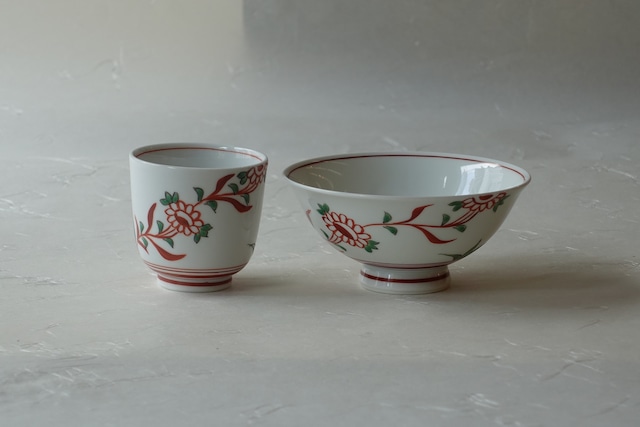
波佐見焼 手描き赤絵 ミニ 飯碗・湯呑セット
¥5,170
波佐見焼から小さな湯呑と飯碗のセットの ご紹介です。 白磁の生地に赤絵で草花の文様が手描き されています。 白磁の生地は薄く、とても軽く繊細なものと なっています。 白生地に手描きされた赤絵草花文様が映え、 葉の緑釉もさわやかな雰囲気が出ています。 とても小さなコップとご飯茶碗は、 お子様用としてもいいですし、少しの量でも 満足感のあるダイエット茶碗としても 使えます。 気品と高級感があり、場取らないので 神仏にお供えする器としても使えそうです。 実際に使ってもよし、飾って小さな器を見て 楽しむのよしの洒落た器といえます。 飯碗 口径 11cm 高さ 5cm 湯呑 口径 6.3cm 高さ 6cm 箱なし Hasami Ware Hand-Painted Red Enamel Mini Rice Bowl & Teacup Set This is a set of a small teacup and rice bowl from Hasami Ware. The floral motifs are hand-painted in red enamel on a white porcelain body. The porcelain is thin, very lightweight, and delicate. The hand-painted red floral motifs stand out beautifully against the white porcelain, while the green glaze on the leaves adds a fresh and refreshing touch. The very small cup and rice bowl are suitable for children, and they can also be used as diet bowls, providing a satisfying feeling even with a small serving. With their elegant and luxurious appearance, and because they take up very little space, they may also be suitable as vessels for offering food or drink to Buddhist and Shinto altars. They are charming and stylish vessels that can be enjoyed both by actually using them and by displaying them as small works of beauty. Rice Bowl: Diameter 11 cm / Height 5 cm Teacup: Diameter 6.3 cm / Height 6 cm No box included. 波佐见烧 手绘赤绘迷你饭碗・茶杯套装 波佐见烧推出这款小巧的茶杯与饭碗套装,现为您介绍。 白色瓷胎上,以赤绘手工描绘了草花纹样。 瓷胎质地轻薄,非常轻盈而精致。 白色瓷胎上手绘的赤绘草花纹样格外醒目,叶片上的绿色釉彩也营造出清新雅致的氛围。 非常小巧的茶杯和饭碗,既适合作为儿童餐具使用,也可以作为减肥用饭碗,即使盛放少量食物,也能带来满足感。 器物具有高雅与高级感,而且不占空间,因此也很适合作为供奉神佛时使用的供器。 既可以实际使用,也可以摆放起来欣赏这份小巧器物之美,可以说是一套雅致而别具情趣的器皿。 饭碗 口径:11厘米 高度:5厘米 茶杯 口径:6.3厘米 高度:6厘米 无盒
-
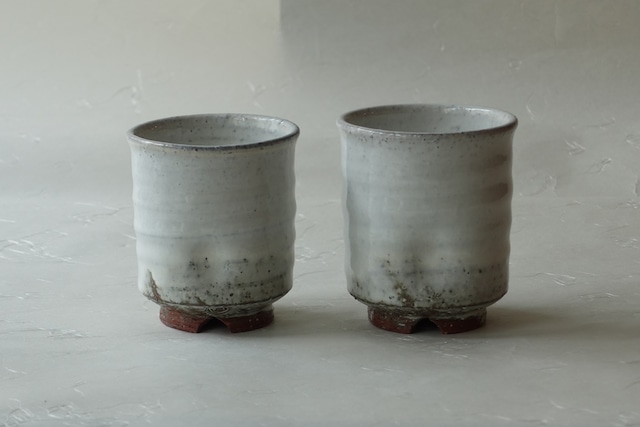
萩焼 白釉 えくぼ 手づくり 組湯呑
¥7,480
萩焼から白釉の組湯呑のご紹介です。 こげ茶色の小石が混じった粗めの土を ろくろ成形し白い釉薬を掛けて 作られています。 内外にろくろ目が残され持つと手に しっくりと馴染みます。 正面にはえくぼが作られ、親指を置く場所が あり持ちやすくなっています。 形はほぼ寸胴型で口は若干外側に反った 羽反り型で飲みやすくなっています。 高台は萩特有の切高台となっており、特徴と なっています。 高台の付近は釉薬の上からでも土の風合いが 見られ、荒々しく力強い雰囲気と なっています。 使い込んで頂くと「萩の七変化」を楽しんで 頂けます。 白釉はお茶の色がきれいに見え、その風合い からお茶を美味しく楽しんで頂ける 湯呑といえます。 大 口径 8cm 高さ 9cm 小 口径 7.5cm 高さ 8.5cm Hagi Ware – White-Glazed, “Dimpled,” Handmade Pair of Tea Cups This is a pair of white-glazed yunomi tea cups from Hagi ware. They are made by wheel-throwing a coarse clay body containing dark brown pebbles and applying a white glaze. The marks left by the potter’s wheel remain both inside and outside, allowing the cups to fit comfortably and naturally in the hand. A “dimple” has been made on the front of each cup, providing a natural place for the thumb and making the cups easy to hold. The shape is almost cylindrical, while the rim is slightly turned outward in a hazori-style form, making the cups comfortable for drinking. The foot is finished in Hagi’s characteristic kirikōdai (cut foot) style, which is one of the distinctive features of Hagi ware. Around the foot, the texture of the clay can still be seen through the glaze, creating a rugged and powerful appearance. As you continue to use the cups over time, you can enjoy the “seven transformations of Hagi” (Hagi no nanahenge), a characteristic of Hagi ware in which the appearance gradually changes through use. The white glaze allows the color of the tea to be seen beautifully, and its gentle texture makes these cups ideal for enjoying tea at its best. Large: Diameter 8 cm / Height 9 cm Small: Diameter 7.5 cm / Height 8.5 cm 萩烧 白釉 酒窝 手工制作 成对茶杯 萩烧为您介绍这款白釉成对茶杯。 选用混有深褐色小石子的粗质陶土,经拉坯成型后施以白色釉料烧制而成。 杯子内外均保留了拉坯时留下的旋纹,拿在手中能够自然贴合手部,握感十分舒适。 正面制作有“酒窝”状的凹陷,形成放置拇指的位置,因此拿取起来更加方便。 整体形状近似直筒型,杯口略微向外翻,为“羽反”式杯口,饮用起来更加顺畅。 底足采用萩烧特有的“切高台”造型,是其一大特色。 靠近底足的部分,即使隔着釉料,也能够看到陶土本身的质感,呈现出粗犷而有力量的风格。 随着长时间使用,可以欣赏萩烧特有的“萩之七变化”,感受器物随着岁月与使用而产生的色泽变化。 白釉能够很好地衬托茶汤的色泽,从其独特的质感来看,可以说是一款能够让您更加享受茶香与茶味的茶杯。 大 口径 8厘米 高度 9厘米 小 口径 7.5厘米 高度 8.5厘米
-

山中塗 木製 くりぬき 丼 中 薄挽き うるし塗り
¥7,700
山中塗から木製くりぬき丼のご紹介です。 栓の木をくりぬき、うるしを何度も塗って 仕上げられています。 すりうるし塗りが施されているので木目が よく見え、木の温かみを感じて頂けます。 表面はとても滑らかで使い心地が とてもよくなっています。 磨きがよく施され、多くの手間が 掛けられていることが分かります。 木地は薄手にされているので、軽く 扱いやすくなっています。 大容量の丼はうどんやそばなどの麺類から、 かつ丼や天丼など丼ぶりものまで様々な 使い方が可能です。 木製の器はお料理を引き立て、より美味しく 感じて頂けるかもしれません。 口径 15cm 高さ 8cm 木製 すりうるし塗り 箱なし Yamanaka Lacquerware – Hand-Carved Wooden Donburi Bowl, Medium, Thinly Turned, Urushi Lacquered This is a wooden donburi bowl from Yamanaka lacquerware. It is made by hollowing out a block of Japanese zelkova wood and finishing it with multiple layers of urushi lacquer. The bowl is finished with a suri-urushi (rubbed urushi) coating, which allows the natural wood grain to show beautifully and gives the bowl a warm, natural feel. The surface is exceptionally smooth, making it very comfortable to use. The bowl has been carefully polished, and the considerable amount of time and craftsmanship that has gone into its creation can be appreciated. The wooden body is made relatively thin, making the bowl lightweight and easy to handle. With its generous capacity, this bowl can be used in many ways, from noodle dishes such as udon and soba to donburi dishes such as katsudon and tendon. A wooden bowl enhances the appearance of food and may even make your meal feel more delicious. Diameter: 15 cm Height: 8 cm Material: Wood Finish: Suri-urushi lacquer Box: Not included 山中涂 木制 整块挖制 中号碗 薄挽 纯漆涂装 山中涂为您介绍这款木制整块挖制的饭碗。 选用栓木整块挖制而成,并经过多次反复涂漆,精心制作完成。 由于采用擦漆工艺,木纹清晰可见,可以感受到木材自然温润的质感。 表面经过细致打磨,十分光滑,使用起来手感非常舒适。 从其细致的打磨工艺中,可以看出制作过程中投入了许多时间与工夫。 木胎制作得较为轻薄,因此重量轻,使用起来十分方便。 容量较大的碗,不仅可以用来盛乌冬面、荞麦面等面食,也可以用来盛猪排盖饭、天妇罗盖饭等各种盖饭料理,用途十分广泛。 木制器皿能够衬托出料理的色泽与美感,也许能让您感觉料理更加美味。 口径 15厘米 高度 8厘米 木制 擦漆涂装 无盒
-

萩焼 白釉 手づくり 組飯碗(ペア)
¥8,470
萩焼から白釉の組飯碗(ペア)の ご紹介です。 萩焼特有の小石の混じった粗めの土を ろくろ挽きし成形した手づくりの ご飯茶碗です。 内側外側ともにろくろ目が残され、 外側下部は土の荒々しさが釉薬の上からでも 確認ができます。 厚めに掛けられた白い釉薬には艶があり、 ぽってりとした素朴な風合いがあり土物の 温かみがあります。 丸みを帯びた形は手にもおさまりやすく、 口が若干外側に反っているので、口当たりも よく、食べやすくなっています。 使い込んで頂くと「萩の七変」も 楽しんで頂けます。 大 口径 12.5cm 高さ 6cm 小 口径 11.5cm 高さ 5.7cm Hagi Ware – White Glaze – Handmade – Set of Rice Bowls (Pair) We are pleased to introduce this pair of Hagi Ware rice bowls with a white glaze. These handmade rice bowls are shaped on a potter’s wheel using the coarse clay characteristic of Hagi Ware, which contains small stones. The marks left by the potter’s wheel have been preserved on both the inside and outside. On the lower outer section, the rough texture of the clay can be seen even through the glaze. The thickly applied white glaze has a glossy finish, while its plump, simple appearance gives the bowls the warm, earthy character of natural clay pottery. The rounded shape fits comfortably in the hand, and the rim curves slightly outward, providing a pleasant feel against the lips and making the bowl easy to eat from. With continued use, you can also enjoy the unique transformation known as the “Seven Changes of Hagi” (Hagi no Shichihen), in which the appearance of Hagi Ware gradually changes over time. Large: Diameter 12.5 cm / Height 6 cm Small: Diameter 11.5 cm / Height 5.7 cm 萩烧 白釉 手工制作 成套饭碗(两只装) 现为您介绍萩烧白釉成套饭碗(两只装)。 这是采用萩烧特有的、混有小石子的粗质陶土,经拉坯成形后手工制作而成的饭碗。 碗的内外均保留了拉坯时留下的旋纹,外侧下部即使隔着釉药,也可以看到陶土原本粗犷的质感。 厚厚施挂的白色釉药富有光泽,呈现出圆润、朴素的质感,同时具有陶器特有的温暖气息。 圆润的器形容易握持,碗口略微向外翻,使入口触感舒适,盛饭进食也更加方便。 随着长期使用,还可以欣赏到萩烧著名的“萩之七变”——器物随着岁月与使用而逐渐发生色泽和质感变化的独特韵味。 大 口径:12.5厘米 高度:6厘米 小 口径:11.5厘米 高度:5.7厘米
-
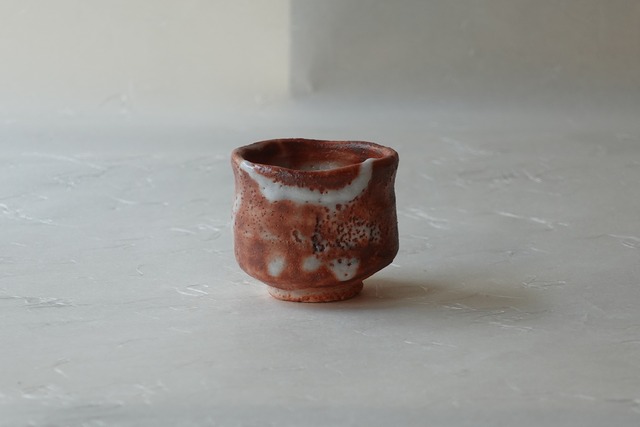
美濃焼 林亮次 荘山窯 赤志野 ぐい呑み 小
¥6,050
美濃焼から林亮次 荘山窯の志野の ぐい呑みのご紹介です。 美濃焼の代名詞ともいえる、志野焼の ぐい呑みです。 志野焼は大変手間のかかる焼き方をするため 専門のノウハウがあり、独自の技術が 必要となります。 他の産地で真似て作ることが難しく なっています。 そのため志野焼は、美濃焼でしか 見られなくなっており美濃焼独自の焼き物と なっています。 人が完全にコントロールできない、焼き物の 独自の世界がそこにはあります。 気温や湿度、天候などの様々な条件で 変化して、同じものが絶対に出来ない 独自の炎の芸術といっても 過言ではありません。 力強いイメージで作られており、微妙な 釉薬の色合いと焼成で志野独特の世界観を 作りあげています。 このぐい呑みは渋い赤茶色が特徴となって おり茶褐色の釉薬の濃淡が所々に見られ、 独特の侘びた風合いが出ています。 釉薬の裂けやひび、貫入やピンホールが たくさん出ており、飽きの来ない風合いと いえます。 正面には白釉が施され、志野焼きの窯変の 特徴がいくつも見ることが出来ます。 切立型ですが、胴には若干丸みがあり 口の下で一旦くびれ、その上の口は外側に 反っており、飲みやすくなっています。 胴回りにはろくろ目があったり、凹みが あったり、とても変化に富んでいます。 手にしっくりと馴染み、持ちやすく 安定感もあります。 自家用でもプレゼントでも海外のお土産でも 使える価値ある逸品です。 口径 6.3cm × 高さ 5cm Mino Ware – Ryoji Hayashi, Shozan Kiln – Aka-Shino Guinomi – Small Introducing a Shino-style guinomi sake cup by Ryoji Hayashi of Shozan Kiln, from Mino ware. This is a guinomi made in the Shino style, which can be considered synonymous with Mino ware. Because Shino ware requires a highly labor-intensive firing process, specialized know-how and unique techniques are necessary. It is difficult to reproduce this style in other production areas, and as a result, Shino ware is now rarely seen outside Mino ware and has become a type of ceramic unique to Mino. There is a unique world of ceramics here that cannot be completely controlled by human hands. The results vary according to many conditions, such as temperature, humidity, and weather, making it absolutely impossible to produce two identical pieces. It is therefore no exaggeration to call Shino ware a unique art of fire. This guinomi has a powerful presence, with subtle variations in the color of the glaze and the effects of firing creating the distinctive world of Shino ware. The characteristic feature of this guinomi is its subdued reddish-brown color. Variations in the depth and tone of the brown glaze can be seen in various places, creating a distinctive, beautifully rustic wabi aesthetic. Numerous glaze breaks, cracks, crazing, and pinholes appear across the surface, giving the piece a rich texture that does not become tiresome to look at. White glaze has been applied to the front, where you can observe several characteristic kiln effects of Shino ware. Although it has a straight-sided form, the body has a slight roundedness. The vessel narrows slightly just below the rim, while the rim itself curves outward, making it comfortable to drink from. The body is rich in variation, with visible throwing marks from the potter’s wheel as well as subtle depressions. It fits comfortably in the hand, is easy to hold, and has a stable feel. This is a valuable piece that can be enjoyed for personal use, given as a gift, or even taken overseas as a memorable souvenir from Japan. Rim diameter: 6.3 cm × Height: 5 cm 美浓烧 林亮次 庄山窑 赤志野 小型酒杯 下面为您介绍一款来自美浓烧、由林亮次庄山窑制作的志野烧酒杯。 这是被誉为美浓烧代名词之一的志野烧酒杯。 志野烧采用非常繁琐且讲究工艺的烧制方法,因此需要专业的制作诀窍和独特的技术。 由于很难在其他产地模仿制作,如今志野烧已经很难在美浓烧以外看到,因此成为了美浓烧独有的陶瓷品种。 其中蕴含着一个人无法完全控制的陶瓷独特世界。 由于会受到气温、湿度、天气等各种条件的影响而产生变化,因此绝对不可能烧制出完全相同的作品,说它是独属于火焰的艺术也毫不为过。 这款酒杯以强烈有力的形象为设计特点,通过微妙的釉色变化与烧成效果,营造出志野烧独特的世界观。 这款酒杯的特点是沉稳的红褐色,局部可以看到茶褐色釉药的浓淡变化,呈现出独特而富有侘寂之美的古朴风韵。 釉药表面出现了许多开裂、细小裂纹、贯入以及针孔等烧制痕迹,可以说是一种越看越不会厌倦的独特质感。 正面施有白釉,可以看到志野烧窑变所呈现出的多种独特特征。 虽然整体为直立型,但杯身略带圆润,在杯口下方稍稍收腰,而上方杯口向外翻展,使饮用时更加舒适。 杯身周围既可以看到轱辘成型留下的旋转纹,又有凹凸变化,整体造型富于变化。 拿在手中十分贴合,容易握持,同时具有良好的稳定感。 无论自用、作为礼物,还是作为赠送海外友人的日本伴手礼,都是一件具有收藏与使用价值的精品。 口径:6.3厘米 × 高度:5厘米
-
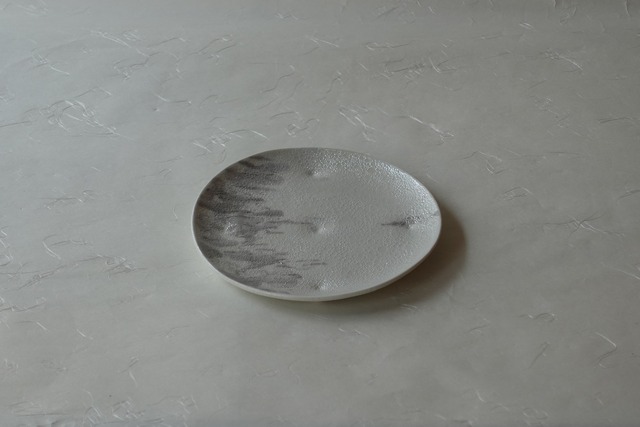
有田焼 バブル 銀プレート ラスター 白 15cmプレート
¥5,390
有田焼から15cmプレートのご紹介です。 表面に大小の泡が不規則に現れた質感の高い 皿です。 ラスターの釉薬が掛けて作られており 金属のような風合いがあり輝いて とてもきれいに見えます。 ラスターとは、陶磁器の表面に極めて薄い 金属の被膜を作り光の干渉により 虹彩を生じる釉薬のことを言います。 銀色の釉薬の泡が大小、変形した泡が 無数に確認でき、この焼き物ならではの 激しい変化がデザインとなって唯一無二の プレートが生まれます。 小さな脚が5つ付いており、プレート表面に 脚のへこみが5つあり、それもデザインと なっています。 裏面の脚もお洒落さを感じさせてくれます。 きらっと光るインパクトがあり目立つ器 ですが和食にも洋食にも使え、シルバー系の 色なので食材を選ばず、どのような食材も 引き立ててくれます。 取り皿から銘々皿、果物やデザート皿に 至るまで、応用が効くので活躍することが 多くなりそうです。 食洗機、電子レンジは避けた方が風合いが 長持ちするようです。 径 15cm 高さ 1.5cm 箱なし Arita Ware – Bubble Silver Plate with Luster Glaze, White, 15 cm Plate Introducing a 15 cm plate from Arita ware. This is a high-textured plate featuring bubbles of various sizes that appear irregularly across the surface. It is made with a luster glaze, giving it a metallic appearance and a beautiful, shimmering finish. “Luster” refers to a glaze that forms an extremely thin metallic film on the surface of ceramics, creating an iridescent effect through the interference of light. Countless bubbles in the silver-colored glaze can be seen in various sizes and irregular shapes. The dramatic variations unique to this type of ceramic become part of the design, creating a one-of-a-kind plate. The plate has five small feet, and five corresponding indentations from the feet can be seen on the surface. These indentations also form part of the design. The feet on the underside add an elegant touch as well. Although this is an eye-catching piece with a striking, sparkling appearance, it can be used for both Japanese and Western cuisine. Its silver-toned color works well with a wide variety of foods and enhances the presentation of any ingredients. It is highly versatile and can be used as a small individual serving plate, a personal plate, or a plate for fruit and desserts, making it a piece you are likely to find yourself using frequently. To preserve its texture and finish for a long time, it is recommended to avoid using it in a dishwasher or microwave. Diameter: 15 cm Height: 1.5 cm No box. 有田烧 气泡银盘 虹彩釉 白色 15厘米盘 下面为您介绍一款有田烧15厘米盘。 这是一款质感非常高级的盘子,盘面上大小不一的气泡以不规则的形态呈现出来。 盘子施以虹彩釉(Luster Glaze)烧制而成,具有类似金属的质感,并呈现出闪耀的光泽,看起来非常漂亮。 所谓“虹彩釉”,是指在陶瓷表面形成极其薄的金属膜,通过光的干涉作用产生虹彩效果的一种釉药。 盘面上可以看到无数大小不一、形状各异的银色釉泡。这种陶瓷特有的剧烈变化本身成为设计的一部分,从而造就出独一无二的盘子。 盘底配有5个小脚,盘面上也留有5处由盘脚形成的凹痕,这些也成为整体设计的一部分。 盘底的脚部同样让人感受到时尚而雅致的魅力。 这是一款闪耀夺目、视觉冲击力很强、十分醒目的器皿,但既可以用于日本料理,也可以用于西式料理。由于采用银色系的色调,不挑选食材,无论搭配何种食材,都能够很好地衬托出食物的美感。 从作为分餐盘、个人餐盘,到盛放水果和甜点的盘子,都可以灵活使用,预计会成为一款使用频率较高、非常实用的器皿。 为了使其质感能够长久保持,建议避免使用洗碗机和微波炉。 直径:15厘米 高度:1.5厘米 无盒
-
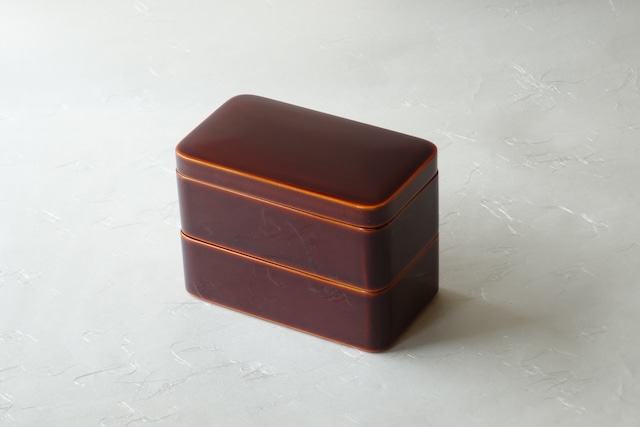
飛騨春慶塗 木製 二段弁当 小 うるし塗り
¥13,200
SOLD OUT
飛騨春慶塗から木製の弁当箱のご紹介です。 この弁当箱は非常に堅牢で耐久性があり 木地は樹齢150年から200年の材料を 使い、木は変形する性質があるので通気性を よくして数年間、乾燥させます。 塗りはうるしが使われており、木地磨き、 目止め、下塗り、仕上げ磨き、摺り漆、 コクソ巻き、すり漆、上塗り、乾燥と、 多くの工程を経て作られています。 うるしの皮膜は半永久的に呼吸し続けるので 通気性がよく、うるしそのものにも 抗菌作用があるので、食材を有害な菌から 守ってくれるので、中の食材が 傷みにくくなります。 木は余分な水分を吸収したり乾燥していれば 水分を放出して内部の湿度を保ってくれる ので食材が乾燥し過ぎたり、ご飯が水分で べたべたになるのを防いでくれます。 結果、食材をより美味しい状態に 保ってくれます。 冷めても、食材をより美味しく召し上がって いただけます。 木製、うるし塗の弁当箱やお重で食べると 美味しく感じるのは決して気のせいではなく 科学的に説明がつくんです。 先人たちはこのことを知っていたか、どうか 分かりませんが、何百年前に既にこの ハイテク素材といえる、木製・うるし塗りの 弁当箱やお重を使っていたことは、 驚くべきことであり、先人たちの知恵には 脱帽するばかりです。 この弁当箱は二段に分かれているので、 ご飯とおかずを完全に分けることができ、 味や汁が移ることがなく、快適に お使い頂けます。 こちらはコンパクトになっており、食が 細い方、ダイエット中の方、女性や お子様などに合う小ぶりなサイズです。 本物の春慶塗は、商品知識と信用のある 専門店でお求めになることを お勧めいたします。 長さ 13.5㎝ 奥行 7.5㎝ 高さ 9.5㎝ 容量 260ml × 2 木製 うるし塗 Hida Shunkei Lacquerware Wooden Two-Tier Bento Box, Small, Urushi Lacquered We are pleased to introduce a wooden bento box from Hida Shunkei Lacquerware. This bento box is exceptionally sturdy and durable. The wood used for the wooden base is sourced from trees that are approximately 150 to 200 years old. Because wood naturally has a tendency to change shape, it is dried for several years under well-ventilated conditions. Urushi lacquer is used for the finishing process. The bento box is made through numerous stages, including polishing the wood, sealing the grain, applying the undercoat, final polishing, applying wiped lacquer, Kokuso wrapping, additional wiped lacquer, applying the topcoat, and drying. The film of urushi lacquer continues to “breathe” almost indefinitely, allowing good ventilation. Urushi itself also has antibacterial properties, helping protect food from harmful bacteria and making the food inside less likely to spoil. Wood absorbs excess moisture and releases moisture when the environment is dry, helping maintain the humidity inside the box. This prevents food from becoming excessively dry and also prevents rice from becoming sticky due to excess moisture. As a result, the bento box helps keep food in a more delicious condition. Even after the food has cooled, it can still be enjoyed at its best. The reason food can taste better when eaten from a wooden, urushi-lacquered bento box or jubako is not simply a matter of imagination; it can be explained scientifically. We do not know whether people in the past understood these properties, but it is remarkable that hundreds of years ago they were already using wooden, urushi-lacquered bento boxes and jubako that could be considered a kind of high-tech material. We can only marvel at the wisdom of our ancestors. This bento box is divided into two tiers, allowing rice and side dishes to be completely separated. This prevents flavors and liquids from mixing and makes the box comfortable and convenient to use. This is a compact size, making it suitable for people with smaller appetites, those on a diet, women, and children. For genuine Hida Shunkei lacquerware, we recommend purchasing from a specialist store with extensive product knowledge and a trustworthy reputation. Length: 13.5 cm Depth: 7.5 cm Height: 9.5 cm Capacity: 260 ml × 2 Material: Wood Finish: Urushi lacquer 飛騨春庆涂 木制 双层便当盒 小号 漆涂 飞騨春庆涂为您介绍一款木制便当盒。 这款便当盒非常坚固耐用。 木胎选用树龄150年至200年的木材制作。由于木材具有容易发生形变的特性,因此会保持良好的通风状态,经过数年的时间进行干燥。 漆面采用天然漆制作,从木胎打磨、填孔、底漆、最后打磨、擦漆、木粉漆修补、再次擦漆、面漆到干燥,需要经过许多道工序才能完成。 漆膜能够近乎永久地持续呼吸,因此具有良好的透气性,而且漆本身具有抗菌作用,可以保护食材免受有害细菌的影响,使便当盒内的食材不易变质。 木材能够吸收多余的水分,在干燥时又会释放水分,从而帮助保持内部适宜的湿度,因此可以防止食材过度干燥,也能防止米饭因水分过多而变得黏糊。 这样一来,能够使食材保持更加美味的状态。 即使食物冷却后,也能让您享受到更加美味的口感。 使用木制、漆涂便当盒或重箱盛装食物后,会觉得食物更加美味,这绝不是心理作用,而是可以从科学角度得到解释的。 我们不知道古人是否已经了解其中的原理,但在数百年前,他们就已经开始使用这种可以称为“高科技材料”的木制漆涂便当盒和重箱,这实在令人惊叹。对于先人的智慧,我们只有由衷地佩服。 这款便当盒分为上下两层,因此可以将米饭和菜肴完全分开,不会发生味道或汤汁相互渗透的问题,使用起来非常舒适方便。 这款便当盒体积小巧,容量较为适中,非常适合食量较小的人士、正在减肥的人士、女性以及儿童等使用。 真正的春庆涂,建议您从具备专业商品知识并值得信赖的专业店铺购买。 长度:13.5厘米 深度:7.5厘米 高度:9.5厘米 容量:260毫升 × 2 木制 漆涂
-
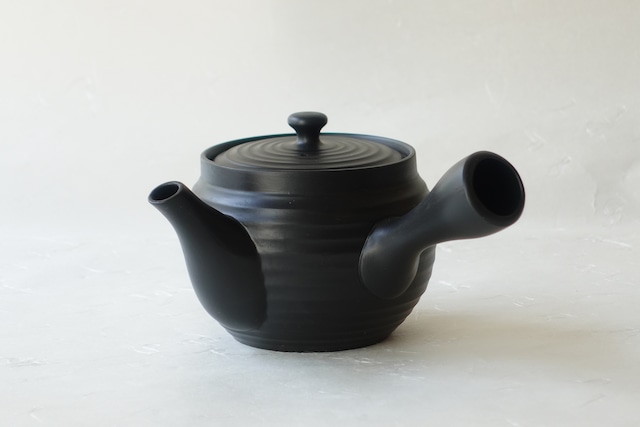
常滑焼 黒泥 千段 急須 550cc
¥8,140
常滑焼から黒泥急須のご紹介です。 常滑焼の代名詞といえる「黒泥」は陶土に 多く含まれる鉄分がお茶の渋みを抑え、 まろやかな味を楽しむことが出来ます。 黒泥の土を成形し外側には横方向に千段が 入れられており、シンプルですが凹凸のある デザインとなっています。 胴は丸みを帯び、550ccの大容量があり 口は広めで茶葉の出し入れが容易で 洗いやすく使いやすい造形となっています。 注ぎ口の内側には大きめの金網が付けられて おり網の面積が大きいので深蒸し茶葉でも 目詰まりしにくい仕様となっています。 注ぎ口は湯切れがよく、液だれしにくい 機能的な作りとなっています。 滑らかな表面は使い心地もよく、黒のみの シンプルなデザインは飽きが来にくく 永く使いえる急須といえます。 18.5cm × 15.5cm 高さ 11cm 容量 550cc Tokoname Ware Black Clay Sen-dan Teapot – 550 cc We are pleased to introduce a black clay teapot from Tokoname ware. “Black clay,” known as one of the defining characteristics of Tokoname ware, contains a high amount of iron in the clay. This is said to help reduce the astringency of tea, allowing you to enjoy a smoother and more mellow flavor. The black clay is shaped into the teapot, and the exterior is decorated with horizontal sen-dan (thousand-step) ridges, creating a simple yet textured design with a distinctive three-dimensional surface. The body has a gently rounded form and a large capacity of 550 cc. The opening is relatively wide, making it easy to add and remove tea leaves and convenient to wash. The overall form is designed for ease of use. A relatively large metal mesh filter is fitted inside the spout. Because the filter has a large surface area, it is less likely to become clogged, even when using deeply steamed tea leaves. The spout is designed for a clean pour, allowing the tea to drain well and helping to prevent dripping. The smooth surface feels pleasant to use, while the simple all-black design is unlikely to become tiresome over time. It is a teapot that can be enjoyed and used for many years. Dimensions: 18.5 cm × 15.5 cm × 11 cm (height) Capacity: 550 cc 常滑烧 黑泥 千段纹 急须 550cc 下面为您介绍一款来自常滑烧的黑泥急须。 常滑烧的代表性陶土之一“黑泥”,由于陶土中含有丰富的铁分,可以抑制茶水中的涩味,使茶汤更加醇和柔顺,能够享受到更加圆润的口感。 采用黑泥陶土成形,外侧横向刻有千段纹,整体设计简洁,却富有凹凸层次感。 壶身呈圆润的弧形,容量达到550cc,壶口较为宽大,茶叶取放方便,也容易清洗,整体造型实用且便于使用。 出水口内侧安装了面积较大的金属滤网,由于滤网面积宽广,即使冲泡深蒸茶,也不容易发生堵塞,是非常实用的设计。 出水口具有良好的断水性能,不易发生滴漏,整体构造兼具实用性与功能性。 光滑的表面带来舒适的使用手感,纯黑色的简约设计不易产生审美疲劳,是一款可以长久使用的急须。 尺寸:18.5厘米 × 15.5厘米 高度:11厘米 容量:550cc
-
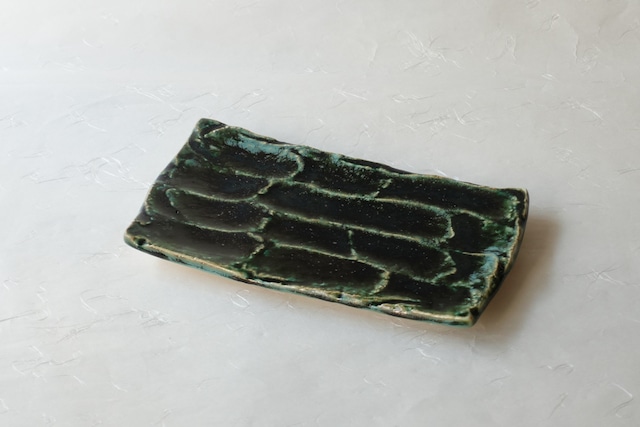
美濃焼 織部 しのぎ 長角皿
¥4,620
美濃焼から織部の長角皿のご紹介です。 白土を長角に成形し織部の釉薬を掛けて 作られています。 皿の表面には削いだような跡が残され、 立体感のある荒々しい雰囲気があります。 全体が変形し、縁の凹凸は手づくり感があり 何とも言えない侘びた風合いがあります。 織部の色は、こっくりとした濃い色をして おり高級感が漂っています。 幅広で魚料理はもちろん、刺身や盛皿と しても使える汎用性の高い器です。 高台の高さがあり、皿の下に指が入るので 皿の持ち下げがしやすく、使いやすく なっています。 お料理を引き立ててくれる重厚感のある 器といえます。 長さ 24.5cm 奥行 14.5cm 高さ 2cm 箱なし Mino Ware Oribe Shinogi Long Rectangular Plate We are pleased to introduce a long rectangular Oribe plate from Mino ware. It is made by shaping white clay into a long rectangular form and applying Oribe glaze. The surface of the plate retains marks that look as though the clay has been shaved, giving it a three-dimensional and rugged appearance. The entire piece has an intentionally irregular shape, while the unevenness along the rim gives it a distinctly handmade character and an indescribably rustic, wabi-sabi aesthetic. The Oribe glaze has a rich, deep color, creating an elegant and luxurious impression. With its broad shape, this is a highly versatile vessel that is suitable not only for fish dishes but also for sashimi and for serving a variety of foods on a platter. The foot is relatively high, allowing your fingers to fit underneath the plate. This makes it easy to lift and carry, adding to its practicality. It can be described as a substantial, dignified piece that enhances and brings out the beauty of the food served upon it. Dimensions: Length 24.5 cm × Depth 14.5 cm × Height 2 cm Box: None 美浓烧 织部 篠纹 长方盘 下面为您介绍一款来自美浓烧的织部长方盘。 采用白色陶土塑造成长方形,再施以织部釉烧制而成。 盘子的表面留有仿佛削刻而成的痕迹,呈现出富有立体感、质朴粗犷的氛围。 整体造型略有变形,盘沿的凹凸也带有明显的手工制作感,散发出一种难以言喻的侘寂风韵。 织部釉呈现出浓郁而深沉的色泽,洋溢着高级质感。 盘面宽阔,除了适合盛放鱼类料理之外,也可用于刺身以及作为盛装菜肴的盛皿,是一款用途十分广泛的器皿。 高台较高,手指可以伸入盘底,因此拿取和端起盘子时更加方便,使用起来也十分顺手。 可以说,这是一款具有厚重质感、能够衬托料理之美的器皿。 长度:24.5厘米 进深:14.5厘米 高度:2厘米 无盒
-
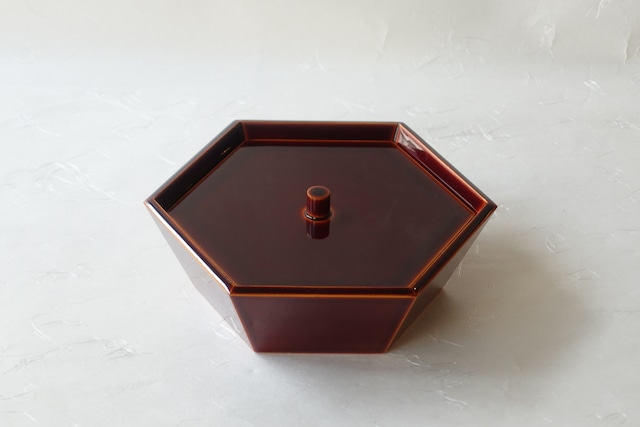
飛騨春慶塗 六角 菓子器 木製 本うるし塗
¥6,600
SOLD OUT
飛騨春慶塗から、木製の蓋付菓子器の ご紹介です。 木地は樹齢150年から200年の材料を 使い、木は変形する性質があるので 通気性をよくして数年間、乾燥させます。 塗りはうるしが使われており、木地磨き、 目止め、下塗り、仕上げ磨き、摺り漆、 コクソ巻き、すり漆、上塗り、乾燥と、 多くの工程を経て作られています。 うるしの皮膜は半永久的に呼吸し続けるので 通気性がよく、うるしそのものに抗菌作用が あるので、中の食材が傷みにくくなります。 木製なので余分な水分を吸収したり、 乾燥していれば、水分を放出して、 内部の湿度を保ってくれるので、食材が 乾燥し過ぎたり、水分でべたべたになるのを 防いでくれます。 結果、食材をより美味しい状態に 保ってくれます。 お菓子を入れたり、お料理を入れたり、 用途は様々にお使い頂けます。 全体が六角形をしており、上部に向かって 開いた端正な形に成形され、高度な技術と 多くの手間が掛けられています。 少し小ぶりですがスタイリッシュで洒落た 造形となっています。 木製ではないものや、うるしではなく 化学塗料で塗られているものがございます ので信用のおける専門店で購入されることを お勧めします。 16cm × 18.3cm × 高さ 5.5cm 木製 うるし塗 Hida Shunkei Lacquerware Hexagonal Lidded Confectionery Box, Wooden, Genuine Urushi Lacquer We are pleased to introduce a wooden lidded confectionery box from Hida Shunkei lacquerware. The wood used for the base is sourced from trees that are approximately 150 to 200 years old. Since wood naturally has a tendency to warp or deform, it is well ventilated and dried for several years before being made into the finished piece. Urushi, or genuine Japanese lacquer, is used for the finish. The piece is created through numerous processes, including polishing the wood, sealing the grain, applying a base coat, final polishing, wiping on urushi lacquer, applying kokuso, additional coats of wiped urushi, top coating, and drying. The film of urushi lacquer continues to breathe almost permanently, providing good breathability. Urushi itself also has antibacterial properties, helping the food stored inside to remain in good condition for longer. Because it is made of wood, it absorbs excess moisture and, when the interior is dry, releases moisture, helping to maintain a balanced level of humidity inside. This helps prevent food from becoming excessively dry or overly moist and sticky. As a result, it helps keep food in a more delicious condition. It can be used for a variety of purposes, such as serving sweets or holding prepared dishes. The entire piece is hexagonal in shape and has been carefully formed into an elegant, refined shape that gently opens toward the top. Its production requires a high level of craftsmanship and considerable time and effort. Although somewhat compact in size, it has a stylish and sophisticated form with an attractive, tasteful appearance. There are products on the market that are not actually made of wood, as well as products finished with synthetic paints rather than genuine urushi lacquer. We therefore recommend purchasing such traditional crafts from a reputable specialty shop you can trust. Dimensions: 16 cm × 18.3 cm × 5.5 cm (height) Material: Wood Finish: Urushi lacquer 飞驒春庆涂 六角形 点心盒 木制 天然漆涂装 下面为您介绍飞驒春庆涂木制带盖点心盒。 木胎采用树龄150年至200年的木材制作。由于木材具有容易发生变形的特性,因此需要保持良好的通风,并经过数年的充分干燥。 涂装使用天然漆制作,经过木胎打磨、填补木眼、底漆、最后打磨、擦漆、刻苧包覆、擦漆、面漆以及干燥等众多工序精心制作而成。 天然漆形成的漆膜能够长期持续地“呼吸”,因此具有良好的透气性。同时,天然漆本身具有抗菌作用,可以使盛放在其中的食材不易变质。 由于采用木材制作,它能够吸收多余的水分;而当内部较为干燥时,又可以释放水分,从而帮助保持内部适宜的湿度,防止食材过度干燥,或因水分过多而变得黏湿。 因此,可以使食材在更加美味的状态下得到保存。 既可以用来盛放点心,也可以用来盛放料理,用途十分多样。 整体呈六角形,并塑造成向上方逐渐敞开的端庄优美造型,制作过程中运用了高超的工艺技术,并耗费了大量的时间与心力。 虽然尺寸略小,但造型时尚雅致,别具韵味。 市场上也有并非木制、或使用化学涂料而非天然漆进行涂装的产品,因此建议您从值得信赖的专业店铺购买。 尺寸:16厘米 × 18.3厘米 × 高5.5厘米 材质:木制 涂装:天然漆
-
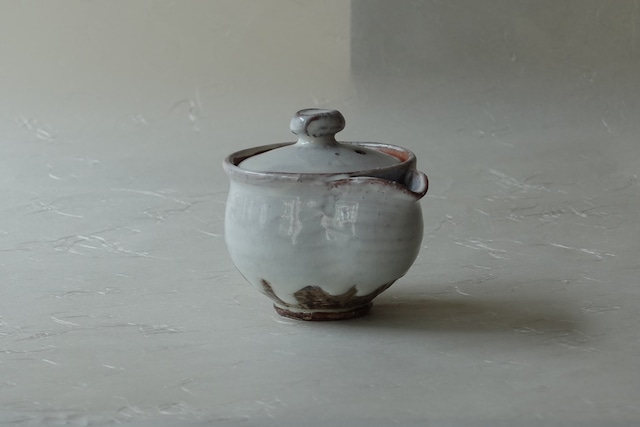
萩焼 手づくり 宝瓶(ほうひん) 白釉 150cc
¥5,500
萩焼から宝瓶(ほうひん)のご紹介です。 「宝瓶」とは持ち手のない急須のことで、 煎茶道などでも使う玉露などのいいお茶を 出す時に使う器です。 持ち手がないのは元来玉露などのいいお茶を 出す時は熱湯を用いず、湯冷ましなどで 一旦冷まして温度を下げてから使うので 熱くて持てない程にはならないということで 持ち手が付いていません。 また、金気が出ないように金属製の網はなく 注ぎ口の内側に穴があいています。 容量は満水で150ccで一人分の容量です。 茶色の土をろくろ挽きし白釉を掛けて 作られています。 力強い造形で口が広く茶葉が入れやすく、 捨てやすく、洗いやすい使いやすい形状と なっています。 作り手の高い技術が詰まったシンプルで 永く使える逸品です。 口径 8cm 全長 10.5cm 高さ 8.5cm 容量 150cc Hagi Ware Handmade Hōhin Teapot, White Glaze, 150 cc We are pleased to introduce this Hōhin teapot from Hagi Ware. A “Hōhin” is a teapot without a handle. It is used when serving fine teas such as Gyokuro, including in Senchado, the Japanese tea ceremony centered on steeped tea. The reason it has no handle is that fine teas such as Gyokuro are traditionally prepared not with boiling water, but with water that has first been cooled to a lower temperature using a cooling vessel or similar method. Therefore, the teapot does not become too hot to hold, making a handle unnecessary. In addition, there is no metal strainer inside the teapot, so that the tea will not acquire a metallic taste. Instead, small holes are made on the inside of the spout to filter the tea leaves. The full capacity is 150 cc, which is an appropriate serving size for one person. It is made by throwing brown clay on a potter’s wheel and then applying a white glaze. Its bold, powerful form has a wide opening, making it easy to add tea leaves, discard them after use, and wash the teapot. It is a highly practical and easy-to-use shape. Simple yet filled with the maker’s advanced craftsmanship, this is a fine piece designed to be enjoyed and used for many years. Opening Diameter: 8 cm Overall Length: 10.5 cm Height: 8.5 cm Capacity: 150 cc 萩烧 手工制作 宝瓶(ほうひん) 白釉 150毫升 现为您介绍一款来自萩烧的宝瓶(ほうひん)。 “宝瓶”是指没有把手的茶壶,是在煎茶道等场合冲泡玉露等高品质茶叶时使用的茶具。 之所以没有把手,是因为冲泡玉露等高品质茶叶时,原本不会使用沸腾的热水,而是先将热水倒入汤冷(湯冷まし)中,使水温降低后再使用。因此,茶壶不会热到无法用手拿取的程度,所以没有配备把手。 另外,为了避免产生金属味,壶内没有使用金属滤网,而是在壶嘴的内侧开有滤茶孔。 容量为装满水时150毫升,是一人份的容量。 采用棕色陶土拉坯成型,再施以白釉烧制而成。 造型浑厚有力,壶口宽大,茶叶容易放入,也便于倒出茶叶和清洗,是一款非常实用、使用方便的造型。 这是一件凝聚制作者高超技艺的作品,造型简洁,却经久耐用,可以长久使用。 口径 8厘米 全长 10.5厘米 高度 8.5厘米 容量 150毫升
-
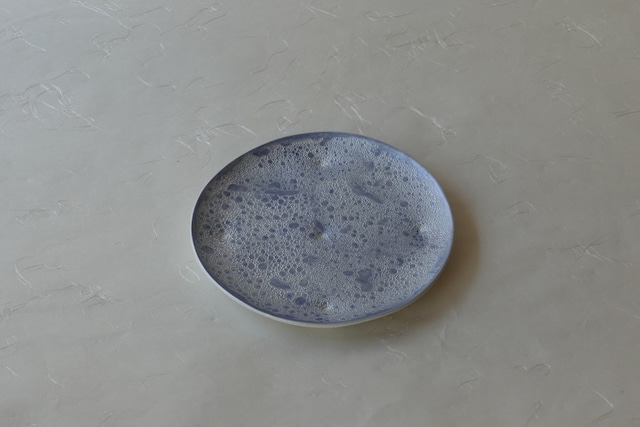
有田焼 バブル ラスター 銀プレート ルリ 15cmプレート
¥5,390
有田焼から15cmプレートのご紹介です。 表面に大小の泡が不規則に現れた質感の高い 皿です。 ラスターの釉薬が掛けて作られており 金属のような風合いがあり輝いて とてもきれいに見えます。 ラスターとは、陶磁器の表面に極めて薄い 金属の被膜を作り光の干渉により 虹彩を生じる釉薬のことを言います。 青紫色の釉薬の泡が大小、変形した泡が 無数に確認でき、この焼き物ならではの 激しい変化がデザインとなって唯一無二の プレートが生まれます。 小さな脚が5つ付いており、プレート表面に 脚のへこみが5つあり、それもデザインと なっています。 裏面の脚もお洒落さを感じさせてくれます。 きらっと光るインパクトがあり目立つ器 ですが和食にも洋食にも使え、シルバー系の 色なので食材を選ばず、どのような食材も 引き立ててくれます。 取り皿から銘々皿、果物やデザート皿に 至るまで、応用が効くので活躍することが 多くなりそうです。 食洗機、電子レンジは避けた方が風合いが 長持ちするようです。 径 15cm 高さ 1.5cm 箱なし Arita Ware Bubble Luster Silver Plate, Ruri, 15 cm We are pleased to introduce this 15 cm plate from Arita Ware. This is a beautifully textured plate featuring bubbles of various sizes that appear irregularly across the surface. It is finished with a luster glaze, giving it a metallic appearance and a beautiful, shimmering quality. “Luster” refers to a glaze technique that creates an extremely thin metallic film on the surface of ceramics. The interaction of light with this film produces an iridescent effect. Countless bubbles in shades of blue and purple can be seen across the surface, ranging from large and small bubbles to irregularly shaped ones. The dramatic variations created during firing become part of the design, resulting in a one-of-a-kind plate unique to this type of ceramic. The plate has five small feet, and five indentations where the feet are located can be seen on the surface. These indentations also become part of the overall design. The feet on the underside also add an elegant touch to the plate. With its striking, shimmering appearance, this is an eye-catching piece. However, it can be used for both Japanese and Western cuisine. Its silver-toned color complements a wide variety of foods without limiting the choice of ingredients, allowing the food itself to stand out beautifully. It is versatile enough to be used as an individual serving plate, a small side plate, or a plate for fruit and desserts, so it is likely to become a frequently used piece. To preserve its texture and appearance for a long time, it is recommended to avoid using it in a dishwasher or microwave. Diameter: 15 cm Height: 1.5 cm Box: Not included 有田烧 泡沫彩釉 银色盘 琉璃色 15厘米盘 现为您介绍一款来自有田烧的15厘米盘。 这是一款质感非常出色的盘子,表面呈现出大小不一、形状不规则的气泡纹理。 盘子采用彩釉(Luster)烧制而成,具有类似金属的质感,并呈现出闪耀的光泽,看起来非常漂亮。 所谓“Luster”,是指在陶瓷表面形成极其薄的金属膜,通过光的干涉作用产生虹彩效果的一种釉料。 盘面上可以看到无数大小不一的青紫色釉泡,其中还有许多形状各异、发生变形的气泡。这种烧制过程中产生的剧烈变化本身就成为独特的设计,从而造就了每一件独一无二的盘子。 盘底配有5只小脚,盘面上也可以看到5处由脚部形成的凹痕,这些凹痕同样成为盘子的设计元素。 背面的5只小脚也让整件器物更显雅致。 这是一款具有闪耀光泽、视觉冲击力十足、十分引人注目的器皿,但既可以用于日本料理,也可以用于西餐。由于整体呈银色系,不挑食材,能够很好地衬托各种食材的色彩与质感。 从作为分菜盘、个人餐盘,到盛放水果和甜点的盘子,都可以灵活使用,相信会成为日常生活中使用频率很高的一件器物。 为了使其独特的质感能够长久保持,建议避免使用洗碗机和微波炉。 直径 15厘米 高度 1.5厘米 无盒
-
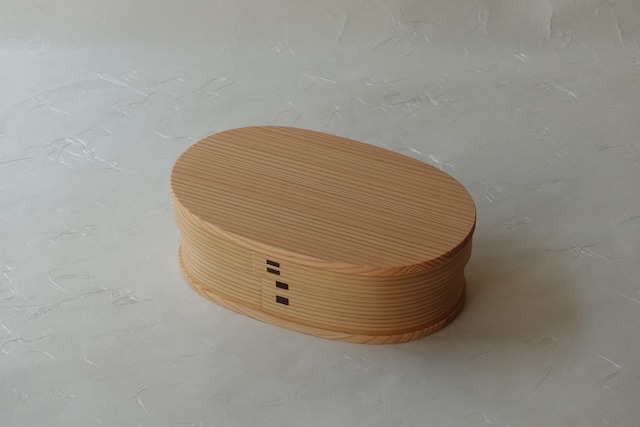
秋田杉 曲げわっぱ 小判弁当 中
¥10,450
秋田杉から、400年の歴史がある 伝統工芸品・「曲げわっぱ」の弁当箱の ご紹介です。 秋田杉の「曲げわっぱ」は1980年に 秋田県の伝統工芸品に指定されました。 天然の秋田杉の柾目と香りが冴え、自然の 木目の模様と曲線のカーブがとても美しい 弁当箱です。 年輪の間隔が細かく揃い、明るくて上品な 木目が、シンプルな味わいの中に美しさと 気品を漂わせています。 秋田杉が本来持つ吸湿性、芳香、殺菌効果に よって、夏場でもご飯が二日は持つとして、 多くの人に愛されてきました。 杉の木には元々、天然の殺菌効果があり、 人体に有害な雑菌の繁殖を防いでくれます。 食中毒やOー157などを防止する 効果があります。 プラスチック性の弁当箱とは異なり、ご飯の 水分が多すぎる時は、水分を吸収し水分が 少ない時は放出する機能性は、先人たちの 素晴らしい知恵といえます。 ご飯が冷めても、美味しく感じるのは、 決して気のせいではなく、杉の弁当箱が 湿度調整をして、ご飯の乾燥を防いだり、 過度な水分でべたべたになるのを防ぎ 最適な湿度を保っているからなんです。 400年前に先人たちが開発した、 ハイテク素材といえるかもしれません。 同じ食材をよりおいしく、より安全に 召し上がって頂くことが出来ます。 細かく均質な美しい木目を持つことで 知られる秋田杉ですが、曲げわっぱの部材は その中でも年輪の柾目部分だけを使います。 一本の杉の原木から、わずか3割しか材料が 取れない場合があり、いかに厳選された 材料を使っているかが分かります。 全て職人さんが一つずつ手作りしています。 杉の柾目板を熱湯で煮沸して柔らかくし、 熱いうちに素早く曲げていきます。 この一瞬ですべてが決まるので、高い技術と 経験に基づいた、力加減が必要になります。 曲げたわっぱを桜皮で縫い留めます。 一通り作業が終わると、やすりをかけ、 下塗り、研摩、中塗、研摩、仕上げ塗装と 膨大な時間と手間をかけて作られています。 こちらは定番中の定番で、最もよく知られ、 最も親しまれてきた形です。 昔から変わらない形で、曲げわっぱの 弁当箱といえば、最初に思い浮かぶ 弁当箱です。 サイズは中で、見た目よりもかなり多くの おかずを入れることが出来ます。 18.7㎝ × 12㎝ × 高さ 5.8㎝ 容量 640㏄ 木製(秋田杉) ウレタン塗装 Akita Cedar Magewappa Oval Bento Box – Medium Introducing a traditional Magewappa bento box crafted from Akita cedar, a traditional craft with a history spanning over 400 years. Akita cedar Magewappa was officially designated as a traditional craft of Akita Prefecture in 1980. This beautiful bento box showcases the straight grain and natural fragrance of premium Akita cedar. The natural wood grain patterns combined with its elegant curved form create a refined and timeless appearance. The annual growth rings are fine and evenly spaced, producing a bright, sophisticated grain that conveys beauty and elegance within its simple design. Thanks to the natural moisture-regulating properties, pleasant aroma, and antibacterial qualities of Akita cedar, these bento boxes have long been cherished. Traditionally, it was said that even during the summer, cooked rice could remain fresh for up to two days. Cedar naturally possesses antibacterial properties that help inhibit the growth of harmful bacteria. It is also considered effective in helping reduce the risk of food poisoning and harmful bacteria such as E. coli O157. Unlike plastic lunch boxes, a cedar bento box naturally regulates moisture. When the rice contains excess moisture, the wood absorbs it; when the rice becomes too dry, the wood gently releases moisture back. This remarkable functionality is a testament to the ingenuity and wisdom of the craftsmen of the past. The reason rice still tastes delicious even after it has cooled is not merely psychological. The cedar bento box regulates humidity, preventing the rice from drying out while also preventing it from becoming soggy due to excessive moisture, maintaining the ideal level of humidity. In many ways, this may be considered a high-tech material developed by our predecessors over 400 years ago. It allows you to enjoy the same ingredients with greater flavor and enhanced food safety. Akita cedar is renowned for its fine, uniform, and beautiful grain. For Magewappa, however, only the straight-grained (quartersawn) portions of the annual rings are selected. In some cases, only about 30% of a single cedar log is suitable for use, demonstrating how carefully the materials are selected. Every piece is individually handcrafted by skilled artisans. The straight-grained cedar boards are first softened by boiling them in hot water. While still hot, they are quickly bent into shape. Everything depends on this brief moment, requiring exceptional craftsmanship, experience, and precise control of pressure. Once bent, the overlapping ends are stitched together with strips of cherry bark. After the forming process is complete, the piece undergoes extensive finishing, including sanding, base coating, polishing, intermediate coating, another polishing, and finally the finishing coat. Each step requires considerable time and meticulous craftsmanship. This is the classic and most iconic Magewappa design—the shape that has remained unchanged for generations and is the one most people immediately associate with a traditional Magewappa lunch box. This is the medium size, offering considerably more capacity than its appearance suggests, allowing plenty of room for side dishes. Dimensions: 18.7 × 12 × 5.8 cm (H) Capacity: 640 ml Material: Natural Akita Cedar Finish: Urethane Coating 秋田杉 曲木便当盒(椭圆形・中号) 下面为您介绍一款拥有四百年历史的秋田杉传统工艺品——曲木便当盒(曲げわっぱ)。 秋田杉制作的“曲げわっぱ”于1980年被指定为秋田县传统工艺品。 这款便当盒采用天然秋田杉的**柾目(直纹木纹)**制作,散发着清新的天然木香,优美自然的木纹与柔和流畅的弧线相互映衬,展现出极高的美感。 秋田杉年轮细密均匀,木纹明亮雅致,在简约自然的风格中流露出优雅与高贵的气质。 由于秋田杉本身具有优异的吸湿性、天然芳香以及抗菌性能,因此自古以来深受人们喜爱。据说即使在夏季,放入其中的米饭也能够保存两天。 杉木本身具有天然的抗菌作用,可抑制对人体有害细菌的繁殖,对于预防食物中毒以及O-157等细菌具有一定效果。 与塑料便当盒不同,当米饭水分过多时,杉木会吸收多余水分;当水分不足时,又会适度释放水分。这种天然的调湿功能,充分体现了古人卓越的智慧。 即使米饭放凉后依然美味,这绝非心理作用,而是因为杉木便当盒能够自动调节内部湿度,防止米饭变干,同时避免因水分过多而变得黏腻,始终保持最适宜的湿度。 可以说,这是四百年前先人们创造出的天然高科技材料。 它能够让相同的食材吃起来更加美味,也更加安全。 秋田杉以细密均匀、美丽的木纹而闻名,而制作曲げわっぱ所使用的材料,更是只选取其中年轮笔直的柾目部分。 有时一整根杉木原木中,仅约三成能够作为制作材料,由此可见其选材之严格。 每一件作品均由工匠纯手工逐一制作。 首先将秋田杉柾目木板放入沸水中煮软,趁木材仍保持高温时迅速弯曲成型。 成败往往决定于这一瞬间,因此必须依靠丰富的经验与高超的技艺,精准掌握施力的力度。 弯曲成型后,再使用**樱树皮(桦皮)**将接缝缝合固定。 完成主体制作后,还需经过打磨、底漆、研磨、中涂、再次研磨以及最后的面漆等多道工序,耗费大量时间与心血方能完成。 这款便当盒属于曲げわっぱ中最经典、最具代表性的款式,也是最广为人知、最受欢迎的造型。 数百年来始终保持着传统外观,一提到曲げわっぱ便当盒,人们首先想到的就是这种经典造型。 本款为中号,虽然外观精巧,却拥有比想象中更大的容量,可轻松盛放丰富的饭菜。 规格 尺寸:18.7 × 12 × 高5.8 cm 容量:640 ml 材质:天然秋田杉 涂装:聚氨酯(PU)涂层
-
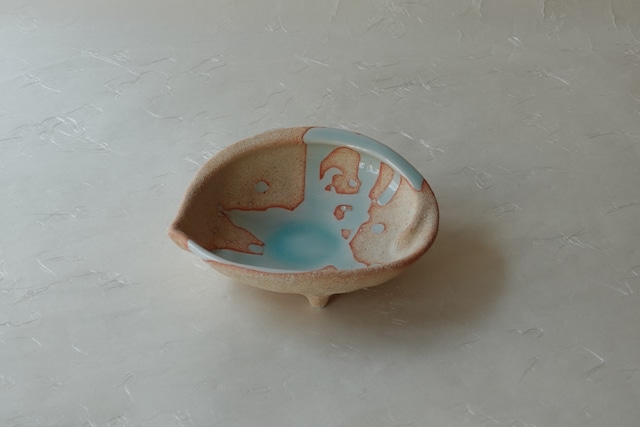
美濃焼 あわび向付 青白釉流し
¥4,290
美濃焼から向付けのご紹介です。 薄い肌色の土を、あわびの形に成形し きれいな青白釉を掛けて作られています。 釉薬は表面の中央から縁に掛けられており それ以外は生地そのものがむき出しに なっているので、土の荒々しさを 感じて頂けます。 青白釉はフリーハンドで掛けられ不規則で 個性をもった器に仕上げられています。 中央に溜まった釉薬には濃淡が現れ、 さわやかで趣のある風合いとなっています。 向付けとは、お造り(刺身)や酢の物、 和え物などを盛る器で、日本料理の膳の中で 最も季節感や料理人のセンスが表現される といわれています。 茶懐石などでご飯と汁物の向こう側に 置かれることから、そのまま向付けと 呼ばれるようになったようです。 土ものの温かみと美しく、さわやかな 青白釉の艶やかさのある器 はお料理を引き立ててくれそうな 飽きの来ない逸品といえます。 幅 16cm 奥行 13.5cm 高さ 5.5cm 箱なし Mino Ware Abalone-Shaped Mukōzuke Bowl with Flowing Blue-White Glaze Introducing a mukōzuke serving bowl from Mino ware. This vessel is crafted by shaping light beige clay into the form of an abalone shell and applying a beautiful blue-white glaze. The glaze is applied from the center of the surface toward the rim, while the remaining areas are left unglazed, exposing the natural clay and allowing you to appreciate its rustic texture and earthy character. The blue-white glaze is applied freehand, giving each piece an irregular pattern and a unique individuality. Where the glaze pools in the center, subtle variations in color and depth emerge, creating a fresh, elegant, and richly expressive appearance. A mukōzuke is a traditional Japanese serving vessel used for presenting sashimi, vinegared dishes (sunomono), dressed vegetable dishes (aemono), and other delicacies. Among the dishes used in a formal Japanese meal, it is said to be the vessel that most clearly expresses the seasonality of the cuisine and the chef's artistic sensibility. The name mukōzuke originated from its placement in cha-kaiseki meals, where it is traditionally set beyond the rice and soup bowls, directly "opposite" (mukō) the diner. The warmth of the earthenware combined with the lustrous beauty of the refreshing blue-white glaze creates a vessel that enhances the presentation of food. Its timeless design offers enduring appeal and makes it a piece that can be enjoyed for many years. Dimensions: Width: 16 cm Depth: 13.5 cm Height: 5.5 cm Packaging: No box included. 美浓烧 鲍鱼形向付 青白釉流釉 下面为您介绍一款美浓烧向付。 这款器皿以浅米色陶土塑造成鲍鱼的造型,并施以优美的青白釉烧制而成。 釉药由器物表面中央自然流向边缘,其余部分保留陶土本来的质感,使人能够充分感受到陶土粗犷而自然的魅力。 青白釉采用手工自由施釉(Freehand)工艺,因此每一件作品的釉色流动都不尽相同,呈现出独一无二的个性。 中央聚积的釉药形成深浅不同的色泽变化,展现出清新雅致、富有韵味的独特风貌。 所谓**“向付(Mukōzuke)”**,是指用于盛放生鱼片(刺身)、醋拌菜、凉拌菜等日本料理的器皿。在日本料理的餐席中,向付被认为是最能体现季节感与料理人审美品味的餐具之一。 据说在茶怀石料理中,由于这种器皿摆放于米饭和汤品的前方(对面)位置,因此便沿用了“向付”这一名称。 陶土特有的温润质感与青白釉清新亮丽的光泽相互映衬,使这款器皿既能充分衬托料理之美,又具有百看不厌、经久耐用的魅力,是一件值得长期使用的精品。 尺寸: 宽16cm × 深13.5cm × 高5.5cm
-
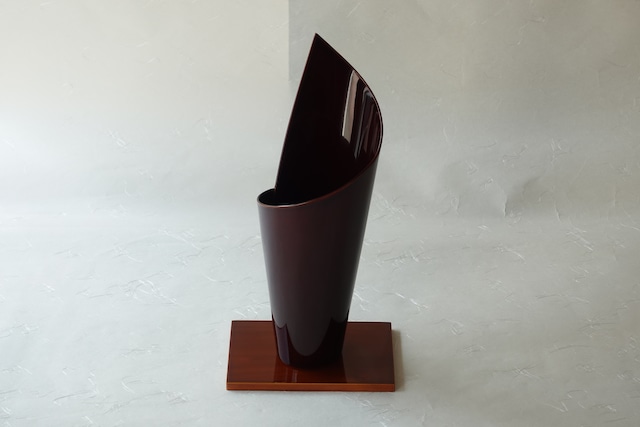
飛騨春慶塗 木製 曲げ花器 うるし塗 花台付
¥6,600
SOLD OUT
飛騨春慶塗から木製の花器のご紹介です。 平たく薄い木の板を曲げて筒状にして 作られた花器です。 木の板を熱湯で曲げ成形し、うるしを塗って 仕上げた珍しい花器です。 木地は樹齢150年から200年の材料を 使い、木は変形する性質があるので 通気性をよくして数年間、乾燥させます。 塗りはうるしが使われており、木地磨き、 目止め、下塗り、仕上げ磨き、摺り漆、 コクソ巻き、すり漆、上塗り、乾燥と、 多くの工程を経て作られています。 飛騨春慶塗は四百年前から、日本に伝わる 伝統工芸品です。 本物の春慶塗は塗りたては、濃い色を していますが、何年もかけて色が次第に 薄くなっていき、最後には木地が透けて 見えてきます。 色が薄くなると同時に、塗りが固く 丈夫になっていきます。 春慶塗は何年もかけて、完成形と なっていきます。 漆の皮膜は半永久的に呼吸し続け、通気性と 抗菌効果があり酸、アルカリ、塩分、 アルコールなどに侵食されることがなく 防水性、防腐性、熱や電気の絶縁性にも 優れています。 何百年も前の春慶塗が現存しているのは、 こうした理由があります。 とんがった先が特徴で上も空いていますが、 下も空いているので水と花を入れる陶器製の 受けが付いています。 花器を置く小ぶりな花台も付いています。 花器自体が大きくないので、比較的小さな スペースに置くことが出来ます。 和風でありながら斬新なデザインは 現代の洋風建築にもマッチしそうです。 ジャパニーズモダンは様々な場所にも 溶け込んで、しっとりとした漆器の良さの ある逸品といえます。 高さ 26cm 径 9cm 木製 うるし塗 受け 陶磁器製 木製花台付き Hida Shunkei Lacquerware Wooden Bent Flower Vase with Lacquer Finish and Wooden Display Stand Introducing a beautifully crafted wooden flower vase from Hida Shunkei lacquerware. This distinctive flower vase is made by bending a thin, flat wooden board into a cylindrical shape. The wood is carefully bent into shape using hot water, then finished with natural lacquer, resulting in a rare and elegant flower vase. The wood base is made from timber aged between 150 and 200 years. Because wood naturally changes shape over time, it is dried for several years in a well-ventilated environment before being used. The lacquering process employs natural urushi lacquer and involves numerous meticulous steps, including wood surface polishing, pore filling, undercoating, finish polishing, wiping lacquer (suri-urushi), kokuso-edge reinforcement, another application of wiping lacquer, final coating, and drying. Hida Shunkei lacquerware is a traditional Japanese craft with a history spanning over 400 years. Authentic Shunkei lacquerware has a deep, rich color when newly finished. Over the years, however, the color gradually becomes lighter until the natural beauty of the wood grain can be seen through the translucent lacquer. As the color lightens, the lacquer coating continues to harden, becoming even more durable. Shunkei lacquerware reaches its true beauty only after many years of use, gradually evolving into its finished form. The lacquer film continues to "breathe" almost permanently, providing excellent breathability and natural antibacterial properties. It is highly resistant to acids, alkalis, salt, and alcohol, while also offering outstanding waterproofing, resistance to decay, and excellent insulation against heat and electricity. These qualities explain why examples of Shunkei lacquerware made hundreds of years ago still survive today. The vase features a distinctive pointed shape with openings at both the top and the bottom. Because the bottom is open, it comes with a ceramic water container that holds both water and flowers. A compact wooden display stand for the flower vase is also included. Since the vase itself is not large, it can be displayed easily even in relatively small spaces. Its innovative design combines traditional Japanese aesthetics with a contemporary feel, making it equally suitable for modern Western-style interiors. This piece embodies the essence of Japanese Modern design, blending naturally into a wide variety of settings while showcasing the refined elegance and warmth of genuine lacquerware. Specifications Height: 26 cm Diameter: 9 cm Material: Wood Finish: Natural urushi lacquer Water Container: Ceramic Includes: Wooden display stand 飞驒春庆涂 木制 弯木花器 漆涂 附花台 下面为您介绍一款飞驒春庆涂木制花器。 这是一款将平整纤薄的木板弯曲成筒状制作而成的花器。 将木板以热水加热后弯曲定型,再施以天然漆精心涂装完成,是一款十分少见且工艺独特的花器。 木胎采用树龄约150年至200年的优质木材制作。由于木材具有容易变形的特性,因此必须保持良好的通风,并经过数年的自然干燥处理后方可使用。 涂装全部采用天然漆完成,经过木胎打磨、填木眼、底漆、精磨、擦漆、刻苧卷边、再次擦漆、面漆以及干燥等多道繁复工序精心制作而成。 飞驒春庆涂是自四百多年前流传至今的日本传统工艺。 真正的春庆涂在刚完成时颜色较深,随着岁月的流逝,漆色会逐渐变浅,最终呈现出木纹若隐若现、晶莹通透的独特美感。 随着颜色逐渐变浅,漆膜也会不断硬化,变得更加坚固耐用。 因此,春庆涂可谓是一件历经岁月不断趋于完美的工艺品。 天然漆形成的漆膜能够长期保持“呼吸”特性,具有良好的透气性和抗菌性能,并且不易受到酸、碱、盐分及酒精等物质的侵蚀,同时兼具优异的防水、防腐、隔热及绝缘性能。 正因如此,数百年前制作的春庆涂器物至今仍能完好保存。 这款花器最大的特色是顶部呈尖形设计,上下两端均为开放式结构,因此附有一个陶瓷制的内胆,可用于盛放清水与插花。 此外,还配有一只小巧的木制花台,用于摆放花器。 由于花器本身尺寸不大,因此能够轻松摆放于空间较小的位置。 兼具和风韵味与创新设计,不仅适合传统日式空间,也能够自然融入现代西式建筑环境。 这种充满“日式现代(Japanese Modern)”风格的作品,无论摆放于何种空间都能和谐融合,充分展现温润典雅的漆器之美,是一件极具魅力的精品。 **尺寸:**高26cm × 直径9cm **材质:**木制/天然漆涂装 **内胆:**陶瓷制 **附属品:**木制花台
-

常滑焼 朱泥 千段 急須 550cc
¥8,140
SOLD OUT
常滑焼から朱泥急須のご紹介です。 常滑焼の代名詞といえる「朱泥」は陶土に 多く含まれる鉄分がお茶の渋みを抑え、 まろやかな味を楽しむことが出来ます。 朱泥の土を成形し外側には横方向に千段が 入れられており、シンプルですが凹凸のある デザインとなっています。 胴は丸みを帯び、550ccの大容量があり 口は広めで茶葉の出し入れが容易で 洗いやすく使いやすい造形となっています。 注ぎ口の内側には大きめの金網が付けられて おり網の面積が大きいので深蒸し茶葉でも 目詰まりしにくい仕様となっています。 注ぎ口は湯切れがよく、液だれしにくい 機能的な作りとなっています。 滑らかな表面は使い心地もよく、朱のみの シンプルなデザインは飽きが来にくく 永く使いえる急須といえます。 18.5cm × 15.5cm 高さ 11cm 容量 550cc Tokoname Ware Red Clay (Shudei) Sendan-Ridged Teapot 550 ml Introducing a red clay (shudei) teapot from Tokoname ware. Shudei, the signature clay of Tokoname ware, is rich in iron naturally contained in the pottery clay. This iron content helps reduce the astringency of tea, allowing you to enjoy a smoother, mellower flavor. The teapot is formed from red clay, and the exterior is decorated with fine horizontal ridges (sendan), creating a simple yet textured design with subtle depth and character. The rounded body offers a generous 550 ml capacity. Its wide opening makes it easy to add and remove tea leaves, while also allowing for effortless cleaning and everyday use. A large stainless steel mesh strainer is fitted inside the base of the spout. Because of its wide filtering surface, it is less likely to become clogged, even when brewing deeply steamed tea leaves (fukamushi-cha). The spout is designed for smooth pouring, providing excellent control with clean water flow and minimal dripping. The smooth surface feels comfortable in the hand, while the simple all-red-clay design has a timeless appeal that resists going out of style, making this a teapot that can be enjoyed for many years. Dimensions: 18.5 cm × 15.5 cm × H 11 cm Capacity: 550 ml 常滑烧 朱泥 千段纹 茶壶 550cc 下面为您介绍一款常滑烧朱泥茶壶。 被誉为常滑烧代表的“朱泥”,由于陶土中富含铁元素,能够有效减轻茶汤的涩味,使茶汤口感更加醇厚圆润。 茶壶采用朱泥陶土制成,壶身外侧饰有横向千段纹,整体设计简洁素雅,同时富有层次感与立体感。 壶身圆润饱满,拥有550cc的大容量;壶口较宽,便于放入和取出茶叶,也更容易清洗,整体造型兼具实用性与易用性。 壶嘴内侧装有面积较大的金属滤网,由于滤网面积宽,即使是深蒸茶茶叶也不易堵塞,使用更加顺畅。 壶嘴出水流畅,断水利落,不易滴漏,具有优异的实用性能。 光滑细腻的表面带来舒适的使用手感,纯朱泥的简约设计经久耐看,不易过时,是一把能够长期使用的优质茶壶。 **尺寸:**18.5 × 15.5 × 高11cm **容量:**550cc